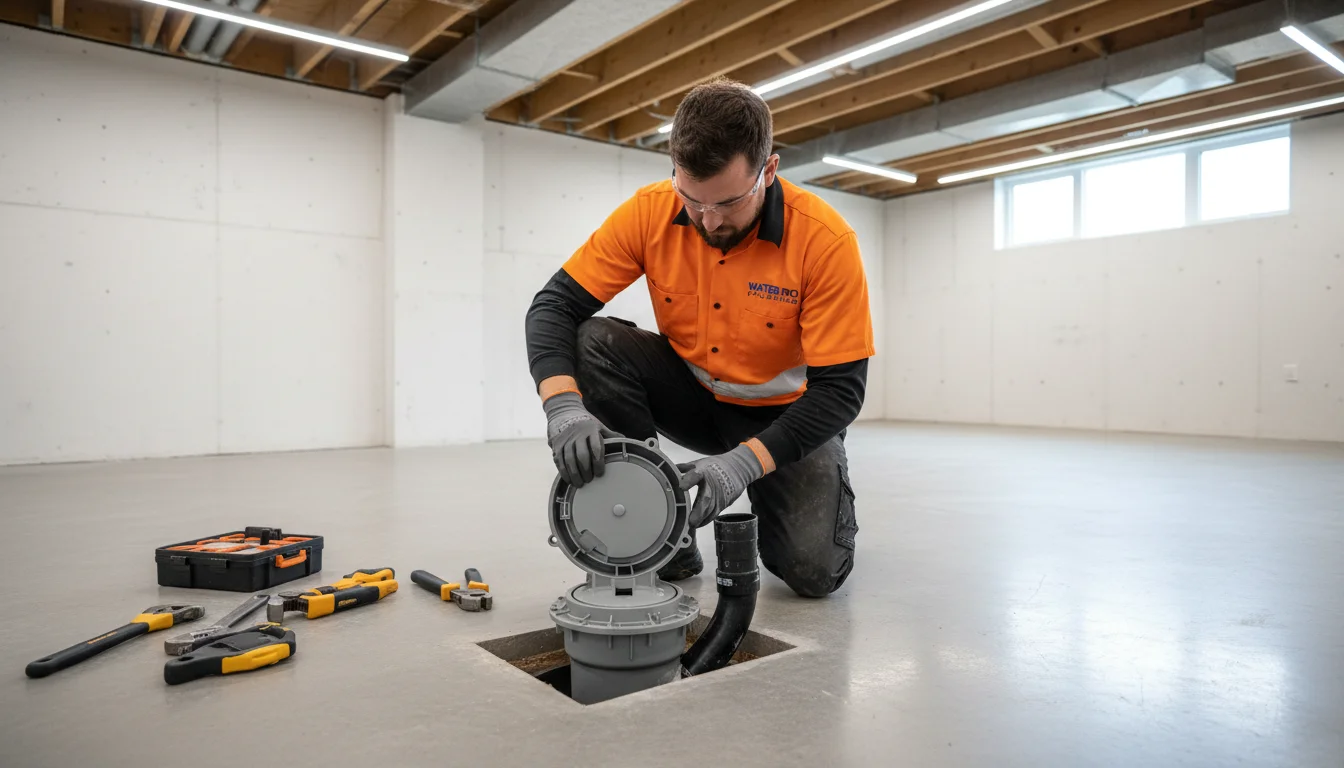

A backwater valve is the single most effective way to protect your Toronto basement from sewer backup. Installation costs $1,500-$4,000, but the City of Toronto's Basement Flooding Protection Subsidy covers up to $3,400—making many installations essentially free. During heavy rainfall, the valve automatically closes to prevent sewage from entering your home. Call (647) 554-4356 for a free basement assessment.
🔑 Key Takeaways
- 78% of Toronto basement floods are sewer-related and preventable with a backwater valve
- City of Toronto rebate covers up to $3,400 of installation cost
- Average basement flood cleanup costs $30,000-$100,000+
- Installation takes 4-6 hours for most basements
- Required by City Building Code for new construction since 2016
- Protects finished basements worth $50,000-$150,000+ in renovations
Why Toronto Basements Need Backwater Valves
Toronto sits on a combined sewer system in most neighborhoods—a 19th-century design where storm water and sanitary sewage share the same underground pipes. This means when heavy rainstorms hit (and they're getting more intense with climate change), the system can become overwhelmed.
When that happens, there's only one place for the excess sewage to go: back up into your basement. Without a backwater valve, raw sewage can flood through your floor drain, basement toilet, shower, and laundry drain—sometimes in minutes.
The July 2013 storm caused over $940 million in insured damage across the GTA, with basement flooding accounting for the majority of claims. More recently, the August 2023 flash floods caught thousands of homeowners off-guard. Climate experts predict these events will become more frequent.
How Backwater Valves Protect Your Basement
A backwater valve is a simple but ingenious device installed on your home's main sewer line, typically in the basement floor. Here's how it works:
Normal Flow
During regular use, wastewater flows freely from your home to the city sewer. The valve's internal flap stays open, allowing unrestricted drainage.
Reverse Flow Detection
When the city sewer backs up (during storms or blockages), water tries to flow backwards into your home. This reverse pressure triggers the valve.
Automatic Closure
The internal flap seals closed, creating a watertight barrier. Sewage cannot enter your basement—it's physically blocked by the closed valve.
Auto-Reset
Once the backup subsides and normal flow resumes, the valve automatically reopens. No manual intervention required.
The best backwater valves feature a clear lid so you can visually confirm the flap position and check for debris without opening the valve. We recommend Mainline brand valves with stainless steel components for Toronto's conditions.
Basement Scenarios That Demand Backwater Valve Protection
Not every basement has the same risk level. Here are the situations where a backwater valve goes from "good idea" to "absolutely essential":
🛋️ Finished Basements
If you've invested $50,000-$150,000+ in a finished basement with flooring, drywall, furniture, and electronics, one sewer backup can destroy everything. Most homeowners never fully recover these losses.
🏠 Basement Apartments
Secondary suites require backwater valve protection by Toronto Building Code. Beyond compliance, tenant safety and landlord liability make this non-negotiable.
🏢 Low-Lying Properties
Homes in valleys, near ravines, or in flood-prone areas like the Don Valley face higher backup risk. If your neighborhood floods during storms, you need protection.
🚽 Basement Bathrooms
Below-grade toilets, showers, and sinks are entry points for sewer backup. These fixtures are the first to flood and create the worst contamination.
📦 Home Offices & Storage
Work-from-home setups with expensive equipment, family heirlooms, or irreplaceable documents in basements need protection from contaminated water damage.
🔧 Older Neighborhoods
Areas with aging infrastructure (pre-1980 sewer systems) in Etobicoke, Scarborough, and North York experience more frequent overflows during storms.
Installation Costs: What Toronto Homeowners Pay
Backwater valve installation costs vary based on accessibility, basement configuration, and whether additional work is needed. Here's what to expect:
| Installation Type | Cost Range | Typical Scenario |
|---|---|---|
| Standard Installation | $1,500 - $2,500 | Unfinished basement, accessible floor drain |
| Finished Basement | $2,000 - $3,500 | Flooring removal/replacement, drywall repair |
| Difficult Access | $2,500 - $4,000 | Deep drain lines, tight spaces, complex piping |
| Dual Valve System | $3,000 - $5,000 | Multiple drain lines, extensive protection |
Most homeowners pay little to nothing out of pocket after the City rebate. We handle the paperwork for you.
City of Toronto Backwater Valve Rebate Program
The City of Toronto offers substantial rebates through the Basement Flooding Protection Subsidy Program. Here's what you need to know:
What's Covered
- Backwater valve installation: Up to $1,250
- Sump pump installation: Up to $1,750
- Sump pump and backwater valve combined: Up to $3,400
- Severance of storm/sanitary connections: Up to $3,400
Eligibility Requirements
- Property must be within City of Toronto boundaries
- Single-family, semi-detached, townhouse, or small multi-residential (up to 6 units)
- Work must be done by a licensed plumber
- Plumbing permit required from the City
- Devices must meet Toronto Building Code standards
Water Pro submits all rebate applications on your behalf. We've helped over 2,000 Toronto homeowners successfully claim their rebates. You pay the reduced amount upfront—no waiting for reimbursement with our direct billing program.
The Basement Backwater Valve Installation Process
Understanding what happens during installation helps you prepare. Here's the step-by-step process:
Step 1: Pre-Installation Assessment (Free)
Our licensed plumber inspects your basement to locate the main sewer line, assess accessibility, and determine the best installation approach. We'll identify any obstacles and provide an exact quote.
Step 2: Permit Application
We apply for the required City of Toronto plumbing permit (mandatory for rebate eligibility). Typical approval takes 5-10 business days. We handle all paperwork.
Step 3: Concrete Cutting
Our crew cuts a section of basement floor concrete (typically 24" x 24" to 30" x 30") to access the sewer line. This is the messiest part—we use dust control measures and lay protective coverings.
Step 4: Sewer Line Modification
We cut into the existing sewer pipe and install the backwater valve in a protective pit. All connections are sealed and tested for leaks.
Step 5: Testing & Inspection
We test the valve operation and schedule the City inspection (required for permit closure and rebate). The inspector verifies code compliance.
Step 6: Concrete Restoration
Fresh concrete is poured around the access pit. We install a removable cover for future maintenance access. Concrete cures for 24-48 hours.
Step 7: Rebate Submission
Once the City inspection passes, we submit your rebate application with all required documentation. Funds typically arrive within 6-8 weeks.
Protect Your Basement Today
Free assessment • City rebate assistance • Same-week installation available
Call (647) 554-4356Finished Basement Considerations
If your basement is finished with flooring, walls, and ceiling, installation requires extra care:
Flooring Impact
- Tile: We remove and replace the affected tiles. Matching old tile can be challenging—we recommend keeping spare tiles from the original installation.
- Carpet: A section must be cut out and replaced. Consider upgrading to luxury vinyl tile (LVT) in the utility area for easier future access.
- Laminate/Hardwood: Removal required around the valve pit. We can install a transition piece to blend with existing flooring.
Additional Costs for Finished Basements
- Flooring removal and replacement: $200-$500
- Drywall repair (if affected): $100-$300
- Custom access cover: $75-$150
- Tile matching/sourcing: $100-$400
Even with added costs for finished basements, the investment is minimal compared to flood damage. One backup can destroy $30,000-$100,000+ in renovations, furnishings, and personal property—plus the irreplaceable items money can't restore.
Backwater Valve Maintenance for Basement Protection
A backwater valve only protects your basement if it's maintained. Here's what every Toronto homeowner should do:
DIY Monthly Checks
- Open the access cover and visually inspect the valve
- Check that the flap moves freely (no debris blocking it)
- Look for cracks or damage to the valve body
- Clean any visible debris from the valve seat
Annual Professional Inspection
We recommend annual professional inspection ($75-$125) that includes:
- Complete disassembly and cleaning
- Flap seal inspection and replacement if worn
- Pit cleaning and sanitizing
- Operational testing
- Documentation for insurance records
High-Risk Neighborhoods in Toronto
These areas have historically higher basement flooding rates due to infrastructure age, topography, or drainage patterns:
- Etobicoke: Bloor West Village, Kingsway, Mimico
- North York: Lawrence Heights, Downsview, Willowdale
- Scarborough: West Hill, Scarborough Village, Wexford
- East York: Thorncliffe Park, Leaside lowlands
- Old Toronto: Trinity-Bellwoods, Roncesvalles, The Beaches
If you live in these areas and don't have a backwater valve, you're taking a significant risk. The City's combined sewer infrastructure in many of these neighborhoods dates to the 1950s-1970s and struggles with modern storm intensity.
Insurance Implications
Many Toronto homeowners don't realize how backwater valve installation affects their home insurance:
Potential Premium Reductions
Some insurers offer 5-15% discounts on water damage coverage for homes with verified backwater valve protection. Ask your insurer about available discounts.
Claims History Protection
A single sewer backup claim can increase premiums by 15-25% or result in coverage denial. Prevention through a backwater valve protects your insurability.
Documentation
Keep records of your installation (permit, invoice, inspection certificate) for insurance purposes. We provide all documentation in a homeowner protection folder.
Frequently Asked Questions
Toronto's combined sewer system means storm water and sewage share the same pipes. During heavy rainfall, the system can overflow backwards into basement drains. A backwater valve automatically closes to prevent this sewage from entering your home, protecting finished basements worth $50,000-$150,000+ in renovations.
Basement backwater valve installation costs $1,500-$4,000 in Toronto depending on accessibility and drain configuration. The City of Toronto's Basement Flooding Protection Subsidy covers up to $3,400 of this cost, making many installations essentially free.
Yes, backwater valves can be installed in finished basements. The installation requires cutting approximately 2x2 feet of concrete around the floor drain. If your basement has flooring over the drain, that section will need to be removed and replaced. Typical finished basement installations add $300-$800 to the base cost.
Standard basement backwater valve installation takes 4-6 hours for a single valve. Finished basements or difficult access situations may require 1-2 days. The concrete needs 24-48 hours to cure before the area can bear weight.
Yes, basement flooding can happen suddenly during extreme weather events. Climate change has increased severe storm frequency in Toronto. A backwater valve costs $1,500-$4,000 to install but prevents potential damage of $30,000-$100,000+ from a single sewer backup event. With City rebates covering up to $3,400, it's essential protection.
The backwater valve should be installed on the main sewer lateral, typically near the floor drain in the basement. This protects all below-grade fixtures including floor drains, basement toilets, and laundry drains. The valve must be accessible for maintenance, usually installed in a pit with a removable cover.
Get Your Free Basement Assessment
Find out if your basement is protected. Our licensed plumbers will inspect your sewer line, explain your options, and help you claim the City rebate.
Call (647) 554-4356