
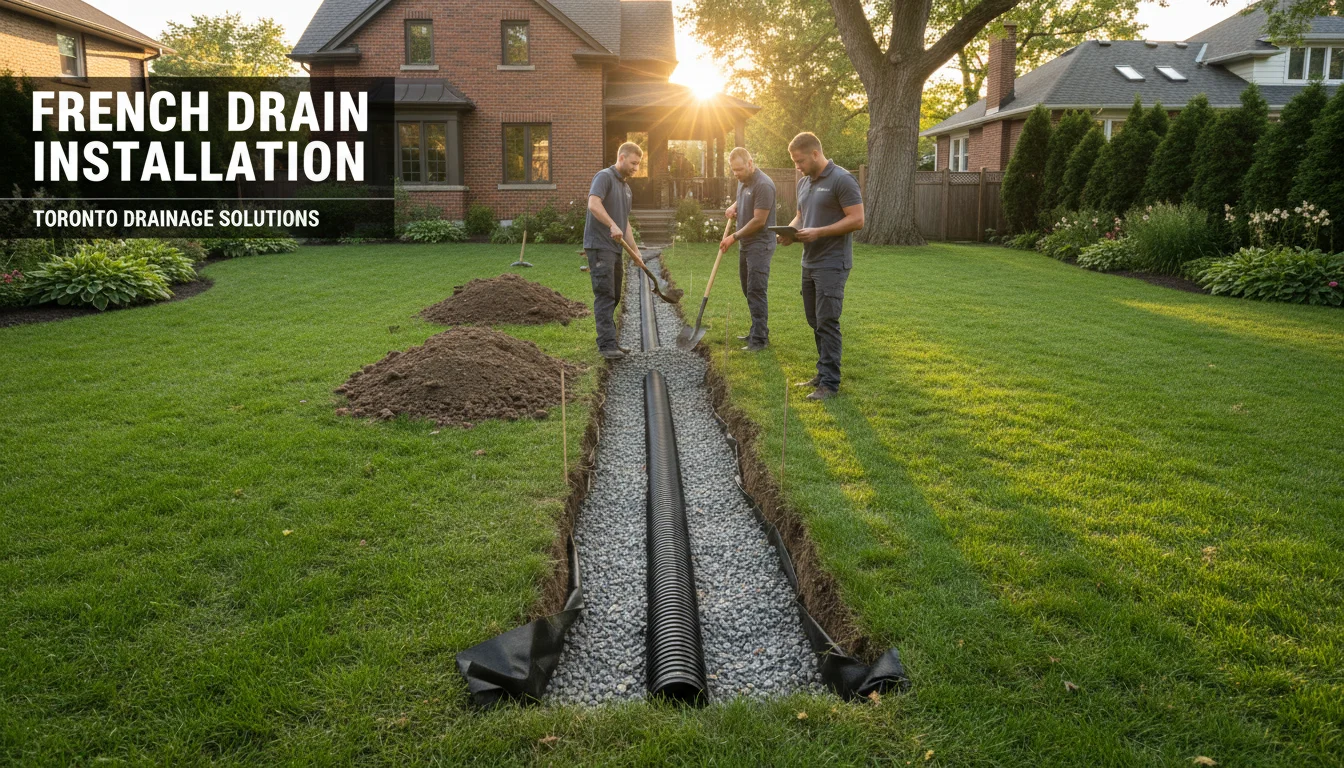
Quick Answer
French drain installation in Toronto costs $2,000-$6,000 for a 50-100 foot run ($25-$60 per linear foot). The system collects surface and subsurface water via a gravel-filled trench with perforated pipe, redirecting it away from problem areas. DIY is feasible for handy homeowners at $10-$15/ft in materials.
Key Takeaways
- ✓ Professional installation: $25-$60/linear foot; DIY materials: $10-$15/ft
- ✓ Typical depth: 18-24" for yard drainage; 6-8' for foundation
- ✓ Minimum slope: 1% (1" drop per 8 feet of run)
- ✓ Filter fabric is essential—prevents clogging in Toronto's clay soil
- ✓ Always call Ontario One Call (1-800-400-2255) before digging
Table of Contents
What is a French Drain?
A French drain (named after Henry French, who popularized it in the 1800s) is a gravel-filled trench containing a perforated pipe that collects and redirects water away from problem areas. It's one of the most effective solutions for yard drainage and foundation protection.
How It Works
Water always seeks the path of least resistance. A French drain creates an easy path:
- Surface water and groundwater enter the gravel-filled trench
- Water filters through gravel to the perforated pipe at the bottom
- Pipe collects water from along its entire length
- Gravity moves water through the pipe to a designated outlet
French Drain vs. Other Drainage Systems
| System | Best For | Key Difference |
|---|---|---|
| French Drain | Yard flooding, foundation protection | Collects subsurface water via perforated pipe |
| Channel Drain | Driveway, patio surface water | Open grate catches surface water only |
| Catch Basin | Low spots, area drains | Single collection point, not linear |
| Swale | Large properties, natural look | Shallow ditch, no pipe, grass-covered |
| Weeping Tile | Foundation perimeter | Same concept, specific to foundations |
When You Need a French Drain
French drains are especially valuable in the GTA where clay-heavy soil prevents natural drainage. Common scenarios:
✓ French Drain Is Right
- • Standing water in yard 24+ hours after rain
- • Soggy, squishy lawn areas
- • Water pooling against foundation
- • Retaining wall with drainage issues
- • Neighbor's property drains onto yours
- • Downhill property with water runoff
✗ Try Something Else
- • Water from overflowing gutters → clean/repair gutters
- • Water from short downspouts → extend downspouts
- • Single low spot → simple regrading
- • Patio/driveway surface water → channel drain
- • Basement seepage → interior drain tile
Pro Tip: The Water Test
Run a hose in the problem area for 10 minutes. If water spreads across the surface but doesn't soak in, you have a drainage problem. If it soaks in but the soil stays soggy for days, you have a high water table—French drain is the solution for both in Toronto's clay.
Toronto Installation Costs
Professional Installation Costs
| Project Type | Linear Foot Cost | Typical Total |
|---|---|---|
| Basic yard drain (18" deep) | $25-$40 | $1,500-$3,000 |
| Standard drain (24" deep) | $35-$50 | $2,500-$4,000 |
| Deep drain (36"+ deep) | $45-$60 | $3,500-$6,000 |
| Foundation drain (6-8' deep) | $100-$150 | $10,000-$25,000 |
DIY Materials Cost (per linear foot)
| Material | Cost/LF | Source |
|---|---|---|
| 4" perforated pipe (rigid PVC) | $2.50-$4.00 | Home Depot, Lowes |
| 4" corrugated with sock | $1.50-$2.50 | Home Depot, Lowes |
| Clear gravel (1/2-1" stone) | $4-$6 | Landscape supply yard |
| Filter fabric (non-woven) | $0.50-$1.00 | Landscape supply |
| Sod replacement | $2-$3 | Garden centres |
| Total DIY materials | $10-$15 | — |
Cost Factors
- Length of run: Primary cost driver
- Depth: Deeper = more excavation and gravel
- Soil type: Rocky soil adds $10-20/ft
- Access: Backyard-only access limits equipment
- Outlet type: Storm sewer connection adds $500-$1,500 plus permit
- Landscaping restoration: Varies by finish quality
Step-by-Step Installation Guide
Step 1: Plan Your Route
- • Identify the water collection area (where it pools)
- • Determine the outlet location (lower than start)
- • Plan the straightest route possible
- • Mark the trench line with spray paint or stakes
- • Call Ontario One Call: 1-800-400-2255 (required, free, 5 business days)
Step 2: Dig the Trench
- • Width: 12" minimum (wider is better for capacity)
- • Depth: 18-24" typical; deeper for subsurface water
- • Slope: 1% minimum (1" drop per 8 feet)
- • Use a level/laser to ensure consistent slope
- • Set soil aside on tarps to protect lawn
Step 3: Install Filter Fabric
- • Line entire trench with non-woven geotextile fabric
- • Leave enough excess to wrap over gravel later (12-18" per side)
- • Fabric prevents soil/clay from clogging gravel and pipe
- • Critical in Toronto's clay soil—don't skip this
Step 4: Add Gravel Base
- • Spread 2-3" of clean 3/4" gravel on fabric
- • Smooth and compact lightly
- • Verify slope is maintained
Step 5: Lay the Pipe
- • Place 4" perforated pipe on gravel bed
- • Holes face DOWN (collects rising groundwater)
- • Connect sections with couplings; glue rigid PVC
- • Optional: Add cleanout access at high end and/or every 50'
Step 6: Cover with Gravel
- • Add gravel until pipe is covered by 2-4"
- • Fill to within 4-6" of grade (leave room for soil/sod)
- • Smooth and compact lightly
Step 7: Wrap and Backfill
- • Fold filter fabric over gravel (overlap at center)
- • Add 4-6" of topsoil over fabric
- • Replace sod or seed as appropriate
- • Water to settle; add more soil if needed
Critical: Holes Down, Not Up
The most common DIY mistake is installing perforated pipe with holes facing up. This only catches water already in the trench. With holes down, rising groundwater enters the pipe before flooding your yard. Think of it as scooping water from below, not catching rain from above.
Materials & Specifications
Pipe Options
| Pipe Type | Pros | Cons | Best For |
|---|---|---|---|
| Rigid PVC (4") | Durable, smooth flow, long-lasting | Harder to install, more connections | Professional installs, deep drains |
| Corrugated (4") | Flexible, easy to install, cheap | Can crush, ridges trap sediment | DIY, shallow drains |
| Corrugated with Sock | Built-in filter fabric | Sock can clog, harder to clean | DIY in sandy soil (not clay) |
Gravel Specifications
- Size: 1/2" to 1" clear crushed stone (no fines)
- Type: Granite or limestone; avoid recycled concrete
- Quantity: Approximately 0.5-1 cubic yard per 10 linear feet
- Don't use: Pea gravel (too round, compacts) or river rock (too large)
Filter Fabric
Use non-woven geotextile fabric (like Typar or similar). Woven landscape fabric is not the same—it doesn't allow water to pass as freely. Buy 3' or 6' wide rolls from landscape supply yards.
Where to Drain the Water
Your French drain needs somewhere to discharge. Options in Toronto:
| Outlet Type | Best For | Permit Needed? | Cost |
|---|---|---|---|
| Daylight (gravity) | Sloped lots, open area to discharge | No | $0 |
| Dry Well | Flat lots, no outlet available | No | $500-$1,500 |
| Storm Sewer | High volume, urban lots | Yes (Toronto Water) | $1,000-$3,000+ |
| Sump Pit + Pump | Low points, no gravity outlet | No | $800-$1,500 |
Never Connect to Sanitary Sewer
Connecting yard drainage to the sanitary sewer is illegal in Toronto. It overloads the wastewater treatment system during storms and can cause sewage backups. Fines are significant, and you'll have to remove the connection.
DIY vs. Professional Installation
DIY Is Feasible If:
- • Run is under 100 feet
- • Depth is under 24 inches
- • No utilities in the path
- • You have time (2-3 weekend days)
- • Physical ability to dig
- • Simple outlet (gravity or dry well)
Hire a Pro If:
- • Drain needs to be 3+ feet deep
- • Rocky or difficult soil
- • Storm sewer connection needed
- • Complex routing around obstacles
- • Limited time or physical ability
- • Foundation drainage (deep excavation)
DIY Savings Tip
Even if you hire out the digging, doing your own material pickup from a landscape supply yard (not retail stores) saves 30-40% on gravel. Rent a trenching machine ($200-$300/day) to make excavation faster—it's worth it for runs over 30 feet.
Need Help with Yard Drainage?
Whether you need a French drain, catch basin, or complete drainage plan, our team can assess your property and provide solutions. Free estimates for homeowners across the GTA.
Frequently Asked Questions
How much does a French drain cost in Toronto?
French drain installation in Toronto costs $25-$60 per linear foot, or $2,000-$6,000 for a typical 50-100 foot run. DIY materials cost $10-$15 per foot. Costs increase for deep trenches, difficult access, or connection to storm sewer.
How deep should a French drain be?
French drains should be 18-24 inches deep for yard drainage, or deep enough to reach below the problem area. For foundation drainage, install at or below footing level (6-8 feet). Minimum 1% slope (1 inch per 8 feet) toward outlet.
Do French drains work in clay soil?
Yes, French drains work in Toronto's clay soil—in fact, they're essential because clay drains so poorly. Use extra gravel (6-8 inches around pipe) and high-quality filter fabric to prevent clay from clogging the system.
Where does a French drain empty?
French drains can empty to: a lower area of your property (gravity), a dry well (underground gravel pit), a storm sewer (requires permit in Toronto), or a sump pit with pump. Never connect to sanitary sewer—this is illegal.
How long do French drains last?
Properly installed French drains with filter fabric last 30-50 years. Without fabric, clay and silt clog the gravel in 5-10 years. Signs of failure include standing water returning, slow drainage after rain, or visible pipe collapse.
Can I install a French drain myself?
Yes, French drains are a feasible DIY project if you're comfortable with manual labor. You'll need to dig a trench, lay fabric and gravel, install perforated pipe, and ensure proper slope. Budget 2-3 days for a 50-foot run. Call Ontario One Call before digging.
Mike Thompson
Master Plumber, 25+ Years Experience
Mike has designed and installed drainage solutions for properties across the GTA, from downtown Toronto townhouses to large Oakville estates. He knows the local soil conditions and what works long-term.