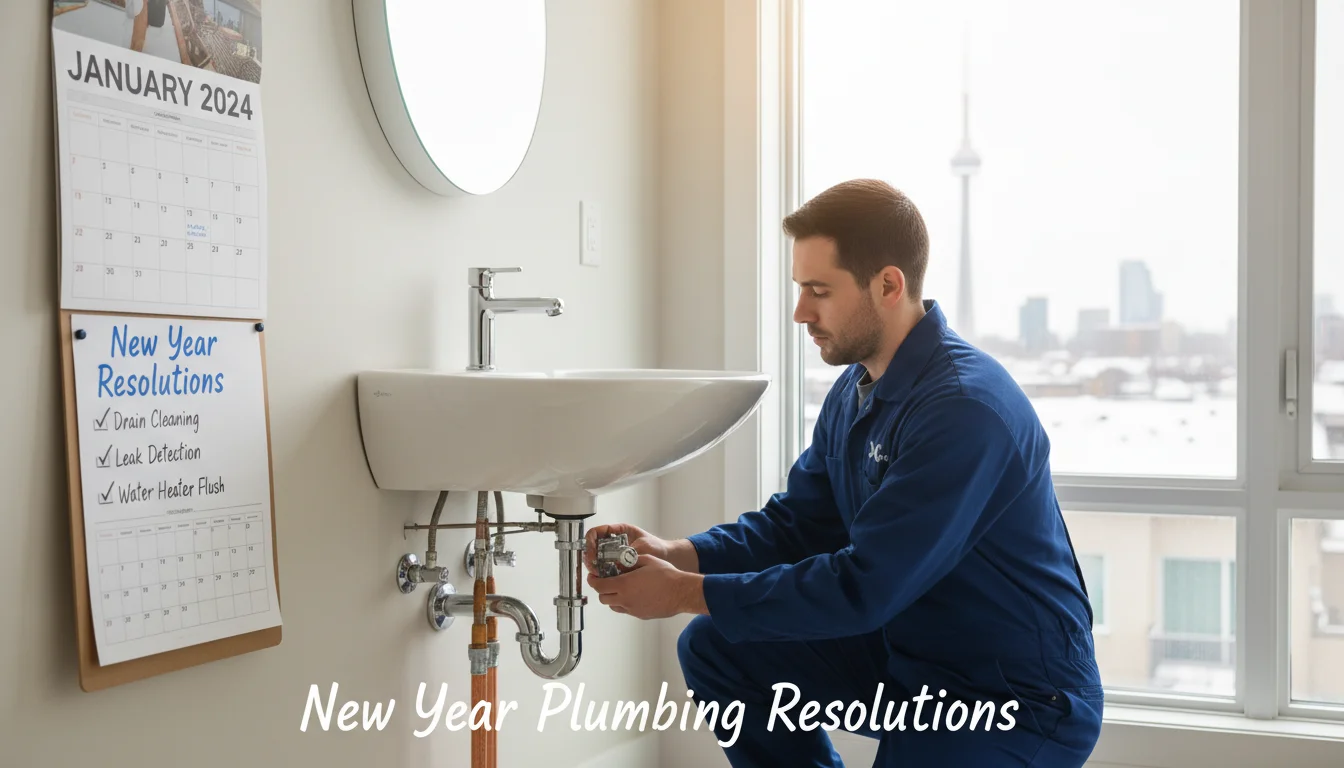
The 3 most important plumbing resolutions for Toronto homeowners in 2025: (1) Schedule an annual plumbing inspection before winter ends, (2) Install a backwater valve to prevent sewer backup and claim up to $3,400 in City rebates, and (3) Know your main water shut-off valve location to minimize damage during emergencies. These three actions alone can save you thousands in potential repair costs.
Key Takeaways
- Annual plumbing inspections cost $150-$250 but prevent $3,000+ emergency repairs
- Toronto offers rebates up to $3,400 for backwater valve installation
- Fixing a dripping faucet saves 20 gallons of water per day
- Water heaters should be replaced proactively at 10-12 years old
- Simple monthly maintenance takes just 10 minutes and prevents major issues
- Resolution 1: Schedule an Annual Plumbing Inspection
- Resolution 2: Learn Your Shut-Off Valve Locations
- Resolution 3: Install a Backwater Valve
- Resolution 4: Fix All Dripping Faucets
- Resolution 5: Test Your Sump Pump Quarterly
- Resolution 6: Flush Your Water Heater
- Resolution 7: Upgrade to Water-Saving Fixtures
- Resolution 8: Create a Plumbing Emergency Kit
- Resolution 9: Insulate Exposed Pipes
- Resolution 10: Build a Plumbing Maintenance Fund
- Frequently Asked Questions
As a Toronto master plumber with over 25 years of experience, I've responded to thousands of plumbing emergencies that could have been prevented with basic maintenance and planning. The new year is the perfect time to commit to habits that protect your home's plumbing system and your wallet.
These 10 resolutions aren't about complex DIY projects or expensive upgrades. They're practical, actionable goals that any Toronto homeowner can achieve in 2025. Let's make this the year you take control of your plumbing before problems take control of you.
Schedule an Annual Plumbing Inspection
Think of a plumbing inspection like a physical for your home. A licensed plumber checks water pressure, inspects visible pipes for corrosion, tests shut-off valves, examines water heater condition, and identifies potential problems before they become emergencies.
Cost: $150-$250 for a comprehensive inspection
Time: 1-2 hours
Best timing: Fall (October-November) before winter freeze risk
During my inspections, I commonly find issues homeowners never knew existed: small leaks behind walls, corroding water heater anodes, stuck shut-off valves, and early signs of sewer line problems. Catching these early saves thousands compared to emergency repairs.
Learn Your Shut-Off Valve Locations
In a plumbing emergency, every minute counts. Knowing exactly where your main water shut-off valve is located can mean the difference between minor water damage and a flooded basement.
Your home has three critical shut-off points:
- Main shut-off valve: Usually in the basement near the front wall where the water line enters
- Curb stop valve: Near the street, requires a special key (consider buying one for $15-$20)
- Individual fixture shut-offs: Under sinks, behind toilets, behind washing machine
Test your main shut-off valve now. Turn it off and on a few times to ensure it works and hasn't seized. If it's stuck or leaking, call a plumber to replace it before you actually need it in an emergency.
Install a Backwater Valve
Toronto's aging sewer infrastructure and increasingly severe storms create real basement flooding risk. A backwater valve automatically closes when sewage tries to back up into your home, preventing devastating damage.
Why this is essential for Toronto homes:
- Average sewer backup cleanup costs $30,000-$100,000
- Toronto offers rebates up to $3,400 through the Basement Flooding Protection Subsidy Program
- Many insurance policies now require backwater valves for sewer backup coverage
- Installation takes 1 day and costs $2,500-$4,000
If you don't have a backwater valve, make 2025 the year you protect your basement. Call (647) 554-4356 to schedule an assessment and learn about City rebates.
Fix All Dripping Faucets
That annoying drip isn't just wasting water - it's costing you money and potentially damaging fixtures. A faucet dripping once per second wastes over 3,000 gallons per year.
The math:
- One dripping faucet = ~20 gallons/day wasted
- Annual water cost: $50-$100 per dripping faucet
- Repair cost: $75-$150 (or $20-$40 DIY for washer replacement)
- Payback: Usually within 6 months
Most drips are caused by worn washers, O-rings, or cartridges - inexpensive parts that any homeowner can replace with basic tools. If DIY isn't your thing, a plumber can fix most faucet drips in under 30 minutes.
Test Your Sump Pump Quarterly
Your sump pump is your basement's last line of defense against flooding. Yet most homeowners never test it until a storm hits and it fails.
Quarterly testing takes 5 minutes:
- Pour a bucket of water into the sump pit
- The pump should activate automatically when water rises
- Listen for unusual sounds (grinding, rattling)
- Verify water discharges properly outside
- Check that the backup battery (if you have one) is charged
Best testing schedule: March (spring thaw), June (before summer storms), September (before fall rains), December (before winter freeze).
Create recurring calendar reminders for each quarterly sump pump test and annual water heater flush. You're much more likely to follow through when your phone reminds you.
Flush Your Water Heater Annually
Sediment buildup in your water heater reduces efficiency, shortens its lifespan, and can cause rumbling noises. An annual flush keeps it running efficiently and can extend its life by 3-5 years.
Signs your water heater needs attention:
- Rumbling or popping noises when heating
- Rusty or discolored hot water
- Taking longer to heat water
- Water not as hot as it used to be
- Visible rust or corrosion on tank exterior
While you can flush a water heater yourself, consider having a plumber do it during your annual inspection. They can also check the anode rod (sacrificial rod that prevents tank corrosion) and T&P valve for proper operation.
Upgrade to Water-Saving Fixtures
If your toilets, showerheads, or faucets are more than 20 years old, upgrading to WaterSense-certified fixtures can reduce your water bill significantly while helping the environment.
Potential annual savings:
- Low-flow toilets: Save 13,000+ gallons/year per toilet
- Efficient showerheads: Save 2,700 gallons/year
- Faucet aerators: Reduce flow by 30% for $5-$10 each
Toronto families typically save $200-$400 annually with water-efficient fixtures. The fixtures pay for themselves within 1-2 years, then continue saving money for decades.
Create a Plumbing Emergency Kit
When a pipe bursts at 2 AM, you don't want to be searching for supplies. Assemble a plumbing emergency kit and store it somewhere accessible.
Essential items ($50-$100 total):
- Pipe repair clamps (various sizes)
- Plumber's tape (Teflon tape)
- Plumber's putty
- Adjustable wrench
- Plunger (one for sinks, one for toilets)
- Bucket and old towels
- Flashlight with fresh batteries
- Emergency plumber's phone number (Water Pro: 647-554-4356)
Insulate Exposed Pipes
Frozen pipes are one of the most common and expensive winter plumbing emergencies in Toronto. Insulating exposed pipes in your basement, garage, and crawl spaces is a simple weekend project that prevents disaster.
High-risk areas for Toronto homes:
- Pipes on exterior walls
- Pipes in unheated garages
- Pipes in crawl spaces
- Pipes near windows or vents
- Outdoor hose bibs (disconnect hoses before freeze)
Cost: Foam pipe insulation costs $2-$5 per 6-foot section. A typical home needs $20-$50 in materials. Compare that to $500-$3,000+ for burst pipe repairs.
Build a Plumbing Maintenance Fund
Every plumbing system eventually needs repairs or replacements. Building a dedicated maintenance fund prevents financial stress when those needs arise.
Recommended savings targets:
- Minimum: $500 emergency fund
- Goal: $2,000-$3,000 for major repairs
- Ideal: $5,000+ for water heater replacement, sewer repairs, or pipe repiping
Suggested approach: Set aside $50-$100 per month into a dedicated home maintenance account. In 2-3 years, you'll have enough to handle most plumbing repairs without going into debt or delaying critical fixes.
Start 2025 With a Professional Plumbing Inspection
Our licensed plumbers will check your entire system and identify any issues before they become emergencies. Annual inspections from $150.
Call (647) 554-4356Frequently Asked Questions
Toronto homeowners should schedule a professional plumbing inspection annually, ideally in fall before winter. Homes over 25 years old or with older pipe materials like galvanized steel or cast iron should have inspections every 6-12 months. A typical inspection costs $150-$250 and can prevent costly emergencies.
Monthly plumbing tasks include: testing all shut-off valves, running water in rarely-used fixtures to maintain P-trap seals, checking under sinks for leaks, inspecting visible pipes for condensation or corrosion, and cleaning drain stoppers of hair and debris. These 10-minute checks prevent major problems.
Replace your water heater proactively at 10-12 years old, before it fails. The best time is spring or fall when plumbers have more availability. Signs to replace sooner include rusty water, rumbling noises, visible corrosion, or leaks around the base. Replacement costs $1,500-$4,000 for tank heaters.
Reduce water bills by fixing dripping faucets (saves 20 gallons/day per drip), replacing pre-1994 toilets with WaterSense models (saves 13,000 gallons/year), installing low-flow showerheads, checking for hidden leaks using your water meter, and insulating hot water pipes. Toronto families typically save $200-$400 annually with these upgrades.
Yes, absolutely. Backwater valves prevent sewer backup during heavy storms and Toronto offers rebates up to $3,400 for installation. With climate change increasing severe storm frequency in the GTA, this $2,500-$4,000 investment protects against $30,000+ in basement flood damage.
Call a 24/7 emergency plumber for: burst pipes, sewage backup, gas line issues, no water to entire home, or flooding you can't stop. You can wait for regular hours for: slow drains, dripping faucets, running toilets, or minor leaks you can contain with a bucket. Emergency calls cost $150-$300 more than regular service.
Ready to Start Your Plumbing Resolutions?
Water Pro is here to help Toronto homeowners with inspections, repairs, installations, and 24/7 emergency service. Let's make 2025 your most leak-free year yet.