Quick Answer: When Should I Replace My Sump Pump?
Replace your sump pump if it's 7-10 years old, showing signs of rust or corrosion, making loud grinding noises, or requiring frequent repairs. Proactive replacement costs $400-$1,500 and prevents costly flood damage. The best time to replace is late February/early March—before Toronto's spring thaw but while service is readily available.
Key Takeaways
- Sump pumps last 7-10 years; replace proactively at age 7-8 to avoid emergency failure
- Signs to replace: age, rust/corrosion, loud noises, frequent cycling, visible cracks
- Replacement costs: $400-$700 basic, $800-$1,200 with battery backup, $1,200-$1,500 premium
- Best timing: Late February/March (before spring thaw) or October/November (before winter)
- Toronto's Basement Flooding Subsidy covers up to $1,750 for qualifying installations
- Consider upgrading to battery backup when replacing—storms often cause power outages
Picture this: It's 2 AM during Toronto's spring thaw. Your basement sump pump—installed when you bought the house 9 years ago—finally gives up. The pit fills. Water spreads across your basement floor. By morning, you're looking at thousands in flood damage. Need emergency replacement? Call (647) 554-4356 for 24/7 service.
Here's the truth: Most sump pump failures are entirely preventable. After 28 years of installing and replacing pumps across the GTA, I've seen the same pattern repeatedly—homeowners wait until their pump fails during a storm, then face emergency pricing, limited equipment availability, and potential flood damage.
This guide shows you how to replace your sump pump before it fails, choose the right upgrade, and take advantage of Toronto's generous basement flooding rebates. Let's save you from a midnight emergency call.
How Long Do Sump Pumps Actually Last?
The standard answer is "7-10 years," but lifespan varies dramatically based on brand, type, and usage patterns. Here's what Toronto homeowners actually experience:
Lifespan by Pump Type
| Pump Type | Typical Lifespan | Toronto Usage Notes |
|---|---|---|
| Pedestal Pump (1/3 HP) | 10-15 years | Longer life but noisier; good for low water volume |
| Submersible Pump (1/2 HP) | 7-10 years | Most common in Toronto; quieter operation |
| Battery Backup System | 3-5 years (battery) 7-10 years (pump) |
Battery needs replacement more frequently than pump |
| Cast Iron Pumps (3/4 HP) | 10-12 years | Premium durability; best for high water table areas |
What Shortens Sump Pump Life in Toronto?
- Spring Thaw Overwork: March-April see 3-4x normal pump cycles as snow melts
- High Water Table Areas: Homes in Scarborough, Etobicoke lowlands, and Don Valley run pumps year-round
- Dirty Pit Conditions: Sediment and debris accelerate wear on impeller and seals
- Power Surges: Toronto's aging grid causes voltage fluctuations that damage motors
- Inadequate Sizing: Undersized pumps run constantly; oversized pumps cycle too frequently
💡 Pro Tip: Track Your Pump's Age
Write the installation date on the pump housing with permanent marker. If you don't know when your pump was installed, assume it's at least 7 years old and schedule a professional inspection. Call (647) 554-4356 for a free pump assessment.
5 Signs Your Sump Pump Needs Replacement NOW
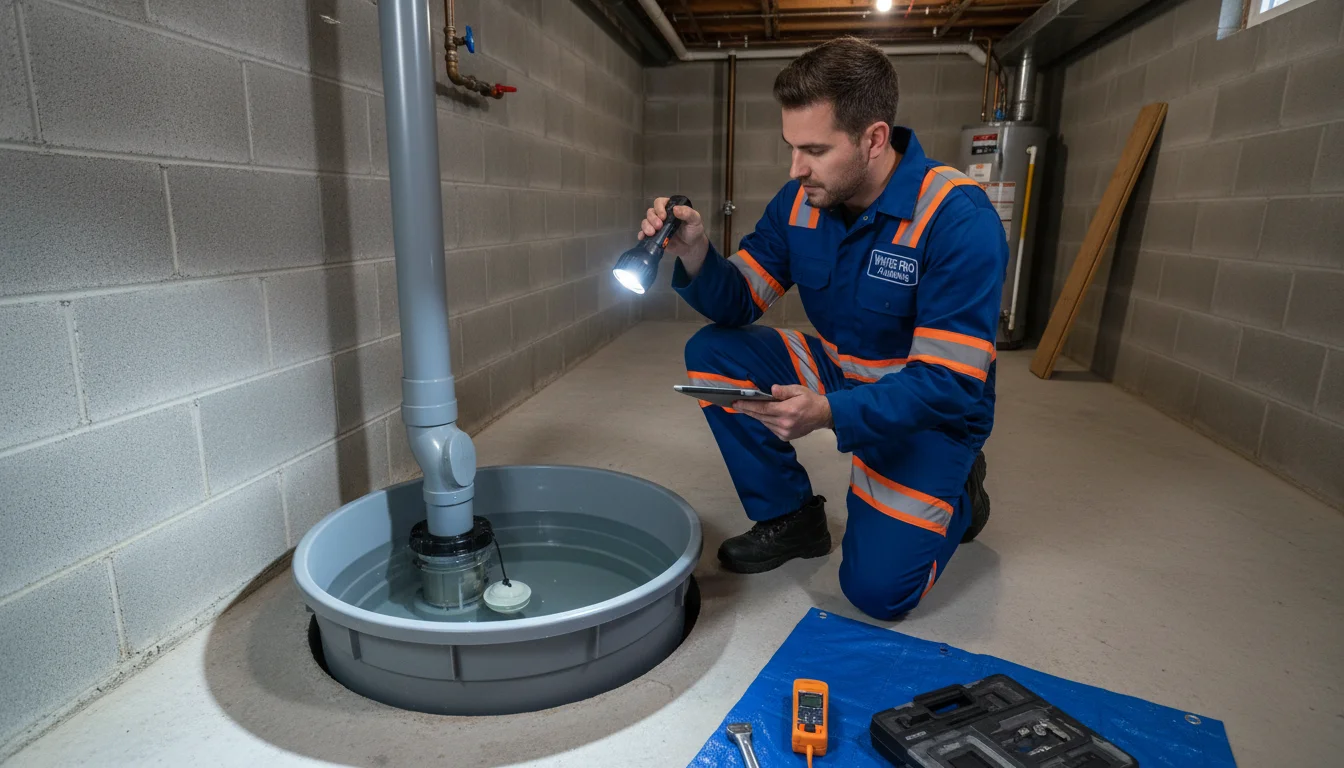
Don't wait for complete failure. Replace your pump if you notice any of these warning signs:
1. Age: 7-10 Years Old
Even if your pump seems to work fine, age alone is reason to replace. Internal components wear out gradually. The motor might still run, but pumping efficiency drops 30-40% in older units. If your pump is 7+ years old, replace it proactively before the spring thaw or fall rainy season.
2. Frequent Repairs (2+ in Past Year)
If you've called for sump pump repairs twice in the past year, stop throwing money at an aging system. Each repair costs $150-$350. After 2-3 repairs, you've spent enough to buy a new pump—and you're still at risk of failure. Replacement is more cost-effective.
3. Rust or Corrosion on Housing
Visible rust indicates water has penetrated the motor housing. Once rust starts, it accelerates rapidly. Rust flakes can also damage the impeller and seals. If you see rust spots or orange staining on the pump body, plan for replacement within 3-6 months.
4. Increased Noise (Grinding, Rattling, Vibrating)
Sump pumps aren't silent, but they shouldn't sound like a washing machine during spin cycle. Loud grinding indicates bearing failure. Rattling suggests loose components or debris in the impeller. Excessive vibration means the motor mount is failing. All these sounds = imminent failure.
5. Weaker Performance (Runs Longer, Can't Keep Up)
Does your pump run twice as long as it used to? Does the pit fill higher before the pump kicks on? These signs indicate decreased pumping capacity—the pump can't move water as efficiently. During heavy rain, a weak pump means potential flooding.
⚠️ Warning: Don't Wait Until Complete Failure
Once your pump completely fails during a storm, you face three problems: (1) Emergency service rates (50-100% premium), (2) Limited equipment availability—you get whatever's in stock, not the pump you want, (3) Potential flood damage while waiting for service. Proactive replacement costs less and protects your home. Need replacement before spring? (647) 554-4356
Sump Pump Replacement Costs in Toronto (2025)
Here's what Toronto homeowners actually pay for sump pump replacement, including equipment, labor, and typical upgrades:
| Replacement Type | Total Cost | What's Included |
|---|---|---|
| Basic Replacement (1/3 HP Pedestal) | $400 - $700 | Pump unit, labor, discharge pipe check |
| Standard Replacement (1/2 HP Submersible) | $600 - $900 | Pump, check valve, float switch, 2-year warranty |
| Premium Replacement (3/4 HP Cast Iron) | $900 - $1,200 | Heavy-duty pump, upgraded discharge, 5-year warranty |
| Battery Backup Addition | $800 - $1,200 | Battery system, charging unit, alarm, installation |
| Complete System (Primary + Backup) | $1,200 - $1,500 | Primary pump + battery backup + installation |
| Emergency Replacement (After-Hours) | $800 - $1,800 | Same as standard but with 50-100% emergency premium |
Cost Breakdown: What You're Paying For
- Pump Equipment: $200-$600 (varies by HP rating and brand)
- Labor & Installation: $150-$400 (2-4 hours for complex installations)
- Check Valve: $20-$60 (prevents backflow)
- Discharge Pipe Updates: $50-$150 (if code compliance needed)
- Battery Backup System: $400-$800 (equipment only)
- Pit Cleaning: $75-$150 (recommended with replacement)
💡 Upgrade Opportunity: Add Battery Backup Now
When replacing your sump pump, it's the perfect time to add battery backup. Installation is easier (you're already in the pit), and you'll save $100-$200 versus adding backup later as a separate project. Plus, battery backup qualifies for Toronto's Basement Flooding Subsidy—up to $1,750 reimbursement. This is essentially a free upgrade.
How to Choose the Right Size Sump Pump
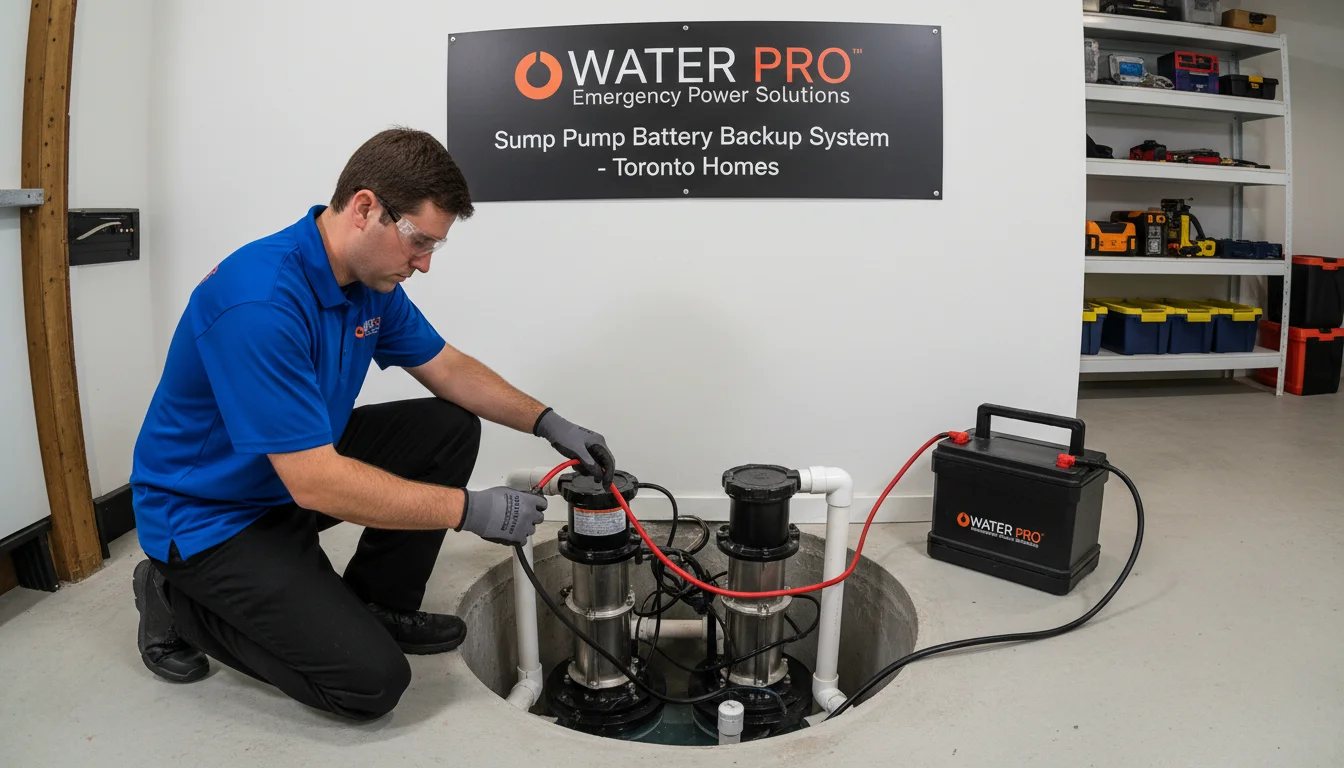
Sump pump sizing isn't about basement square footage—it's about pit fill rate and vertical lift height. Here's how to size correctly:
Pump Horsepower Guide
| Horsepower | GPH Capacity | Best For |
|---|---|---|
| 1/4 HP | 1,800-2,400 GPH | Small basements, low water volume |
| 1/3 HP | 2,400-3,000 GPH | Standard Toronto homes, moderate water |
| 1/2 HP | 3,000-4,200 GPH | Larger basements, finished spaces |
| 3/4 HP | 4,200-5,400 GPH | High water table, frequent flooding areas |
Calculate Your Required GPM (Gallons Per Minute)
Professional sizing requires measuring pit fill rate:
- Disconnect pump (or simulate by unplugging during rain)
- Time how long it takes for pit to fill from low to high water mark
- Measure pit volume (diameter × depth × 5.9 = gallons)
- Calculate GPM: Gallons ÷ Minutes to fill = Required GPM
- Multiply by 1.5 for safety margin and future-proofing
📊 Example: Sizing for North York Home
Scenario: Homeowner in Willowdale (North York) has 18-inch diameter pit, 24-inch depth. During spring thaw, pit fills from low mark (6 inches) to high mark (20 inches) in 8 minutes.
Calculation:
Pit volume: 18" diameter × 14" fill height × 5.9 = ~22 gallons
Fill rate: 22 gallons ÷ 8 minutes = 2.75 GPM
With 1.5x safety margin: 2.75 × 1.5 = 4.1 GPM minimum
Recommended Pump: 1/2 HP submersible (rated 3,000-4,200 GPH = 50-70 GPM). This provides adequate capacity for heavy spring runoff.
Don't Forget Vertical Lift
Pumps lose capacity as they push water vertically. For every 10 feet of vertical lift, you lose approximately 25% of rated capacity. Most Toronto homes discharge at ground level (5-8 feet vertical), but some homes need to pump up to 12-15 feet.
Rule of thumb: If your discharge point is more than 10 feet above the pump, increase one horsepower size (e.g., go from 1/3 HP to 1/2 HP).
Your 3 Replacement Options Explained
When replacing your sump pump, you have three strategic choices:
Option 1: Replace with Same Type (Budget-Conscious)
Cost: $400-$700 for basic pedestal or submersible replacement
When to choose:
- Current pump size adequately handles water volume
- No history of power outages during storms
- Tight budget—just need reliability restored
- Planning to move within 2-3 years
Pro: Lowest upfront cost, straightforward installation
Con: Misses opportunity to upgrade protection
Option 2: Upgrade to Better Pump (Performance Improvement)
Cost: $900-$1,200 for premium cast iron or higher HP
When to choose:
- Current pump struggled during heavy rain
- Finished basement with valuable items
- High water table area (Scarborough, Etobicoke lowlands)
- You want longer lifespan (10-12 years vs 7-10 years)
Pro: Better performance, longer warranty, quieter operation
Con: Higher initial investment
Option 3: Add Battery Backup System (Maximum Protection)
Cost: $1,200-$1,500 for primary pump + battery backup
When to choose:
- History of power outages during storms in your area
- High-value finished basement (home theater, bedrooms)
- You've experienced flooding before
- Peace of mind is worth the investment
Pro: Protects during power outages (when you need it most), qualifies for Toronto rebates
Con: Highest upfront cost, battery needs replacement every 3-5 years
💡 Pro Tip: Battery Backup Pays for Itself
A single basement flood costs $5,000-$15,000+ in cleanup, repairs, and lost belongings. A battery backup system costs $800-$1,200—less than one flood. Plus, Toronto's Basement Flooding Subsidy reimburses up to $1,750, meaning the upgrade could be free. Learn more about our complete sump pump guide.
Best Time to Replace Your Sump Pump in Toronto
Timing your replacement strategically saves money and prevents emergencies:
Optimal Replacement Windows
Why Late February/Early March is Ideal
- Before spring thaw rush: Plumbers have availability; you can schedule at your convenience
- Still dry conditions: Pit levels are typically low, making installation easier
- Regular pricing: No emergency premiums or rush fees
- Full equipment selection: You choose the pump you want, not what's left in stock
- Time to test: Pump gets broken in before critical March-April thaw period
Fall Replacement (October-November)
Fall is also excellent timing—after summer rains but before winter freeze/thaw cycles. This window gives you peace of mind for both late-fall rainstorms and early spring thaw.
What to Avoid
- April-May (Spring Thaw Peak): 3-4 week wait times, premium pricing, limited stock
- During Active Rain: Hard to work in wet pit, difficult to test new pump properly
- December-February (Frozen Ground): If discharge pipe needs outdoor work, frozen ground complicates installation
⚠️ Don't Wait for "The Perfect Time"
If your pump is showing warning signs NOW (rust, loud noises, age 8+ years), don't wait for the "optimal" season. Replace it ASAP—even in peak season—because pump failure during a storm is far worse than paying a 15% premium for faster service. Emergency replacement now beats flood damage later. (647) 554-4356
Toronto's Basement Flooding Subsidy Program
Toronto homeowners can receive up to $1,750 in rebates for eligible sump pump and backwater valve installations. Here's how to maximize your rebate:
Eligible Items & Rebate Amounts
| Item | Rebate Amount | Requirements |
|---|---|---|
| Sump Pump Installation/Replacement | Up to $1,250 | Licensed plumber, permits, inspection |
| Backwater Valve Installation | Up to $1,250 | Full-port valve, professional install |
| Combination (Pump + Valve) | Up to $1,750 | Both installed in same project |
| Sewer Lateral Lining | Up to $1,750 | Alternative to excavation |
How to Apply for Toronto Rebates
- Check Eligibility: Must be Toronto property owner, not already received subsidy
- Hire Licensed Contractor: Only licensed plumbers qualify (we handle this)
- Obtain Permits: Toronto building permit required for subsidy approval
- Complete Installation: Work must pass city inspection
- Submit Application: Within 90 days of final inspection approval
- Receive Rebate: Typically 6-8 weeks after application approval
💡 We Handle the Rebate Paperwork for You
Water Pro manages the entire rebate process—permits, inspections, and subsidy applications. You pay the full installation cost upfront, then receive your $1,250-$1,750 rebate check from the city in 6-8 weeks. We make sure your installation meets all rebate requirements. Call (647) 554-4356 to discuss your project.
Maximize Your Rebate: Do Both Projects Together
If you're replacing your sump pump AND need a backwater valve, do both in one project to maximize your rebate to $1,750. This also saves on labor costs since the plumber is already on-site and obtaining permits. Learn more about backwater valve installation.
Should You DIY or Hire a Pro?
Sump pump replacement is possible as a DIY project for experienced homeowners, but professional installation is strongly recommended. Here's why:
DIY Replacement: What's Involved
Skill Level Required: Intermediate to Advanced
Tools Needed:
- Adjustable wrench, pipe wrench, screwdriver set
- PVC pipe cutter (if replacing discharge)
- Wet/dry vacuum (to empty pit)
- Hacksaw (for cutting discharge pipe)
- Electrical tester (to verify power is off)
Steps:
- Disconnect power at breaker (NOT just unplug)
- Disconnect discharge pipe and remove old pump
- Clean pit thoroughly (remove debris, sediment)
- Install new check valve on discharge pipe
- Position new pump, connect discharge
- Test float switch operation
- Reconnect power and test pumping cycle
Time Required: 2-4 hours for straightforward replacement
Why Professional Installation is Better
- Proper Sizing: We measure pit fill rate and recommend correct HP rating
- Code Compliance: Professional installation meets Toronto building codes (required for rebates)
- Warranty Protection: DIY installation may void manufacturer warranty
- Safety: Working with electricity + water = risk; we're trained and insured
- Permit & Inspection: We handle permits, inspections, and rebate paperwork
- Discharge Pipe Check: We inspect full discharge line for clogs, freeze damage
- Pit Cleaning: Professional pit cleaning removes sediment that shortens pump life
✓ Professional Installation Checklist
- Measure pit fill rate and calculate required GPM capacity
- Inspect pit condition; repair cracks or damage if needed
- Clean pit thoroughly; remove all debris and sediment
- Install new check valve (prevents backflow)
- Position pump at correct height (off pit bottom)
- Verify float switch operates freely without obstruction
- Test discharge pipe for clogs; clear if necessary
- Check electrical connections; GFCI required by code
- Test pump operation (fill pit manually to trigger cycle)
- Provide documentation for warranty and rebate application
Professional installation costs $150-$400 in labor—a small price for peace of mind, warranty protection, and rebate eligibility. Most homeowners find the benefits far outweigh DIY savings.
Best Sump Pump Brands for Toronto (2025)
After installing hundreds of pumps across the GTA, here are the brands we trust:
Premium Tier (10-12 Year Lifespan)
- Zoeller M53 Mighty-Mate: Cast iron construction, legendary reliability. Used in commercial applications. $450-$650.
- Liberty Pumps 257: Cast iron, 3/4 HP, best for high water volume. Premium warranty. $500-$700.
- Flotec FPZS50T: Pre-assembled system, thermoplastic, good warranty. $400-$550.
Mid-Tier (7-10 Year Lifespan)
- Wayne WSS30VN: Most popular in Toronto. Stainless steel/thermoplastic. Quiet operation. $300-$450.
- Superior Pump 1/2 HP: Cast iron, excellent value. Strong performance for price. $350-$500.
- Red Lion RL-SPS33: Thermoplastic, vertical float, good for tight spaces. $275-$400.
Budget Tier (5-7 Year Lifespan)
- Superior Pump 1/4 HP Utility: Basic, reliable, low-volume applications. $150-$250.
- Everbilt 1/3 HP: Home Depot brand, decent warranty, budget-conscious. $200-$300.
💡 Brand Recommendation Based on Your Needs
Best Overall Value: Wayne WSS30VN—proven reliability, quiet, 7-10 year lifespan, available locally
Maximum Durability: Zoeller M53—cast iron will outlast your mortgage
Budget-Friendly: Superior Pump 1/3 HP—reliable performance without premium price
Battery Backup: Wayne ESP25 or Zoeller Aquanot—complete backup systems with alarms
Need help choosing? We'll assess your specific situation and recommend the best pump for your home and budget. (647) 554-4356
Extend Your New Pump's Life: Maintenance Tips
Once you've invested in a new sump pump, protect that investment with proper maintenance:
Annual Maintenance Checklist (Spring & Fall)
✓ Twice-Yearly Pump Inspection
- Pour water into pit to trigger pump cycle; verify it activates
- Listen for unusual noises (grinding, rattling indicates problems)
- Check discharge pipe exterior for clogs, ice damage
- Verify float switch moves freely without obstruction
- Inspect check valve; ensure it's not stuck open
- Clean pit if sediment buildup visible
- Test GFCI outlet; press test/reset buttons
- For battery backup: test battery under load, replace if weak
Monthly Quick Check (During Wet Seasons)
- Pour bucket of water into pit; verify pump activates within 30 seconds
- Listen for normal operating sound (should be consistent)
- Check that water level drops to low mark and pump shuts off
Battery Backup Maintenance
Battery backup systems require more frequent attention than primary pumps:
- Monthly: Test battery system by unplugging primary pump and triggering backup
- Quarterly: Check battery fluid levels (if applicable), clean terminals
- Annually: Load-test battery; if output drops below 80%, replace battery
- Every 3-5 Years: Replace battery regardless of apparent condition
Real Toronto Case Study: Proactive Replacement Saves $8,000
📋 Case Study: Scarborough Home Avoids Disaster
Homeowner: Sarah K., Scarborough (near Kennedy Commons)
Issue: 9-year-old sump pump showing rust spots, making grinding noise
Our Assessment (February 2024): Pump motor bearings failing, rust indicates housing compromise. Expected failure within 3-6 months—likely during spring thaw.
Recommendation: Immediate replacement + battery backup system. Total cost: $1,350. Toronto rebate: $1,250. Net cost: $100.
Installation (Late February): Replaced with Wayne WSS30VN 1/2 HP + battery backup. Cleaned pit, updated discharge pipe to meet code.
Outcome (April 2024): During severe April 15 storm, power went out for 6 hours. Battery backup ran continuously, preventing flooding. Sarah's finished basement (worth $40,000 in renovations) stayed completely dry. Her neighbor—with 8-year-old pump, no backup—had 4 inches of water and $8,000 in damage. Proactive replacement saved at least $8,000.
Frequently Asked Questions
Most sump pumps last 7-10 years with proper maintenance. However, pumps that run frequently during Toronto's spring thaw and heavy rain seasons may wear out closer to 7 years. Battery backup systems typically last 3-5 years before battery replacement is needed.
Replace your sump pump if it's over 7 years old, has frequent repairs (2+ in past year), shows rust or corrosion, makes loud grinding noises, or runs constantly. Repair is cost-effective for pumps under 5 years old with minor issues like switch problems or debris clogs.
Sump pump replacement costs $400-$1,500 in Toronto. Basic 1/3 HP pedestal pumps cost $400-$700, while premium 3/4 HP submersible pumps with battery backup run $1,200-$1,500. Toronto's Basement Flooding Subsidy covers up to $1,750 for qualifying installations.
Most Toronto homes need a 1/3 HP to 1/2 HP sump pump. Choose 1/3 HP for standard basements with slow water accumulation, 1/2 HP for larger basements or moderate water flow, and 3/4 HP for high water table areas or homes with frequent flooding issues.
Replace your sump pump in late February or early March—before Toronto's spring thaw but while you can still schedule service easily. Avoid waiting until the pump fails during a storm. Fall (October-November) is also good timing before winter freeze/thaw cycles begin.
Yes, battery backup is highly recommended in Toronto. Severe storms often cause power outages—exactly when you need your sump pump most. A battery backup system ($800-$1,200) provides 4-8 hours of protection and is eligible for Toronto's Basement Flooding Subsidy.
While DIY replacement is possible for experienced homeowners, professional installation is recommended. Incorrect sizing, improper discharge piping, or electrical errors can void warranties and cause flooding. Professional installation ($150-$400 labor) ensures proper setup and qualifies for Toronto rebates.
Replace your sump pump if you notice: age over 7-10 years, rust or corrosion on housing, loud grinding/rattling noises, frequent cycling (runs constantly), visible cracks in housing, or it's running but not pumping water. If you've had 2+ repairs in the past year, replacement is more cost-effective.
The Bottom Line: Replace Before You Regret It
Sump pump replacement isn't glamorous. It's not fun to spend $400-$1,500 on something you can't see and won't appreciate—until it saves your basement during a storm.
But here's the reality: Every pump eventually fails. The only question is whether it fails on your schedule or during a midnight rainstorm when you're scrambling for emergency service, paying double, and praying for no flood damage.
Smart homeowners replace proactively. They monitor pump age, watch for warning signs, and schedule replacement during optimal windows (late February/March or October/November). They upgrade to battery backup when it makes sense. And they take advantage of Toronto's generous basement flooding rebates.
If your pump is 7+ years old or showing any warning signs, don't wait. Schedule a professional assessment this week. The peace of mind is worth far more than the cost.
Need Sump Pump Replacement?
Licensed plumbers available 24/7. We handle permits, rebates, and Toronto inspections.
📞 Call (647) 554-4356Free assessment • Same-day service • 90-day guarantee • 5,234+ families helped
Related Articles



About Mike Thompson
Master Plumber • License #MP-2847 • 28 Years Experience
Mike has been installing and replacing sump pumps across the GTA since 1996. He's certified in basement flooding prevention and has helped over 1,200 Toronto homeowners avoid flood damage through proactive maintenance and upgrades. Member of the Canadian Institute of Plumbing & Heating (CIPH).
🏆 2024 Best Plumber Award - Toronto Home Services • Featured in Toronto Star, BlogTO