Frozen Pipes Toronto: Complete Prevention & Emergency Thawing Guide 2025
Frozen pipes in Toronto can be safely thawed using a hair dryer on medium heat or warm towels—never use open flames or blowtorches. Professional thawing costs $150-$400 for accessible pipes, $300-$800 for in-wall pipes. Call (647) 554-4356 immediately if you suspect a burst pipe or cannot locate the frozen section.
🚨 Emergency: Signs of a Burst Pipe
Call (647) 554-4356 immediately if you notice:
- Water spraying or gushing from walls, ceiling, or floor
- Unexplained puddles or water stains appearing rapidly
- Sound of running water when all taps are closed
- Sudden drop in water pressure throughout the home
- Visible cracks or splits in exposed pipes
⚠️ Shut off your main water valve immediately and call for 24/7 emergency service.
✅ Key Takeaways
- Prevention is cheap: $20-$50 in pipe insulation vs. $5,000+ in burst pipe damage
- Warning signs: No water flow, frost on pipes, gurgling sounds, bulging pipes
- Safe DIY methods: Hair dryer, heat lamp, warm towels, electric heating pad
- Never use: Open flames, propane torches, blowtorches, or boiling water directly on pipes
- Professional cost: $150-$400 accessible pipes, $300-$800 in-wall/underground
- Best prevention: Insulate pipes, let faucets drip, maintain 15°C minimum heat
Why Pipes Freeze in Toronto Winters
Pipes freeze when outdoor temperatures drop below -6°C (20°F) for several hours, causing water inside to freeze and expand. Toronto's brutal winters—with temperatures regularly hitting -15°C to -25°C in January and February—create perfect conditions for frozen pipes, especially in older homes built before modern insulation standards.
When water freezes, it expands by approximately 9% in volume. This expansion creates enormous pressure inside pipes—up to 2,000 PSI (pounds per square inch)—which can cause even heavy-duty copper and steel pipes to rupture. The real danger isn't just the frozen section itself; it's the pressure buildup between the ice blockage and closed faucets downstream.
According to the Insurance Bureau of Canada, water damage from burst pipes costs Ontario homeowners an average of $5,000 to $20,000 per incident. In severe cases involving flooded basements or multiple floors, costs can exceed $50,000. These figures don't include the emotional stress of displacement, lost belongings, or mold remediation down the road.
The Physics Behind Pipe Freezing
Unlike most liquids, water expands when it freezes rather than contracts. As temperatures drop, water molecules slow down and form crystalline structures (ice) that take up more space than liquid water. This is why ice floats on water—it's less dense.
In a confined space like a pipe, this expansion has nowhere to go. The ice formation starts at the coldest point (usually near an exterior wall) and grows inward. As the blockage expands, it pushes water in both directions. With closed faucets on both ends, pressure builds rapidly until the pipe fails—usually at the weakest point, which may be joints, bends, or areas with existing corrosion.
Pipes Most at Risk in Toronto Homes
These locations are most vulnerable to freezing:
- Exterior walls: Pipes running through outside-facing walls, especially in older Toronto homes built before 1980 in neighbourhoods like The Annex, Rosedale, High Park, and East York where wall insulation is often minimal (R-8 or less instead of modern R-20+)
- Unheated spaces: Garages, crawl spaces, attics, and cold basements—particularly common in Scarborough and North York bungalows and split-level homes where pipes pass through uninsulated areas
- Under kitchen sinks: Especially on exterior walls where cabinet doors block warm room air from reaching pipes. This is a frequent problem in older row houses in Riverdale, Leslieville, and Little Italy
- Outdoor hose bibs: Garden hose connections and outdoor faucets that weren't properly winterized by shutting off interior valves and draining completely
- Water meter area: The pipe entering your home from the municipal water main, particularly in older Toronto neighbourhoods with shallow water line depth or poor insulation around foundation penetrations
- Second-floor bathrooms: In homes with pipes routed through exterior walls or uninsulated attic spaces (common in older Cape Cod and bungalow-style homes)
Homes built before 1980 in neighbourhoods like High Park, The Beaches, Leslieville, and The Annex often have copper or galvanized steel pipes routed through exterior walls with minimal insulation (sometimes just R-4 or R-8). These are prime candidates for freezing during January-February cold snaps. If you live in a pre-1980 home, consider a preventative insulation upgrade for vulnerable pipes—it costs $100-$300 but can save you $10,000+ in burst pipe damage.
Toronto's Freeze Risk Timeline
January: Coldest month, average low -7°C, frequent cold snaps to -15°C or below. Highest risk period for pipe freezing.
February: Second-coldest month, sustained cold with average low -6°C. Extended cold periods create cumulative freeze risk.
December: Transitional month, occasional deep freezes catch homeowners unprepared before winter precautions are in place.
March: Warming trend begins but sudden cold snaps (-10°C to -15°C) can still freeze pipes, especially after thawing has begun.
Signs Your Pipes Are Frozen
The primary signs of frozen pipes are no water flow when you turn on faucets, reduced water pressure, visible frost or ice on exposed pipes, unusual sounds (banging, gurgling, clanking) when turning on taps, and sewage odors from drains if your drain line is frozen.
Early Warning Signs (Before Bursting)
- No water from faucet: Turn on the tap and nothing comes out, or only a tiny trickle emerges. This is the most obvious sign—test both hot and cold to determine which line is frozen
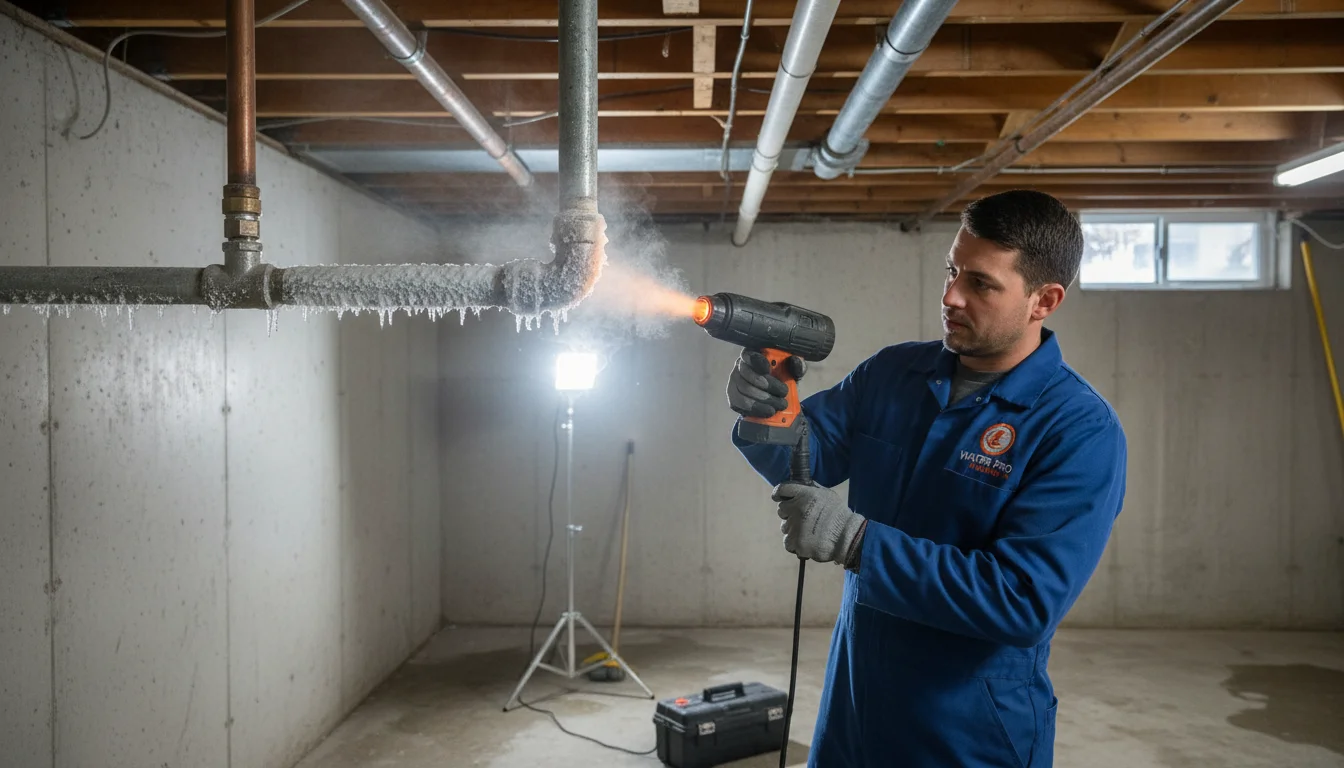
- Frost on exposed pipes: Visible frost, ice crystals, or condensation on pipes in your basement, crawl space, or under sinks. The frosted section indicates where freezing has occurred
- Strange sounds: Banging (water hammer), clanking, or gurgling when you turn on water. These sounds indicate ice blockage disrupting normal water flow
- Sewage odors from drains: If your drain line is frozen, sewer gases can't escape properly and may back up into your home, creating foul smells from sinks or tubs
- Bulging or swollen pipes: Visible swelling in pipe sections—this is extremely dangerous as it indicates the pipe is under severe stress and may burst at any moment
- Only one area affected: If water flows fine upstairs but not in the basement, or vice versa, this helps pinpoint the frozen section
- Slow draining: Water drains very slowly or not at all, indicating a frozen drain line rather than supply line
If only ONE faucet is affected, the freeze is likely in the pipe leading to that specific fixture (easier to fix). If MULTIPLE fixtures throughout your home have no water, your main supply line is frozen—this is serious and requires professional thawing equipment. Do not attempt DIY thawing of main lines. Call (647) 554-4356 immediately.
How to Locate the Frozen Section
Finding the exact location of the freeze helps you decide whether DIY thawing is safe or if you need professional help:
- Start at the problem faucet: Identify which fixture has no water or reduced flow
- Trace the supply line backward: Follow the pipe from the faucet back toward your water heater or main water line. Use a flashlight in dark basement areas
- Feel for temperature differences: Carefully feel along exposed pipes (wear gloves in very cold spaces). The frozen section will feel significantly colder than the rest of the pipe
- Look for visible frost or ice: Check for frost crystals, ice formation, or heavy condensation on pipe surfaces—this is your frozen zone
- Check high-risk areas first: Focus on pipes in exterior walls, under sinks on exterior walls, in crawl spaces, unheated basements, and garages
- Listen for sounds: Tap gently on pipes with a wrench or screwdriver. Frozen sections may sound different (duller, less resonant) than unfrozen sections
If you cannot locate the frozen section after 10-15 minutes of searching, or if the frozen pipe is inside a wall or underground, stop and call a professional. Attempting to thaw pipes you can't access can cause hidden damage or make the problem worse.
How Much Does Pipe Thawing Cost in Toronto?
Professional pipe thawing costs $150 to $800 in Toronto depending on pipe accessibility. Accessible exposed pipes cost $150-$400, while pipes inside walls, ceilings, or underground cost $300-$800. Emergency after-hours service (evenings, weekends, holidays) adds approximately $150 to the base price.
Detailed Toronto Price Breakdown (2025)
| Service Type | Price Range | Time Required | What's Included |
|---|---|---|---|
| Accessible Pipe Thawing | $150-$250 | 1-2 hours | Exposed pipes in basement, crawl space, or under sinks; includes inspection and pressure testing after thawing |
| Wall/Ceiling Pipes | $300-$500 | 2-3 hours | Specialized infrared or electric thawing equipment; may require small access holes (patching extra) |
| Underground/Main Line | $500-$800 | 3-5 hours | Electric pipe thawing machine; excavation if needed; water main thawing permit if required |
| Emergency After-Hours | +$150 | 24/7 availability | Evenings (after 6pm), weekends, statutory holidays; 60-minute response time in GTA |
| Burst Pipe Repair (if needed) | $300-$1,500 | 2-4 hours | Pipe section replacement, water damage assessment, insurance documentation, cleanup coordination |
| Prevention: Pipe Insulation | $100-$300 | 1-2 hours | Foam pipe insulation for vulnerable areas, heat tape installation where needed, winterization inspection |
Don't wait until pipes freeze. A preventative $150-$400 thawing service is infinitely cheaper than $5,000-$20,000 in water damage repairs from a burst pipe. If you notice reduced water flow during a Toronto cold snap, call (647) 554-4356 before it becomes an emergency. Our technicians can often prevent bursting with early intervention.
What Affects the Cost?
- Pipe accessibility: Exposed pipes = lower cost. Hidden pipes in walls/floors = higher cost due to specialized equipment and access work
- Location in home: Basement pipes are easiest to access. Second-floor or attic pipes require more labor and equipment
- Length of frozen section: A 2-foot frozen section thaws quickly. A 10-foot section takes much longer and costs more
- Time of service: Regular business hours (7am-6pm weekdays) cost less. Emergency after-hours service costs more but prevents catastrophic damage
- Pipe material: Copper and PEX thaw easily. Older galvanized steel pipes may require more time and specialized techniques
Safe DIY Thawing Methods (Step-by-Step)
You can safely thaw accessible frozen pipes using a hair dryer on medium heat, heat lamp positioned 12-18 inches away, electric heating pad wrapped around the pipe, or towels soaked in hot water. Always work from the faucet toward the frozen section, and never use open flames, blowtorches, or propane heaters.
Open the Affected Faucet Completely
Turn on both hot and cold handles fully. This serves two critical purposes: it relieves dangerous pressure buildup that could cause bursting, and it allows water to flow as ice begins melting. Even a slow trickle of running water helps melt ice faster than still water. Keep the faucet open throughout the entire thawing process.
Locate the Exact Frozen Section
Find the frozen area by feeling along exposed pipes for unusually cold spots (wear insulated gloves in very cold areas). Look for visible frost, ice crystals, or heavy condensation on pipe surfaces. The frozen section is typically within 3 feet of an exterior wall, in unheated spaces, or under sinks on exterior walls. If you can't locate it within 15 minutes, call a professional.
Apply Gentle, Gradual Heat
Start at the faucet end (closest to the tap) and work toward the frozen section—this allows melting water to escape through the open faucet. Use a hair dryer on medium heat (NOT high), heat lamp positioned 12-18 inches away, or towels soaked in hot water wrapped around the pipe. Move the heat source continuously—never concentrate heat on one spot for more than 30 seconds to prevent thermal shock or pipe damage.
Monitor Water Flow Restoration
As ice melts, water should begin trickling from the open faucet. Continue applying heat until full water pressure is restored at the tap. This typically takes 30-60 minutes depending on the length of frozen pipe and ambient temperature. Don't stop heating too soon—ensure complete thawing to prevent re-freezing overnight.
Inspect Thoroughly for Leaks and Damage
Once fully thawed, carefully inspect the entire pipe section for cracks, splits, pinhole leaks, or dripping water. Critical: Pipes often crack while frozen but don't leak until thawed. Watch for drips, wet spots, water stains, or spraying water. If you discover any damage, immediately shut off your main water valve and call (647) 554-4356.
Best DIY Thawing Tools (Ranked by Effectiveness)
- Hair dryer (medium heat): Most controlled heat source, easy to direct, prevents overheating. Keep 6-12 inches from pipe, move continuously. Best for: Accessible pipes under sinks, in basements
- Heat lamp (infrared or ceramic): Provides gentle, even heat over larger area. Position 12-18 inches from pipe, monitor constantly. Best for: Longer frozen sections, hard-to-reach areas
- Electric heating pad: Wrap around pipe section and plug in. Use medium setting, check every 15 minutes. Best for: Pipes in tight spaces where you can't hold a dryer
- Hot towels: Soak towels in hot tap water (NOT boiling), wrap around frozen section, replace every 5-10 minutes. Best for: Small frozen sections, supplementing other methods
- Space heater: Place in unheated room or basement to raise ambient temperature. Keep 3+ feet from all pipes and flammables. Best for: Preventing re-freezing, supplementing direct thawing
What NOT to Do: Dangerous Thawing Methods
The following methods are extremely dangerous and have caused house fires, severe burns, and catastrophic pipe damage in Toronto homes. Insurance may deny your claim if damage results from using prohibited methods.
Prohibited Thawing Methods
- ❌ Blowtorches or propane torches: Extreme fire hazard. Can instantly ignite nearby wood framing, insulation, or dust. Melts plastic pipes and damages copper pipe joints. Has caused hundreds of house fires in Ontario. NEVER USE.
- ❌ Boiling water poured directly on frozen pipes: Extreme thermal shock can crack or shatter frozen pipes instantly. Temperature differential (100°C boiling water on -10°C pipe) causes immediate failure. Use warm (not hot) water only on towels, never directly.
- ❌ Heat guns on high setting: Can reach 500°C+ and melt PVC/PEX pipes in seconds. Damages solder joints on copper pipes. If you must use a heat gun, use LOW setting only and keep 12+ inches away.
- ❌ Charcoal grills or portable BBQs: Produces deadly carbon monoxide in enclosed spaces. Extreme fire hazard. Open flame risk. People have died using these indoors.
- ❌ Kerosene or propane space heaters (unvented): Carbon monoxide poisoning risk in basements or crawl spaces. Fire hazard if left unattended or too close to pipes.
- ❌ Electrical heating cables without thermostat: Can overheat and melt plastic pipes or cause electrical fires. Only use UL-listed self-regulating heat tape with built-in temperature control.
⚠️ If You Smell Gas During Thawing
- Immediately stop thawing attempts
- Do NOT use any electrical switches, phones, or devices
- Evacuate everyone from the house
- Call Enbridge Gas emergency line: 1-866-763-5427
- Call 911 once outside and at safe distance
- Do NOT re-enter until gas company clears the home
When to Call a Professional Plumber
Call a professional plumber when frozen pipes are inside walls or ceilings, underground or in your main water line, if you discover a burst or cracked pipe, or if DIY thawing hasn't worked after 30-45 minutes. Also call immediately if multiple fixtures are affected (main line freeze) or if you smell gas.
Safe for DIY When:
- Frozen pipe is exposed and easily accessible (visible in basement, under sink, in crawl space)
- Only one fixture is affected (isolated freeze in supply line to that tap)
- No visible damage, bulging, or swelling on the frozen pipe section
- You can safely apply gentle heat without risk of fire or burns
- Pipe is copper, PEX, or PVC (avoid DIY on old galvanized steel)
- You have 1-2 hours available to monitor the thawing process continuously
Call a Professional Immediately When:
- 🚨 Pipes are inside walls or ceilings: Requires specialized infrared thawing equipment or electric pipe thawing machines to avoid cutting into drywall unnecessarily. DIY attempts can cause hidden damage or flooding inside walls.
- 🚨 Underground pipes or main water line frozen: Main line thawing needs professional-grade electric thawing machines and may require excavation. This is beyond DIY capability and attempting it can damage municipal water infrastructure.
- 🚨 Multiple fixtures affected throughout house: Indicates main supply line freeze affecting your entire plumbing system. Requires immediate professional assessment and specialized equipment.
- 🚨 Pipe has burst or is actively leaking: Shut off main water valve immediately and call for emergency service. Water damage worsens by the minute—each hour of delay adds hundreds to repair costs.
- 🚨 DIY thawing hasn't worked after 30-45 minutes: Ice blockage may be longer than expected, or freeze may be in inaccessible location. Continuing DIY attempts wastes time and risks burst during re-freezing overnight.
- 🚨 You smell natural gas or propane: Evacuate immediately and call gas company first, plumber second. Frozen pipes near gas lines create explosion risk if gas leaks develop.
- 🚨 Visible bulging or swelling in pipe: Pipe is under extreme stress and likely to burst. Professional pressure relief and thawing needed urgently.
- 🚨 Cannot locate the frozen section: If you can't find the freeze after 15 minutes of searching, it's likely in a wall, ceiling, or underground—all require professional tools to locate and thaw.
Need Emergency Pipe Thawing in Toronto?
Our licensed Master Plumbers respond within 60 minutes across Toronto, Mississauga, Brampton, and the entire GTA. Available 24/7 with specialized thawing equipment for all pipe types and locations.
📞 Call Now for Emergency Service24/7 emergency service • Upfront pricing • 90-day guarantee • 5,234+ Toronto families helped
What Professional Plumbers Do Differently
- Infrared cameras: Locate frozen sections inside walls without cutting drywall—saves you $500+ in repair costs
- Electric pipe thawing machines: Safely thaw underground or in-wall pipes using controlled electrical current through the pipe—impossible for homeowners to replicate
- Pressure testing: After thawing, pros pressure-test the system to find hairline cracks before they become floods
- Insurance documentation: Provide detailed reports and photos needed for insurance claims if burst occurs
- Prevention recommendations: Identify other vulnerable pipes before they freeze and cause repeat emergencies
How to Prevent Frozen Pipes in Toronto
Prevent frozen pipes by insulating exposed pipes with foam sleeves ($2-$5 per 6-foot section), sealing air leaks around pipes with caulk, keeping your home at 15°C minimum even when away, and letting vulnerable faucets drip slightly when temperatures drop below -10°C. These prevention steps cost $20-$50 but can save you $5,000-$20,000 in burst pipe damage.
Before Winter: One-Time Preparation (September-November)
- Insulate all exposed pipes: Wrap pipes in basements, crawl spaces, garages, and attics with foam pipe insulation ($2-$5 per 6-foot section at Home Depot, Canadian Tire, or Rona). Pay special attention to pipes within 3 feet of exterior walls. Pre-slit foam tubes slip on easily—no tools required.
- Disconnect and drain garden hoses: Before first frost (typically late October in Toronto), remove all garden hoses, drain them completely, and store indoors. Shut off interior valves leading to outdoor spigots, then open the outdoor faucet to drain remaining water. A frozen hose can back up and burst pipes inside your walls.
- Seal air leaks around pipes: Use caulk or expanding foam to seal gaps where pipes enter through walls, especially at foundation penetrations. Check behind dryers, under sinks, and around water heaters. Cold drafts blowing on pipes accelerate freezing.
- Know your main shut-off location: Locate your main water shut-off valve (usually near water meter in basement or crawl space). Test that it turns easily—corroded valves can fail in emergencies. Tag it with a bright label so anyone can find it quickly. Every family member should know where it is.
- Install heat tape on vulnerable pipes: For pipes in consistently cold areas (unheated garage walls, crawl spaces), install UL-listed self-regulating heat tape ($15-$30 per 6-foot section). This electric heating cable activates automatically when pipe temperature approaches freezing.
During Cold Snaps: Active Prevention (-10°C and Below)
- Let vulnerable faucets drip slightly: When temperatures drop below -10°C, let faucets on exterior walls drip at pencil-lead thickness. Running water resists freezing much better than still water. Focus on kitchen sink if on exterior wall, basement utility sinks, and second-floor bathrooms over unheated garages.
- Open cabinet doors under sinks: On exterior walls, open cabinet doors to allow warm room air to circulate around pipes. This simple step can raise pipe temperature by 5-10°C. Remove cleaning supplies if you have young children or pets.
- Maintain minimum 15°C heat 24/7: Never let your thermostat drop below 15°C (59°F), even when away or asleep. The cost of heating ($3-$5 per day) is trivial compared to $10,000+ burst pipe repair. If going on winter vacation, ask a trusted neighbour to check your home daily.
- Use space heaters in unheated areas: Place approved electric space heaters in basements, crawl spaces, or garages where pipes are exposed. Keep heaters at least 3 feet away from all pipes, walls, and flammable materials. Never use unvented kerosene or propane heaters indoors—carbon monoxide hazard.
- Check weather forecasts: When Environment Canada issues Extreme Cold Weather alerts for Toronto (-20°C or below), take extra precautions: increase dripping faucets to thin stream, open more cabinet doors, run clothes washer and dishwasher to circulate warm water through pipes.
Never turn heat below 15°C. Better yet, maintain 18°C for added safety margin. Ask a trusted neighbour to check your home daily and report any issues immediately. For extended absences (2+ weeks), consider shutting off main water valve and draining all pipes—hire a plumber to do this properly as DIY draining often misses pockets of water. A burst pipe while you're in Florida can cause $20,000-$50,000 in damage before discovery.
High-Risk Areas in Toronto Homes
Certain areas of Toronto homes are far more vulnerable to frozen pipes based on construction era, architectural style, and neighbourhood characteristics:
High-Risk Toronto Neighbourhoods (Pre-1980 Construction)
- The Annex & Seaton Village: Homes built 1890-1930 with original plumbing often routed through exterior walls. Minimal wall insulation (R-4 to R-8). Copper pipes in exterior walls freeze frequently during January cold snaps.
- Riverdale & Leslieville: Victorian-era row houses (1880-1920) with pipes in shared exterior walls between units. Original galvanized steel pipes more brittle when frozen. Limited crawl space access for insulation upgrades.
- High Park & Roncesvalles: 1920s-1940s homes with basement pipe routing through cold areas near foundation. Single-pane basement windows create cold spots. Uninsulated rim joists allow frigid air to reach pipes.
- North York bungalows (1950s-1970s): Crawl space construction with pipes running through unheated voids. Split-level designs with pipes in exterior walls of lower levels. Minimal insulation upgrades since construction.
- Scarborough: 1960s-1970s split-level homes with pipes routed through unheated garage walls. Attached garages create thermal bridges. Pipes serving second-floor bathrooms pass through cold zones.
Specific High-Risk Pipe Locations
- Kitchen sink on north-facing exterior wall: Coldest wall in house receives least sunlight. Cabinet blocks warm room air. Often forgotten during prevention efforts.
- Second-floor bathroom over unheated garage: Garage ceiling typically uninsulated or poorly insulated. Pipes run through cold zone with no heat source below. Common in 1960s-1980s split-levels.
- Basement laundry room on exterior wall: Often in coldest corner of basement. Utility sink and washing machine supply lines exposed. Nearby window or foundation vents create drafts.
- Water meter area near foundation: Pipe enters home from street through cold foundation wall. Often uninsulated or under-insulated. Vulnerable to extended cold periods even at -10°C.
- Pipes in unfinished attics: Homes with bathrooms or kitchens on top floor may have supply lines running through attic before dropping down to fixtures. Attic temperatures often -20°C during cold snaps.
Ontario Building Code requirements for pipe insulation and protection were significantly strengthened in 1983. Homes built before this date—especially pre-1970—often have pipes routed through exterior walls with little to no protection. If you own a pre-1983 Toronto home, consider hiring a plumber for a winter vulnerability assessment ($150-$250). Identifying and insulating at-risk pipes now prevents $10,000+ in emergency repairs later.
Does Home Insurance Cover Frozen Pipe Damage?
Most Ontario home insurance policies cover sudden water damage from burst pipes (damage to floors, walls, ceilings, belongings), but NOT the pipe repair itself. Coverage requires you maintained adequate heat (typically 13°C minimum). Damage from neglect, unheated vacant homes, or gradual deterioration is usually excluded.
What's Typically Covered by Ontario Home Insurance
- Water damage to structure: Damage to floors, subfloors, walls, drywall, ceilings, paint, trim, cabinets caused by sudden water release from burst pipe
- Personal property damage: Furniture, electronics, clothing, appliances damaged by water from burst (subject to policy limits and depreciation)
- Mold remediation: Professional mold removal if mold develops as direct result of burst pipe (typically up to $10,000-$50,000 limit depending on policy)
- Temporary housing (Additional Living Expenses): Hotel, rental, or temporary accommodation costs if home is uninhabitable during repairs (limits vary by policy)
- Emergency mitigation costs: Water extraction, emergency board-up, temporary repairs to prevent further damage (receipts required)
What's Usually NOT Covered
- The pipe repair/replacement itself: Cost to fix, thaw, or replace the frozen/burst pipe is typically excluded as "maintenance" rather than sudden damage
- Damage if home was vacant and unheated: Most policies exclude coverage if you failed to maintain heat or have someone check the property regularly (daily in winter). "Vacant" usually defined as unoccupied 30+ days.
- Gradual damage or lack of maintenance: Slow leaks, recurring freezing, damage from pipes you knew needed repair but ignored
- Outdoor pipe freezing: Damage from frozen outdoor faucets, hose bibs, sprinkler systems, or unheated garages/sheds typically excluded
- Sewer backup from frozen drain lines: Requires separate sewer backup endorsement (not standard coverage)
- Preventative costs: Insulation, heat tape, winterization services are homeowner responsibility
Ontario Insurance Requirements for Coverage
To maintain valid coverage during winter, most Ontario insurers require:
- Maintain minimum heat: Typically 13°C (55°F) or higher at all times, even when away. Some policies specify 15°C.
- Daily checks if vacant: If home unoccupied, have someone physically enter and check daily. Keep documentation (signed log, dated photos).
- Immediate notification: Report burst pipes to insurer within 24-48 hours. Delays can void coverage.
- Mitigation duty: Take reasonable steps to prevent further damage (shut off water, extract standing water, document losses).
Before any cleanup: Take extensive photos/video of all damage from multiple angles. Photograph the burst pipe, water damage, affected belongings, water meter readings. Keep all receipts for emergency plumber, water extraction, hotels, purchases. Get a detailed written report from your plumber including cause of burst. Contact your insurance company within 24 hours—most policies require prompt notification. Water Pro provides comprehensive documentation and reports specifically formatted for Ontario insurance claims.
Average Frozen Pipe Claim Costs in Ontario (2025)
- Minor burst (caught quickly): $2,000-$5,000 (single room, limited water, fast cleanup)
- Moderate burst (hours of flooding): $8,000-$15,000 (multiple rooms, flooring replacement, mold risk)
- Major burst (discovered late): $20,000-$50,000 (flooded basement, structural damage, extensive mold)
- Catastrophic (vacant home, weeks unnoticed): $75,000-$150,000+ (complete home rebuild may be required)
Frequently Asked Questions About Frozen Pipes
Signs of frozen pipes include no water flow when you turn on faucets (or only a trickle), reduced water pressure throughout the house, frost visible on exposed pipes in basement or crawl space, unusual banging or gurgling sounds when turning on taps, and sewage odors from drains if your drain line is frozen. If multiple fixtures are affected, your main line may be frozen. In Toronto homes, check pipes on exterior walls first, especially in basements, crawl spaces, and under kitchen sinks.
Professional pipe thawing in Toronto costs $150-$400 for accessible exposed pipes and $300-$800 for pipes inside walls, ceilings, or underground. Emergency after-hours service adds approximately $150. Water Pro offers 24/7 emergency service with upfront pricing—call (647) 554-4356. Prevention through insulation costs only $20-$50 in materials and can save you thousands in repair costs. If a pipe bursts, total water damage repairs typically range from $5,000 to $20,000.
You can safely thaw accessible frozen pipes using a hair dryer on medium heat, heat lamp positioned 12-18 inches away, electric heating pad, or towels soaked in hot water. Always open the faucet first, work from the tap toward the frozen section, and apply heat gradually. Never use open flames, blowtorches, propane heaters, or boiling water directly on pipes. Call a professional for pipes inside walls, underground pipes, main water lines, or if you smell gas. If DIY thawing doesn't restore flow within 45 minutes, stop and call (647) 554-4356.
Pipes typically freeze when outdoor temperatures drop below -6°C (20°F) for extended periods (6+ hours). In Toronto, pipes in unheated areas like garages, crawl spaces, attics, and pipes on exterior walls are most vulnerable during January and February cold snaps. Unprotected pipes can begin freezing within 6-8 hours at -6°C, or as quickly as 3-4 hours during extreme cold below -20°C. Wind chill accelerates freezing. Pipes with flowing water resist freezing better than those with still water.
Prevent frozen pipes by: 1) Insulating exposed pipes with foam sleeves ($2-$5 per section at Home Depot/Canadian Tire), 2) Sealing air leaks near pipes with caulk, 3) Keeping cabinet doors open during cold snaps to allow warm air circulation, 4) Letting vulnerable faucets drip slightly (pencil-lead thickness) when temps drop below -10°C, 5) Maintaining indoor temperature at 15°C minimum even when away, 6) Disconnecting garden hoses before winter, 7) Installing self-regulating heat tape on pipes in unheated areas. These steps cost $20-$50 but prevent $5,000+ in damage.
Not all frozen pipes burst, but the risk is significant—especially with copper and PVC pipes. Pipes burst when ice expands (9% volume increase) and creates pressure up to 2,000 PSI between the blockage and closed faucets. Flexible PEX pipes are more resistant to bursting than rigid copper or PVC. Quick thawing and keeping faucets open reduces burst risk by relieving pressure. Critical: Pipe bursts typically occur during thawing, not while frozen, as expanding ice finally overcomes pipe strength. Even if a pipe doesn't burst, hairline cracks can develop and leak later.
Most Ontario home insurance policies cover sudden water damage from burst pipes (floors, walls, ceilings, belongings), but NOT the pipe repair itself. Coverage requires you maintained adequate heat (typically 13°C minimum) and took reasonable precautions. Damage from neglect, unheated vacant homes (without daily checks), or outdoor pipes is usually excluded. Document all damage immediately with photos/video, keep all receipts, get a detailed plumber's report, and contact your insurer within 24 hours. Average burst pipe claims in Ontario range from $5,000 to $20,000. Water Pro provides insurance-ready documentation for claims.
Unprotected pipes in exterior walls or unheated spaces can begin freezing within 6-8 hours when outdoor temperatures drop below -6°C. Pipes in more exposed locations (crawl spaces, garages, attics) freeze faster—often within 4-6 hours. During extreme Toronto cold snaps (-20°C or below), freezing can occur in as little as 3-4 hours. Factors affecting freeze time: pipe location (interior vs. exterior wall), insulation quality, wind chill exposure, pipe material (copper freezes faster than PEX), and water flow (running water freezes much slower than standing water). This is why letting faucets drip during cold snaps is so effective.

Related Emergency Guides