
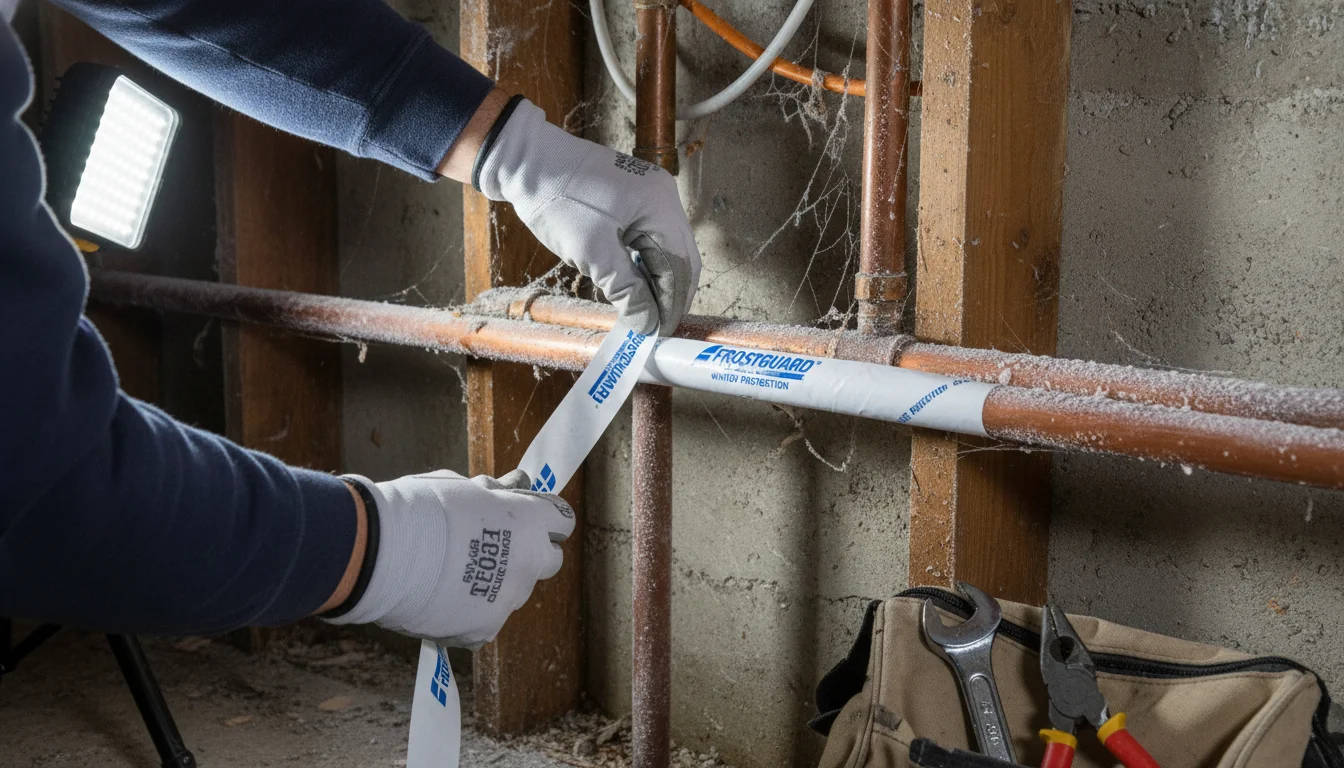
⚡ Quick Answer
Heat tape installation in Toronto costs $150-$500 depending on pipe length and heat tape type. Self-regulating heat cable ($15-$25/foot installed) is the safest choice for most homes. Priority installation areas: garage pipes, exterior wall water lines, and crawl spaces. Professional installation recommended for permanent electrical connections.
🔑 Key Takeaways
- Self-regulating heat cable adjusts power based on temperature—safer and more efficient than constant wattage
- Installation costs $150-$500 for typical residential applications (20-40 feet of pipe)
- Priority areas: garage pipes, exterior walls, crawl spaces, and water entry point
- Professional installation required for permanent electrical connections per Ontario ESA code
- Annual testing before winter ensures heat tape is working properly
📋 In This Guide
Why Toronto Homes Need Heat Tape
Toronto winters regularly hit -20°C to -30°C during cold snaps, and those extreme temperatures can freeze unprotected pipes in just a few hours. When water freezes inside a pipe, it expands with tremendous force—up to 25,000 PSI—enough to split copper, crack PVC, and rupture even galvanized steel.
The Insurance Bureau of Canada reports that water damage from frozen pipes costs Canadian homeowners $500 million annually, with average claims running $15,000-$40,000. Heat tape provides reliable freeze protection for a fraction of potential repair costs.
High-Risk Situations for Frozen Pipes in Toronto
- Pipes in unheated garages - Especially common in Scarborough, Etobicoke, and North York homes built 1960s-1980s
- Water lines in exterior walls - North-facing walls in older Toronto homes lack adequate insulation
- Crawl space plumbing - Found in many Leaside, High Park, and Beaches-area homes
- Water service entry points - First 3-6 feet where water enters from municipal supply
- Outdoor hose bibs - Even frost-free sillcocks need protection in extreme cold
- Vacation properties - Cottages and secondary homes left unattended during cold snaps
Self-Regulating vs Constant Wattage Heat Tape
The two main types of heat tape work very differently, and choosing the right one matters for safety, efficiency, and longevity.
| Feature | Self-Regulating | Constant Wattage |
|---|---|---|
| How It Works | Adjusts output based on pipe temperature | Same heat output regardless of conditions |
| Energy Efficiency | Uses power only when needed | Constant power draw all winter |
| Safety | Can't overheat—self-limiting | Requires thermostat, fire risk if overlapped |
| Installation Cost | $15-$25 per linear foot | $8-$15 per linear foot |
| Lifespan | 10-20 years | 3-5 years |
| Best For | Residential, most applications | Budget temporary solutions |
💡 Pro Tip
We recommend self-regulating heat cable for all Toronto residential installations. The higher upfront cost pays for itself through energy savings and 10-20 year lifespan. It's also the only type that can safely cross itself without overheating—important for complex pipe runs.
Heat Tape Installation Cost in Toronto
Costs vary based on pipe length, accessibility, heat tape type, and electrical requirements. Here's what Toronto homeowners typically pay:
10-15 feet, accessible pipes, plug-in cable
20-40 feet, hardwired with thermostat
50+ feet, crawl space, multiple runs
Cost Breakdown
- Self-regulating heat cable: $8-$15 per foot (materials)
- Installation labor: $75-$150 per hour
- Thermostat controller: $50-$150
- Electrical connection (ESA permit): $100-$200
- Pipe insulation: $2-$5 per foot
Where to Install Heat Tape in Your Home
Strategic placement provides maximum protection while controlling costs. Focus on these priority areas:
Priority 1: High-Risk Zones (Essential)
- Water service entry - First 6 feet where the main line enters your basement
- Garage water lines - Any pipes running through or to unheated garage
- Exterior wall pipes - Kitchen sinks on outside walls are especially vulnerable
Priority 2: Secondary Protection (Recommended)
- Crawl space plumbing - All exposed pipes under the house
- Attic pipes - Common in renovated Toronto Victorians with bathroom additions
- Outdoor hose bibs - Even if frost-free, add protection during extreme cold
Priority 3: Vacation Protection (Situational)
- Cottage main water line - Essential if leaving building unheated
- Hot tub supply lines - Exposed during winter months
- Pool house plumbing - If any water remains in pipes
⚠️ Never Install Heat Tape On:
- Plastic pipes rated below the cable's maximum temperature
- Gas lines or any non-water pipes
- Pipes containing flammable liquids
- Inside walls without accessible maintenance access
Professional Installation Process
Here's what to expect when Water Pro installs heat tape at your Toronto home:
Step 1: Assessment (30 minutes)
We inspect all vulnerable pipes, measure lengths, identify electrical access points, and check pipe material compatibility. You'll get a detailed quote before any work begins.
Step 2: Surface Preparation
Pipes are cleaned and any existing corrosion addressed. Aluminum tape applied at key points ensures even heat transfer. Proper surface prep doubles heat tape effectiveness.
Step 3: Cable Installation
Heat cable is wrapped along the bottom of horizontal pipes (where water settles first) and spiraled around vertical runs. Spacing follows manufacturer specs—typically 6" apart for self-regulating cable.
Step 4: Insulation Cover
Foam pipe insulation installed over the heat cable retains warmth and improves efficiency by 40%. We use minimum R-4 insulation for Toronto climate conditions.
Step 5: Electrical Connection
For permanent installations, a licensed electrician connects the heat cable to a dedicated circuit with appropriate GFCI protection. Thermostat controller set to activate at 5°C.
Step 6: Testing & Documentation
System tested for proper operation, amp draw verified, and you receive documentation for your records and home insurance.
DIY vs Professional Installation
When DIY Makes Sense
- Plug-in heat cables on easily accessible pipes
- Outdoor hose bib protection kits
- Temporary solutions for vacation homes
- You're comfortable with basic pipe work and electrical safety
When to Call a Professional
- Permanent hardwired installations (Ontario ESA code requires licensed electrician)
- Crawl space or difficult-access locations
- Heat tape on plastic pipes (temperature limits critical)
- Multiple pipe runs requiring coordinated installation
- Insurance documentation or permit requirements
Heat Tape Maintenance & Testing
Annual maintenance ensures your freeze protection works when you need it most.
Fall Pre-Winter Checklist
- Visual inspection - Check for damage to outer jacket, exposed wires, or crushed sections
- Plug in/power on test - Verify the cable warms up within 15 minutes
- Thermostat check - Confirm activation temperature setting (typically 5°C)
- Insulation inspection - Repair any damaged or missing pipe insulation
- Electrical connections - Ensure plugs are secure and GFCI is functioning
Signs Your Heat Tape Needs Replacement
- Cable doesn't warm up when plugged in
- Breaker trips when heat tape is activated
- Visible damage to outer jacket or exposed conductors
- Pipes freeze despite heat tape being powered on
- Age exceeds 15 years for self-regulating or 5 years for constant wattage
Protect Your Pipes Before the Next Cold Snap
Water Pro installs self-regulating heat cable throughout the GTA. Same-week installation available.
📞 Call (647) 554-4356Free quotes • Licensed & Insured • 90-Day Guarantee
Frequently Asked Questions
How much does heat tape installation cost in Toronto?
Heat tape installation in Toronto costs $150-$500 depending on the length of pipe and type of heat tape used. Self-regulating heat cable costs $15-$25 per linear foot installed, while constant wattage tape is $8-$15 per foot. A typical 20-foot installation runs $300-$500 with materials and labor.
What is the difference between heat tape and heat cable?
Heat tape (flat, ribbon-style) and heat cable (round, flexible) are often used interchangeably. The key difference is self-regulating vs constant wattage. Self-regulating cable adjusts output based on temperature and won't overheat, making it safer and more energy-efficient. Constant wattage is cheaper but requires a thermostat and carries higher fire risk if installed incorrectly.
Can I install heat tape myself or do I need a plumber?
Basic heat tape on exposed pipes can be DIY, but Toronto building code requires a licensed electrician for permanent electrical connections. Plumbers should install heat tape on pipes in crawl spaces or difficult areas. Professional installation ensures proper overlap, insulation coverage, and thermostat setup for safe, effective freeze protection.
How much electricity does heat tape use?
Self-regulating heat tape uses 5-8 watts per linear foot in cold conditions, dropping near zero in mild weather. A 30-foot installation runs about 240 watts at -20°C—similar to 4 light bulbs. Monthly cost during winter averages $20-$40. Constant wattage tape uses more power continuously regardless of temperature.
Where should heat tape be installed in Toronto homes?
Priority locations for heat tape in Toronto homes include: pipes in unheated garages, water lines in exterior walls (especially north-facing), pipes in crawl spaces, outdoor hose bibs, and any pipes that have frozen previously. Focus on the first 3-6 feet of water entry into the house—the most vulnerable zone during extreme cold.
How long does heat tape last before replacement?
Quality self-regulating heat cable lasts 10-20 years with proper installation. Constant wattage tape typically needs replacement every 3-5 years. Signs of failure include: tripped breakers, cold spots on pipes, visible damage to outer jacket, or pipes freezing despite heat tape being on. Test heat tape annually before winter.
Mike Thompson
Master Plumber & Drain Specialist
Licensed Master Plumber with 25+ years experience serving Toronto. Specializes in freeze protection, pipe repair, and emergency plumbing services.