Pipe Insulation Toronto: Complete Freeze Prevention Guide 2025
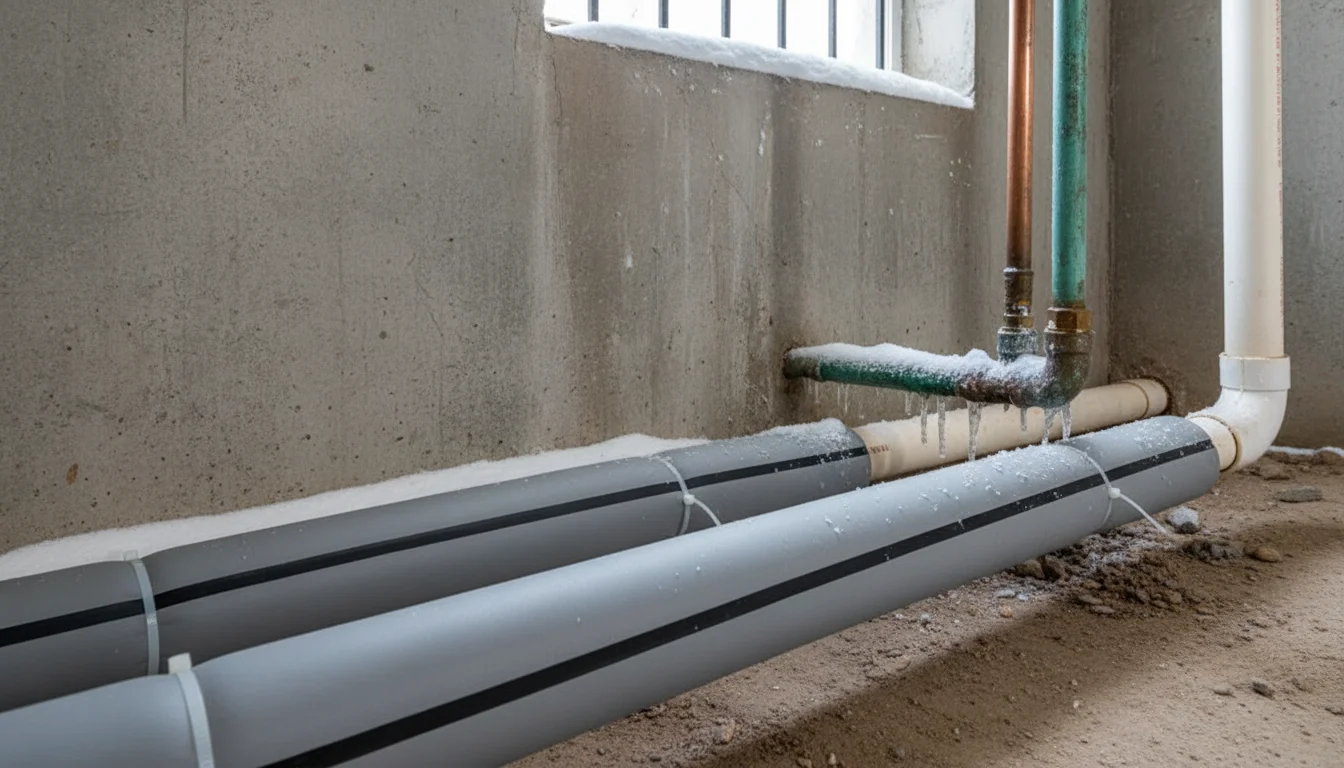
💡 Quick Answer: Pipe Insulation in Toronto
Closed-cell foam insulation (1.5-2 inches thick) is essential for Toronto's -20°C winters, preventing $5,000-15,000 freeze damage. Costs $2-4 per linear foot for materials, with professional installation at $3-6/foot labor. Combine foam with self-regulating heat tape for vulnerable areas (crawl spaces, exterior walls). Frost-proof outdoor faucets are code-required in Toronto since 1980s. Complete home insulation ($1,500-3,000) prevents ONE emergency freeze repair ($8,000-12,000).
📋 Key Takeaways
- Closed-cell foam outperforms fiberglass in Toronto climate (R-6 to R-8 vs. R-3.2 to R-4 per inch)
- Heat tape + foam insulation provides redundant protection in -20°C conditions
- Frost-proof faucets required on ALL exterior outlets (Toronto Building Code)
- Professional installation prevents gaps causing 40% of DIY failures
- Prevention cost ($1,500-3,000) is 1/3 to 1/5 of emergency repairs ($5,000-15,000)
- Etobicoke, North York, Vaughan most vulnerable (extreme exposure)
- Why Pipe Insulation Is Critical in Toronto
- Types of Pipe Insulation: Foam vs. Fiberglass
- DIY Installation vs. Professional Services
- Frost-Proof Faucets: Code Requirements
- Heat Tape Installation & Protection
- Seasonal Maintenance Checklist
- Emergency Protocol: If Pipes Freeze
- Cost Analysis: Prevention vs. Repair
- Frequently Asked Questions
Why Pipe Insulation Is Critical in Toronto Winters
Toronto winters are unforgiving. With temperatures regularly dropping to -15°C to -20°C, unprotected pipes face continuous freeze risk from December through March. A single frozen pipe section doesn't just stop water flow—it creates rupture risk worth $5,000-15,000 in emergency repairs, structural damage, and insurance complications.
Toronto's Climate Challenge (Why Standard Insulation Fails)
Unlike southern Ontario or temperate climates, Toronto experiences sustained cold snaps that last 3-7 days. Standard fiberglass pipe wrap (R-3.2 per inch) loses effectiveness below -10°C due to moisture absorption from humidity in crawl spaces and basements. The water supply lines—constantly under pressure—freeze faster than gravity-fed drainage pipes, making active protection (heat tape) necessary for reliable winter operation.
Areas most vulnerable in Toronto:
- North York/Vaughan: Elevated areas with wind exposure, exterior wall piping
- Etobicoke: Lakefront microclimates, older homes with poor basement insulation
- Scarborough: Bluffs region temperature variations, clay soil poor heat retention
- Downtown Toronto: Heritage buildings with non-standard pipe routing
Types of Pipe Insulation: Foam vs. Fiberglass Comparison
| Insulation Type | R-Value/Inch | Cost/Foot | Toronto Rating |
|---|---|---|---|
| Closed-Cell Foam | R-6 to R-8 | $3-5 | ⭐⭐⭐⭐⭐ Ideal |
| Open-Cell Foam | R-3.5 to R-4 | $1.50-2.50 | ⭐⭐⭐ Fair |
| Fiberglass Wrap | R-3.2 to R-4 | $0.75-1.50 | ⭐⭐ Poor |
| Mineral Wool | R-3.7 to R-5 | $2-3.50 | ⭐⭐⭐⭐ Good (fire-rated) |
| Heat Tape (Self-Reg) | Active heating | $2-3/6ft | ⭐⭐⭐⭐⭐ Essential add-on |
Why Closed-Cell Foam Wins in Toronto
Closed-cell foam's molecular structure contains trapped air pockets, delivering twice the R-value per inch compared to fiberglass. More importantly, its moisture-resistant properties prevent the degradation that destroys fiberglass in Toronto's humid basements and crawl spaces. A 1.5-inch foam layer provides equivalent protection to 2.5-3 inches of fiberglass—while taking up 40% less space in tight utility areas.
DIY Installation vs. Professional Services
DIY Pipe Insulation (Best For Accessible Pipes)
Self-install foam wrap works for visible, accessible basement water lines. You'll need:
- Closed-cell foam pipe sleeves (1.5-2 inches): $150-300
- Duct tape or pipe insulation adhesive: $20-40
- Heat tape (optional but recommended): $50-150
- Pipe hangers/supports: $40-80
- Time: 6-12 hours for average 100-foot home
Common DIY mistakes causing 40% failure rate:
- Gaps at pipe junctions and fittings (freeze points)
- Wrapping supply lines only (ignoring vulnerable elbows)
- Incorrect tape sealing (water infiltration)
- No support for weight, causing insulation to sag
- Skipping heat tape in high-risk areas
Professional Installation (Recommended for Complex Systems)
Plumber-installed insulation ($1,500-3,000 for average home) includes:
- Complete survey of exposed/vulnerable pipes
- Proper thickness (1.5-2 inches) applied seamlessly
- Heat tape integration in crawl spaces and exterior walls
- Structural supports preventing compression
- Vapor barriers to prevent moisture intrusion
- 10-year warranty on materials and labor
💡 Pro Tip: Heat Tape Selection
Self-regulating heat tape (adjusts wattage based on temperature) is essential for Toronto winters. Fixed-wattage tape can overheat in mild December weather, wasting electricity ($200-300 annually). Self-regulating tape costs $15-30 per 6-foot section but pays for itself through energy savings. Choose -30°C rated tape with automatic thermostat control.
Frost-Proof Faucets: Toronto Building Code Requirements
Why Traditional Outdoor Faucets Fail in Toronto
A standard outdoor spigot installed on Toronto's pre-1980s homes has 2-3 inches of exposed stem outside, directly exposed to -20°C cold. Water inside the stem freezes solid, rupturing the brass fitting. One burst faucet costs $3,000-5,000 in wall damage, interior water damage, and basement flooding.
Toronto Building Code (updated 1989) requires frost-proof silcocks on ALL exterior water outlets. If your home has traditional faucets, upgrading is a legal requirement, insurance requirement, and financial necessity.
How Frost-Proof Faucets Work
A frost-proof silcock (also called antifreeze hose bib) has an internal shut-off valve located 6-12 inches INSIDE the house wall. When you turn the handle, it opens the internal valve, allowing water to flow through exterior stem to the hose. When shut, water drains from the exposed stem back into the wall, eliminating freeze risk.
Frost-Proof Faucet Costs in Toronto
- DIY Replacement (2-3 hours): $40-80 faucet + $20-40 tools = $60-120
- Professional Installation: $150-250 labor + $50-100 faucet = $200-350 total
- Multiple Exterior Outlets: $300-800 professional (4-6 outlets)
⚠️ Warning: Prevent Freeze-Burst Disasters
One unprotected outdoor faucet can cause $5,000-8,000 damage in a single Toronto winter night. Water intrusion from a burst silcock travels through walls into finished basements, damaging drywall, flooring, furnishings. Insurance claims often deny coverage if frost-proof faucet wasn't installed (Building Code violation). Upgrade all exterior outlets BEFORE December 1st annually.
Heat Tape Installation & Protection Strategy
Where Heat Tape Is Critical (Toronto Priority Areas)
Heat tape should be installed on:
- Crawl Space Water Lines: Most freeze-prone area in Toronto homes
- Exterior Wall Pipes: North-facing walls, no interior insulation barrier
- Unheated Basement Sections: Areas below 10°C consistently
- Water Meter Lines: Outdoor meter pits if not buried below frost line
- Main Supply Entry Points: Where water enters from underground
Heat Tape Application (Step-by-Step)
- Clean pipe surface completely (dust, debris reduce adhesion)
- Wrap self-regulating heat tape spirally around pipe (3-inch spacing)
- Cover heat tape with aluminum foil for heat distribution
- Apply foam insulation sleeve over tape (traps heat)
- Plug into grounded 120V outlet with thermostat control
- Set thermostat to 5°C activation (Toronto winter protocol)
- Test during October (before freezing season)
Heat Tape Power Consumption
A 100-foot heat tape setup runs roughly 500-800 watts during active heating. At Toronto hydro rates (~$0.15/kWh), monthly cost during heating season (Dec-Feb, 90 days) is approximately $55-90. This cost is negligible compared to $8,000-12,000 freeze damage.
Seasonal Maintenance & Winter Readiness Checklist
October Preparation (Before Freezing Season)
- ✓ Inspect ALL exposed pipes for existing insulation damage or gaps
- ✓ Clean gutters (prevent ice dam water from flowing into exterior walls)
- ✓ Test heat tape systems (plug in, verify activation at 5°C)
- ✓ Seal air leaks around pipe entry points
- ✓ Ensure crawl space vents are clear
- ✓ Drain exterior hoses, store indoors
- ✓ Test all frost-proof faucets
December-February Monitoring
- ✓ Check heat tape indicator lights monthly
- ✓ Monitor basement temperature (should stay above 5°C)
- ✓ Keep cabinet doors under sinks OPEN (allows heating)
- ✓ If temperature drops below -15°C, let kitchen faucet drip
- ✓ Inspect for moisture/condensation on insulation
March Post-Winter Inspection
- ✓ Remove heat tape to inspect for damage, corrosion
- ✓ Check insulation integrity (cracks, compression, moisture damage)
- ✓ Plan replacement if insulation shows degradation
- ✓ Schedule professional inspection if any freeze events occurred
Emergency Protocol: If Pipes Freeze
Despite best prevention efforts, pipes occasionally freeze during extreme cold snaps. Immediate action prevents rupture and $8,000+ damage:
Warning Signs of Frozen Pipes (Act Within 30 Minutes)
- No water at single fixture: Likely local freeze at that line
- No water in entire section: Freeze at supply line
- Hissing/banging sound in walls: Pressure buildup from partial freeze
- Frost or ice on exterior wall pipes: Imminent freeze risk
Emergency Thawing Steps
- Locate the frozen section (look for frost, feel for cold spots)
- Safely apply heat: Hair dryer on high (10-15 minutes), heat lamp, or pipe warming tape. Never use torch or blowtorch!
- Open nearby faucets (allows water flow as ice melts)
- Apply continuous heat for 30-60 minutes
- Once water flows, continue heating 10-15 minutes
- Call (647) 554-4356 if you cannot locate frozen section
Pipe Insulation Cost Analysis: Prevention vs. Repair
| Scenario | Cost | Risk Level |
|---|---|---|
| Foam Insulation (DIY) | $300-600 | 30% freeze risk (gaps) |
| Professional + Heat Tape | $1,500-3,000 | <5% freeze risk |
| No Protection | $0 upfront | 70% freeze risk |
| Freeze Damage Restoration | $8,000-12,000 | Insurance denial risk |
| Complete Basement Flood | $15,000-25,000 | Full remediation + mold |
Financial Bottom Line: Professional pipe insulation ($1,500-3,000) costs 15-25% of average freeze damage ($8,000-15,000). One prevented freeze episode pays for itself completely. Over 10-year lifespan, insurance premium savings recoup additional costs.
Frequently Asked Questions About Pipe Insulation
