Licensed Plumber Toronto: TSSA Credentials & Verification Guide
💡 Quick Answer: What Makes a Plumber Licensed?
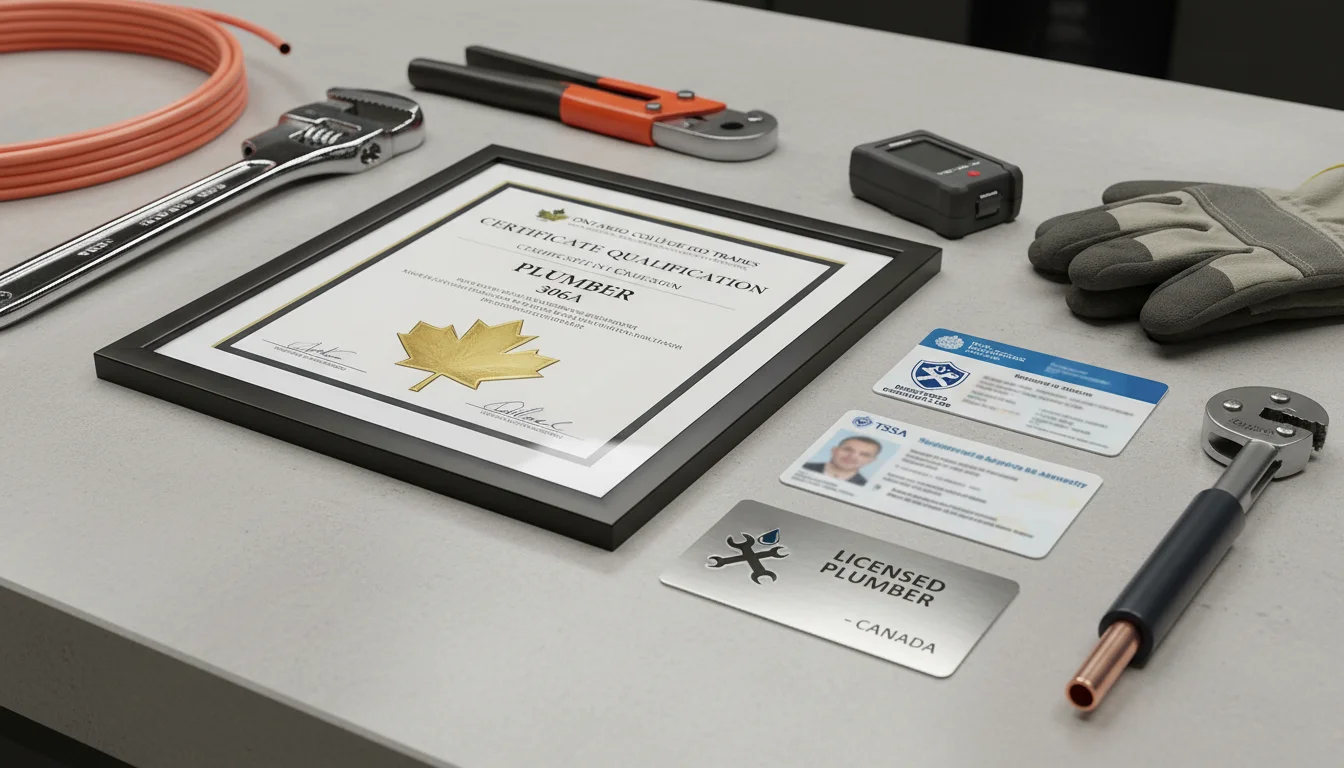
Licensed plumbers in Toronto must hold valid TSSA (Technical Standards and Safety Authority) certification proving completion of apprenticeship (8,000+ hours), technical exams, and background checks. Ontario Regulation 941 mandates this licensing. You can verify licenses online at the TSSA website or request credentials before hiring. Unlicensed plumbing violates Ontario law and voids homeowner insurance.
📋 Key Takeaways
- TSSA certification is mandatory for all plumbers working in Ontario
- Verify licenses at TSSA website or request license number directly
- Three main license levels: Apprentice, Journeyperson, Master Plumber
- Ontario Regulation 941 sets training hours, exam requirements, safety standards
- Unlicensed plumbing is illegal and voids homeowner insurance coverage
- Licensed plumbers carry $2M+ liability insurance as legal requirement
You wouldn't let someone without a driver's license drive your car. Yet many Toronto homeowners hire unlicensed plumbers—often without realizing the legal and financial risks.
After 28 years managing licensed plumbing crews, I've seen too many renovations derailed by unlicensed work. Insurance claims denied. Home inspections failed. Code violations cited by inspectors. For immediate peace of mind, call (647) 554-4356 to speak with our licensed master plumbers.
What is TSSA Certification and Why It Matters
The Technical Standards and Safety Authority (TSSA) is an independent agency created by the Ontario government to license and regulate plumbers, gas technicians, and other skilled trades. Think of it like the medical licensing board for plumbers.
TSSA Certification Proves Three Critical Things:
- Technical Competence: Rigorous apprenticeship (minimum 8,000 hours) covering codes, safety, and best practices
- Exam Passage: Written tests on Ontario plumbing code, materials, system design, and troubleshooting
- Background Check: Criminal record screening and character verification for consumer protection
💡 Pro Tip: Insurance Protection
A licensed plumber carries $2 million minimum liability insurance—required by Ontario law. If something goes wrong (burst pipe, water damage), that insurance protects you. Unlicensed plumbers? Zero coverage. Any damage becomes your liability.
The Three TSSA Plumber License Levels in Ontario
Not all plumber licenses are equal. Here's what each level means:
1. Apprentice Plumber (Levels A1, A2, A3)
Entry-level training program (typically 3-4 years). Apprentices work under supervision of journeyperson or master plumber. Cannot work independently or sign off on installations.
- Training Required: 8,000 hours minimum on-the-job + classroom
- Can Do: All plumbing work under direct supervision
- Cannot Do: Unsupervised work, complex design decisions
2. Journeyperson Plumber (JP)
Full-qualified plumber eligible to work independently across Ontario. This is the most common license you'll encounter for residential service calls.
- Requirements: 8,000+ hours apprenticeship + exam passage
- Can Do: All residential and commercial plumbing work independently
- Signature Authority: Can certify installations to building inspectors
3. Master Plumber (MP)
The senior license. Master plumbers manage crews, handle complex projects, run plumbing businesses, and design systems.
- Requirements: Journeyperson license + 2+ additional years + advanced exam
- Business Authority: Can own and operate licensed plumbing company
- Common In: Large projects, company ownership, specialized work
Understanding Ontario Regulation 941: The Law
Ontario Regulation 941 is the legal framework governing all plumbing licensing and work standards. It exists because bad plumbing causes real harm:
- Frozen pipes from improper insulation → $10,000+ water damage
- Cross-contamination of drinking water → public health hazard
- Improper sewer installation → basement backups, soil contamination
Mandatory Training Hours by License Level
| License Level | Total Hours | Classroom | On-Job |
|---|---|---|---|
| Apprentice (A1) | 2,000 | 800 | 1,200 |
| Apprentice (A2) | 4,000 | 1,600 | 2,400 |
| Apprentice (A3) | 2,000 | 800 | 1,200 |
| Journeyperson (JP) | 8,000 | 3,200 | 4,800 |
| Master Plumber (MP) | 10,000+ | 4,000+ | 6,000+ |
⚠️ Legal Penalties for Unlicensed Plumbing
Unlicensed plumbers face fines up to $50,000 AND jail time. Homeowners hiring unlicensed plumbers may face insurance claim denial, home sale complications, and liability for injuries. If work causes damage and no license exists, you're liable for 100% of repairs.
How to Verify a Plumber's TSSA License
Three simple steps to verify any plumber's credentials before hiring:
Step 1: Ask for License Number
Call the plumber's business and ask: "Can you provide your TSSA license number and confirm your license level?" Legitimate licensed plumbers will provide this immediately.
Step 2: Request Photo ID
When the plumber arrives, ask to see photo ID with license number. Licensed plumbers carry physical credentials.
Step 3: Verify Online at TSSA
Visit the Technical Standards and Safety Authority (TSSA) website → Licensing section → Verify a license. The database shows:
- License holder's full name
- Current license level (Apprentice, JP, MP)
- License expiration date
- Any disciplinary history or suspensions
- Whether license is active or expired
Red Flags: Warning Signs of Unlicensed Plumbers
- Cash-only payment (legitimate businesses accept credit cards)
- No written estimate (licensed plumbers provide documentation)
- Reluctant to show credentials (major red flag)
- No business address or phone (uses only personal cell)
- No liability insurance (asks you to assume risk)
- Prices 30-50% below market (often cutting corners)
Insurance & Home Sale Implications
Most homeowner insurance policies explicitly deny claims for damage resulting from unlicensed plumbing work.
Insurance Claim Denial Scenario
You hire an unlicensed plumber for $500 worth of water line work. Six months later, a pipe bursts, causing $50,000 in basement water damage. You file insurance claim. Insurance investigator discovers unlicensed work. Claim denied. You pay 100% out of pocket.
Home Sale Red Flag
Buyers' home inspectors specifically check for permits and licensed work. Unpermitted plumbing can:
- Kill the sale entirely
- Require remediation ($5,000-$20,000 typical cost)
- Lower home value significantly
- Create title issues if lien is placed
Frequently Asked Questions
