🔊 Quick Answer: What Is Sewer Line Repair?
Sewer line repair restores damaged underground pipes that carry wastewater from your home to the city main. Toronto plumbers use trenchless methods (CIPP lining, pipe bursting) or traditional excavation depending on damage severity. Repair costs range from $150 for spot fixes to $15,000+ for full-line rehabilitation. Call (647) 554-4356 for same-day diagnosis.
Key Takeaways
- 80% of sewer repairs can be done without digging (trenchless)
- CIPP lining costs $80-$250/foot and lasts 50+ years
- Tree roots cause 40% of Toronto sewer line damage
- Camera inspection ($150-$350) is essential before any repair
- Most repairs take 1-2 days vs. 3-5 days for excavation
- City of Toronto permits required for major repairs ($150-$500)
When your sewer line fails, you need solutions—not sales pitches. After repairing over 2,000 sewer lines across the GTA, I've seen every type of damage and know which repair method works best for each situation. This guide explains exactly what happens during sewer line repair, so you can make informed decisions when it matters most.
Whether you're dealing with slow drains, sewage smells, or a complete backup, understanding your options puts you in control. For immediate help, call (647) 554-4356—we offer free camera inspections with every repair quote.
What Is Sewer Line Repair?
Your sewer line is the main pipe (typically 4-6 inches diameter) that runs from your home's plumbing system to the city sewer main at the street. In Toronto, homeowners are responsible for their sewer lateral—the section from the house to the property line, and in many cases, all the way to the city connection.
Sewer line repair addresses damage to this pipe without full replacement. Depending on the problem, repair might involve:
- Spot repair: Fixing a single damaged section (1-4 feet)
- Pipe lining: Installing an epoxy-coated liner inside the existing pipe
- Pipe bursting: Breaking the old pipe while pulling new pipe through
- Section replacement: Excavating and replacing a damaged segment
The goal is restoring full flow capacity while preserving your landscaping, driveway, and budget. Modern trenchless methods make this possible for most Toronto homes.
7 Warning Signs Your Sewer Line Needs Repair
Sewer problems rarely appear suddenly. Most homeowners notice warning signs for weeks or months before a complete failure. Here's what to watch for:
🚨 Multiple Drain Backups
When toilets, sinks, and showers backup simultaneously, your main line is blocked. This is an emergency—call immediately.
💨 Sewage Smell in House
Rotten egg odor from drains or basement indicates sewer gas escaping through cracks or breaks. Health hazard—address immediately.
🔊 Gurgling Sounds
Gurgling from toilets when using other fixtures signals air trapped in a partially blocked line. Early warning sign.
🐌 Slow Drains Throughout
When every drain is slow (not just one), the problem is in the main sewer line, not individual branch lines.
🌿 Lush Lawn Patches
Unusually green grass over the sewer line? Leaking sewage fertilizes the lawn. Also watch for sinkholes or wet spots.
🏠 Foundation Cracks
Sewer leaks can erode soil beneath foundations, causing settling and cracks. Especially common in older Toronto homes.
🐀 Pest Problems
Rodents and insects enter through sewer line cracks. Sudden pest infestations may indicate pipe damage.
💡 Pro Tip from Mike
If you notice any of these signs, don't wait. A $150-$350 camera inspection can identify problems before they become emergencies. We've seen $500 repairs turn into $15,000 replacements because homeowners delayed. Call (647) 554-4356 for same-day diagnosis.
What Causes Sewer Line Damage in Toronto?
Toronto's climate, mature trees, and aging infrastructure create unique challenges for sewer lines. Here are the most common causes of damage we encounter:
1. Tree Root Intrusion (40% of Cases)
Toronto's beautiful tree canopy is a sewer line's worst enemy. Roots from maples, willows, and poplars seek moisture in sewer pipes, entering through joints and cracks. Once inside, roots create blockages and crack pipes from within.
High-risk neighborhoods: Forest Hill, Rosedale, High Park, The Beaches, Leaside—anywhere with mature trees over 30 years old. Read more about tree root problems in sewer lines.
2. Pipe Age and Material Degradation
Many Toronto homes built before 1970 have clay (terracotta) or even Orangeburg (tar paper) pipes. These materials have a 50-75 year lifespan—many are now failing.
| Pipe Material | Era | Lifespan | Common Issues |
|---|---|---|---|
| Clay/Terracotta | Pre-1970 | 50-60 years | Root intrusion at joints, cracking |
| Orangeburg | 1945-1972 | 25-50 years | Collapse, deformation, water absorption |
| Cast Iron | 1920-1980 | 75-100 years | Interior corrosion, scale buildup |
| PVC | 1970-present | 100+ years | Joint separation, rarely fails |
| HDPE | 2000-present | 100+ years | Virtually maintenance-free |
3. Ground Movement and Frost Heave
Toronto's freeze-thaw cycles cause significant ground movement. When soil freezes (down to 5 feet in severe winters), it expands, shifting pipes and separating joints. This is why we see more sewer emergencies in spring—damage from winter settling becomes apparent as the ground thaws.
4. Grease and FOG Buildup
Fats, oils, and grease (FOG) poured down drains coat pipe walls and harden. Over time, these deposits narrow the pipe diameter and trap debris. Commercial kitchens and older homes without grease traps are most affected.
5. Flushing Non-Degradables
"Flushable" wipes aren't flushable. Neither are feminine products, cotton swabs, or dental floss. These items accumulate at joints and rough spots in pipes, creating blockages that require professional removal.
Sewer Line Repair Methods: Which Is Right for You?
Modern sewer repair offers multiple solutions depending on your pipe's condition, material, and location. Here's what each method involves and when it's appropriate:
🔧 Spot Repair
- ✓ Fixes isolated damage (1-4 feet)
- ✓ Fastest method (2-4 hours)
- ✓ Minimal excavation if trenchless
- ✓ Best for single cracks or joint failures
- ✗ Not suitable for widespread damage
Ideal for: New cracks, localized root intrusion, joint separations
🛡️ CIPP Pipe Lining
- ✓ No digging required (trenchless)
- ✓ Creates seamless "pipe within pipe"
- ✓ Lifespan: 50+ years
- ✓ Prevents future root intrusion
- ✗ Slightly reduces pipe diameter
Ideal for: Multiple cracks, root damage, aging pipes with structural integrity
💪 Pipe Bursting
- ✓ Complete pipe replacement (trenchless)
- ✓ Can upsize diameter (4" to 6")
- ✓ New HDPE pipe: 100+ year life
- ✓ Only 2 access pits needed
- ✗ Requires straight pipe runs
Ideal for: Collapsed pipes, severely damaged lines, full replacement needs
⛏️ Traditional Excavation
- ✓ Works for any pipe condition
- ✓ Access to repair connections
- ✓ Visual inspection of surrounding soil
- ✗ Destroys landscaping/driveway
- ✗ Takes 3-5 days minimum
Ideal for: Bellied pipes, offset joints, when trenchless isn't possible
⚠️ When Trenchless Won't Work
Trenchless methods require at least 50% of the original pipe structure. If your pipe has collapsed, has severe bellies (sagging sections), or multiple offset joints, excavation may be your only option. A camera inspection reveals the truth—never accept a repair quote without one.
The Sewer Line Repair Process: What to Expect
Here's exactly what happens when you call Water Pro for sewer line repair in Toronto:
Initial Assessment & Camera Inspection
We insert a high-definition camera through a cleanout or toilet opening to inspect your entire sewer line. You'll see the footage in real-time on our monitor. We identify the problem, measure depth and distance, and determine the best repair approach.
Detailed Quote & Method Selection
Based on inspection findings, we provide a written quote with repair options. We explain why we recommend a specific method and show you comparable jobs we've completed. No pressure—take time to decide.
Pipe Cleaning & Preparation
Before repair, we thoroughly clean the pipe using hydro jetting or mechanical cutting to remove roots, grease, and debris. This ensures the repair bonds properly and removes any remaining blockages.
Repair Execution
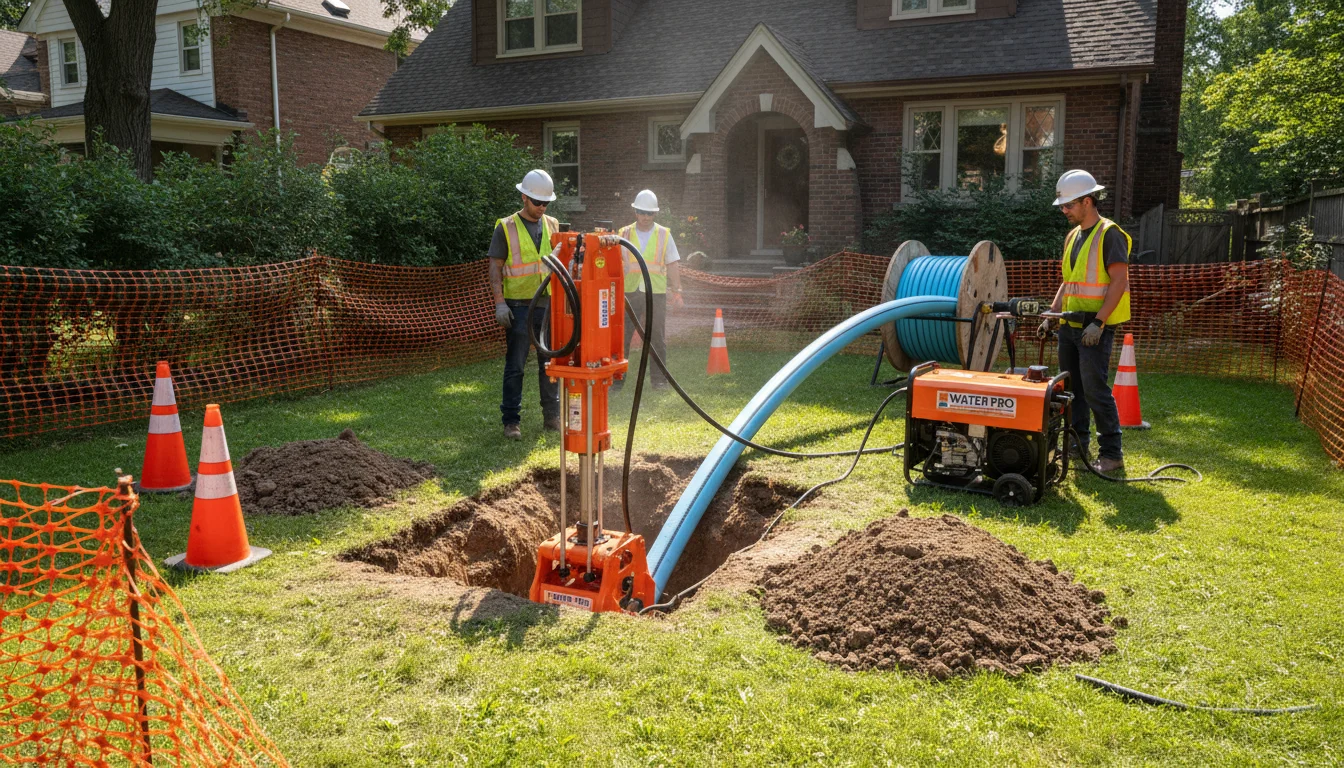
For CIPP lining: We saturate a felt liner with epoxy resin, invert it into the pipe using air pressure, inflate it against pipe walls, and cure it with UV light or hot water. For pipe bursting: We create entry and exit pits, pull a bursting head through the old pipe while simultaneously pulling in new HDPE pipe behind it.
Final Camera Inspection & Cleanup
We perform a post-repair camera inspection to verify quality and proper flow. You receive before/after footage for your records. We restore any disturbed areas and clean up completely.
Repair vs. Replace: Making the Right Decision
The most common question homeowners ask: "Should I repair or just replace the whole thing?" Here's how we help you decide:
When Repair Makes Sense
- Isolated damage: One or two problem spots with the rest of the pipe in good condition
- Newer pipes: PVC or ABS pipes less than 40 years old
- 80%+ sound: Camera inspection shows most of the line is undamaged
- Budget constraints: Repair now, plan replacement for later
- Landscaping concerns: Mature gardens, expensive hardscaping
When Replacement Is Better
- Widespread damage: More than 50% of pipe is compromised
- Clay or Orangeburg pipes: These materials continue to deteriorate
- Multiple previous repairs: Adding repairs to old repairs creates weak points
- Bellied sections: Sagging pipes can't be fixed with lining
- Planning to sell: New sewer line adds property value and avoids buyer concerns
Read our detailed guide on sewer repair vs. replacement for a complete cost-benefit analysis.
💡 The 50% Rule
If repairs will cost more than 50% of replacement, replacement usually makes more financial sense. You get a warranty on the entire line rather than just patched sections, and you eliminate future repair costs for decades.
Toronto-Specific Considerations
Sewer line repair in Toronto has unique requirements that plumbers from other regions might not understand:
City of Toronto Permits
Major sewer work requires permits from the City of Toronto Building Division. This includes:
- Replacing more than 3 meters of sewer line
- Connecting to city mains at the property line
- Excavation in city easements or boulevards
- Work that affects property drainage patterns
Permit costs range from $150 to $500 depending on scope. Licensed plumbers handle permit applications as part of their service.
Depth Requirements
Toronto's frost line extends to approximately 5 feet (1.5 meters). Sewer lines must be installed below this depth to prevent freezing. Repairs must maintain or restore proper depth—shallow repairs in Toronto will fail.
Lead Pipe Concerns
Some Toronto homes built before 1955 have lead water service lines. While sewer lines aren't lead, excavation for sewer work sometimes reveals lead water connections. We coordinate with the City's lead pipe replacement program when applicable.
Neighborhood Pipe Patterns
Different Toronto neighborhoods have predictable pipe types based on construction era:
- Rosedale, Forest Hill, The Annex: Clay pipes from 1900s-1940s
- Etobicoke, North York, Scarborough: Mix of clay (older areas) and PVC (post-1970 developments)
- Mississauga, Brampton, Vaughan: Mostly PVC from 1970s-present
- Downtown Toronto condos: Cast iron verticals, clay or PVC mains
Sewer Line Repair Costs in Toronto
For a complete breakdown of sewer repair pricing, including cost factors, insurance coverage, and money-saving tips, read our dedicated guide: Sewer Repair Cost Toronto 2025.
Here's a quick summary:
| Repair Type | Price Range | Typical Total |
|---|---|---|
| Camera Inspection | $150 - $350 | Often free with repair |
| Spot Repair | $150 - $500 | $300 average |
| CIPP Lining (30-50 ft) | $80 - $250/ft | $4,000 - $12,000 |
| Pipe Bursting (30-50 ft) | $60 - $200/ft | $3,000 - $10,000 |
| Excavation Repair (30-50 ft) | $100 - $350/ft | $5,000 - $17,000 |
Need a quote? Call (647) 554-4356 for free estimates. We provide itemized quotes with no hidden fees.
Preventing Future Sewer Line Problems
After repair, protect your investment with these preventive measures:
Annual Camera Inspections
A yearly inspection ($150-$350) catches problems early. This is especially important for homes with mature trees or pipes over 30 years old. Water Pro offers maintenance plans that include annual inspections at reduced rates.
Root Treatment
If tree roots caused your problem, ask about root inhibitor treatments. Chemical root killers ($50-$100 per treatment) prevent regrowth for 12-18 months. For recurring root issues, consider root barrier installation.
Grease Management
Never pour cooking oil or grease down drains. Let it cool, wipe with paper towels, and dispose in garbage. For kitchens with heavy cooking, consider a grease trap installation.
Mindful Flushing
Only flush human waste and toilet paper. Everything else goes in the garbage—including "flushable" wipes, which are the leading cause of sewer blockages in Toronto according to city data.
Frequently Asked Questions
Signs of sewer line damage include slow drains throughout the house, sewage smells, gurgling toilets, wet spots in the yard, foundation cracks, and multiple fixture backups. A camera inspection ($150-$350) provides definitive diagnosis.
Yes, trenchless methods like CIPP pipe lining and pipe bursting repair sewer lines without excavation. These methods work for 80% of residential repairs, save landscaping, and typically cost 20-40% less than traditional excavation.
Simple spot repairs take 2-4 hours. CIPP lining takes 1-2 days including curing time. Pipe bursting takes 1 day. Traditional excavation takes 2-5 days depending on pipe length and soil conditions.
Standard policies don't cover sewer line repair due to age or wear. However, sudden damage from tree roots or ground shifting may be covered. Many insurers offer 'sewer backup' riders ($40-$100/year) that provide coverage up to $50,000.
Sewer line repair in Toronto costs $150-$500 for spot repairs, $80-$250 per foot for CIPP lining, $60-$200 per foot for pipe bursting, and $100-$350 per foot for traditional excavation. Full line repairs range from $3,000 to $25,000+.
Common causes include tree root intrusion (40% of cases), pipe aging and corrosion (especially pre-1970 clay pipes), ground shifting from frost heave, grease buildup, flushing non-degradables, and construction damage.
Repair makes sense for isolated damage, pipes less than 40 years old, and when 80%+ of the line is sound. Replace when damage spans 50%+ of the line, pipes are clay or orangeburg, or multiple repairs have failed.
Minor repairs (spot fixes) don't need permits. Major work—replacing sections, connecting to city mains, or excavation near property lines—requires City of Toronto permits ($150-$500). Licensed plumbers handle permit applications.
Get Your Sewer Line Inspected Today
Sewer line problems don't fix themselves—they get worse. What starts as a slow drain can become a complete backup, turning a $300 repair into a $15,000 emergency. The smartest thing you can do is get a camera inspection at the first sign of trouble.
At Water Pro, we've been repairing sewer lines across the GTA since 2000. We offer free camera inspections with every repair quote, upfront pricing with no hidden fees, and a 90-day guarantee on all work. Our licensed plumbers are available 24/7 for emergencies.
Need Sewer Line Repair?
Free camera inspection with every quote. Same-day service available across the GTA.
📞 Call (647) 554-435624/7 Emergency Service • 90-Day Guarantee • 5,234+ Families Helped
Related Articles

About Mike Thompson
Master Plumber • License #MP-2847 • 28 Years Experience
Mike has repaired over 2,000 sewer lines across the GTA since 1996. He specializes in trenchless technology and helps homeowners understand their options without pressure. Member of the Canadian Institute of Plumbing & Heating (CIPH) and Ontario Plumbing Inspectors Association (OPIA).