Trenchless Sewer Repair Toronto: Complete Guide 2025

Quick Answer
Trenchless sewer repair in Toronto costs $3,000-$15,000 and takes 1-2 days. This no-dig method preserves landscaping while providing permanent 25-100+ year repairs using CIPP lining or pipe bursting technology.
Key Takeaways
- No digging required - preserves 95-100% of your landscaping, trees, and driveways
- CIPP lining costs $80-$250/ft and completes in 4-8 hours with 50+ year warranty
- Pipe bursting costs $60-$200/ft and takes 1-2 days with 100+ year lifespan
- Perfect for Toronto's common clay pipes in pre-1970 homes
- Saves $2,000-$5,000 vs traditional excavation (no driveway/patio reconstruction)
- Toronto's Basement Flooding Subsidy reimburses up to $3,400 for eligible repairs
Table of Contents
What is Trenchless Sewer Repair?
Trenchless sewer repair is a modern, no-dig technology that fixes damaged sewer lines without excavating your entire yard. For Toronto homeowners, this revolutionary approach means preserving mature trees, driveways, patios, and carefully landscaped gardens while getting permanent sewer repairs that last 25-100+ years.
Unlike traditional excavation that requires digging a 3-4 foot wide trench along your entire sewer line, trenchless methods work from inside the existing pipe or use minimal access points. This is especially valuable in Toronto's older neighborhoods like The Beaches, High Park, and Leaside where properties have established landscaping, heritage trees, and expensive driveways.
Cost Breakdown: $3,000-$15,000
Trenchless sewer repair costs in Toronto depend on the method used, pipe length, accessibility, and damage severity. Here's the complete cost breakdown:
CIPP Pipe Lining
- ✓ Zero digging required
- ✓ 4-8 hour completion
- ✓ 50-year warranty
- ✓ Best for most repairs
Pipe Bursting
- ✓ Small access pits only
- ✓ 1-2 day completion
- ✓ 100+ year lifespan
- ✓ Full pipe replacement
Add-On Services
- Camera inspection: $200-$400
- Hydro-jetting: $300-$600
- Permits & inspections: $150-$400
Average Total Cost: Most Toronto homeowners pay $6,500-$9,000 for a complete trenchless sewer repair. A typical 30-40 foot residential sewer line with CIPP lining costs $4,800-$8,000 including camera inspection and permits.
| Cost Factor | CIPP Lining | Pipe Bursting |
|---|---|---|
| Cost per foot | $80-$250 | $60-$200 |
| 30ft line total | $2,400-$7,500 | $1,800-$6,000 |
| 50ft line total | $4,000-$12,500 | $3,000-$10,000 |
| Camera inspection | $200-$400 | $200-$400 |
| Typical completion | 4-8 hours | 1-2 days |
Two Main Methods: CIPP vs Pipe Bursting
Toronto contractors use two primary trenchless technologies, each with specific applications and benefits:
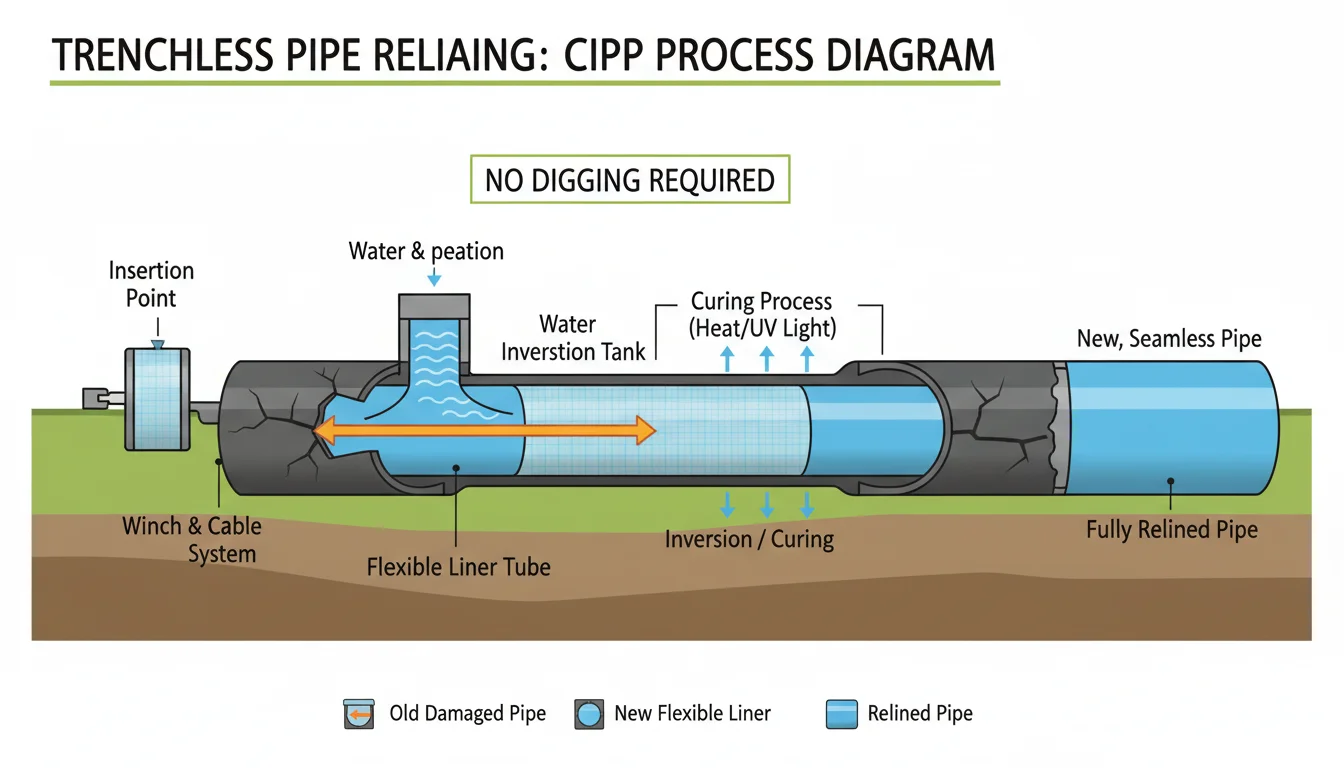
1. CIPP Pipe Lining (Cured-In-Place Pipe)
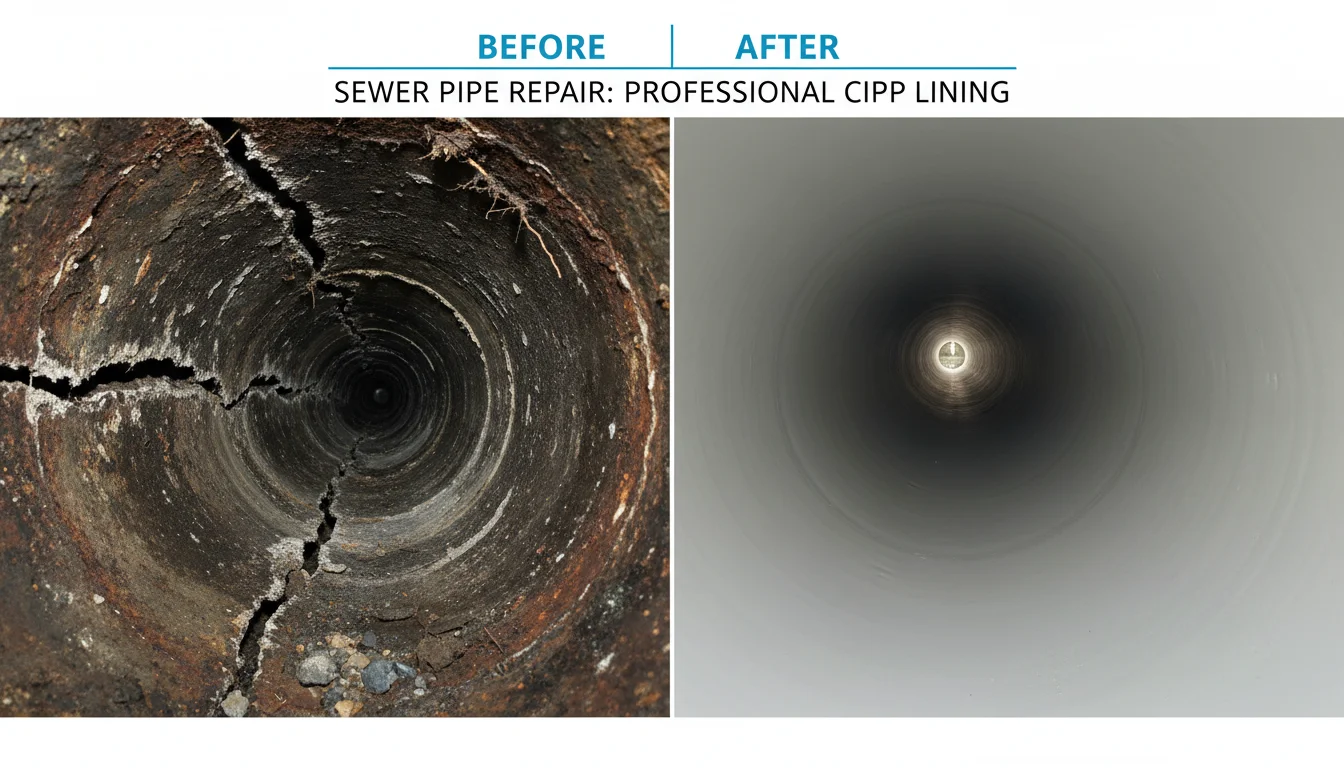
How it works: A flexible epoxy-saturated liner is inserted into your existing sewer pipe, inflated with air or water pressure, and cured with heat or UV light. The result is a seamless "pipe within a pipe" that's stronger than the original.
Best for:
- Cracked or fractured pipes with structural integrity still intact
- Root intrusion damage (common in Toronto's tree-lined neighborhoods)
- Corrosion or deterioration in clay or cast iron pipes
- Pipes under driveways, patios, or landscaping you want to preserve 100%
- Quick repairs (4-8 hours from start to finish)
Camera Inspection
Identify damage location and severity with HD sewer camera
Clean Pipe
Hydro-jet to remove debris, roots, and buildup
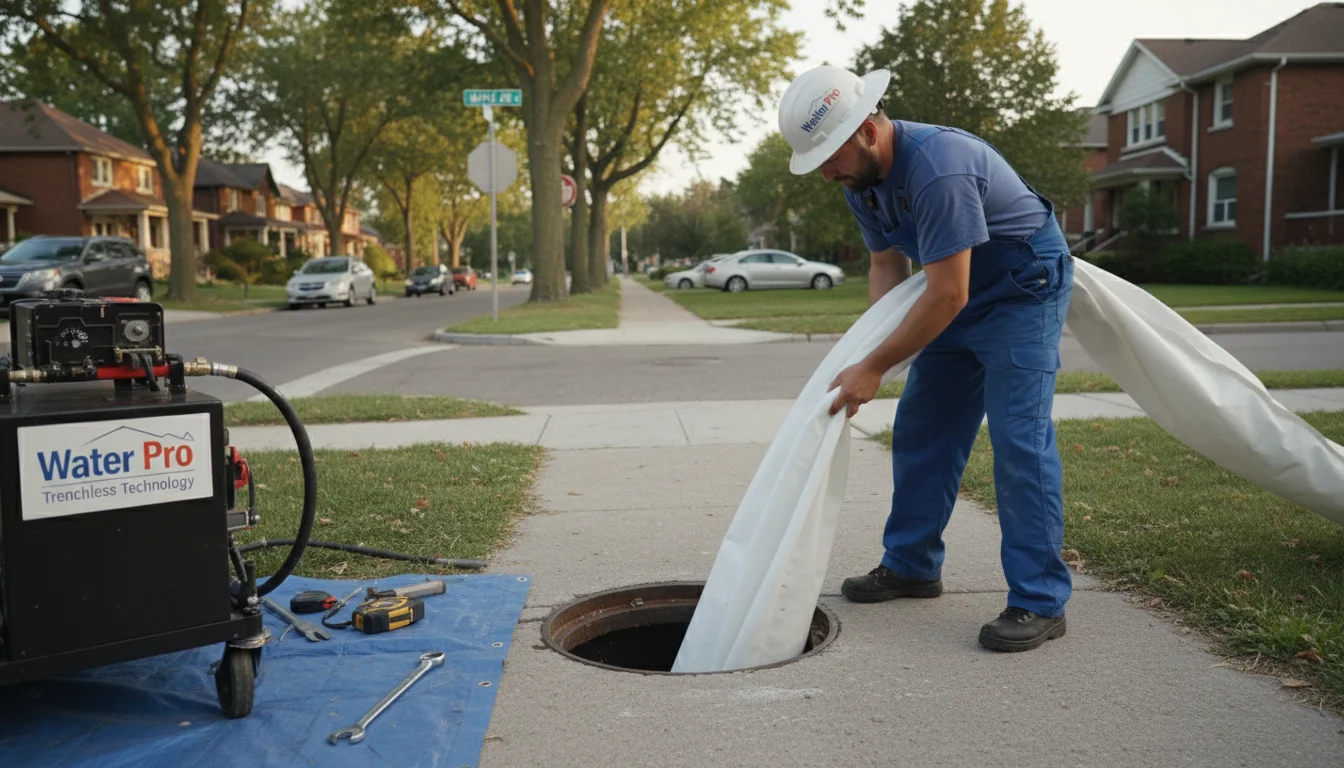
Insert Liner
Pull epoxy-saturated liner through pipe from access point
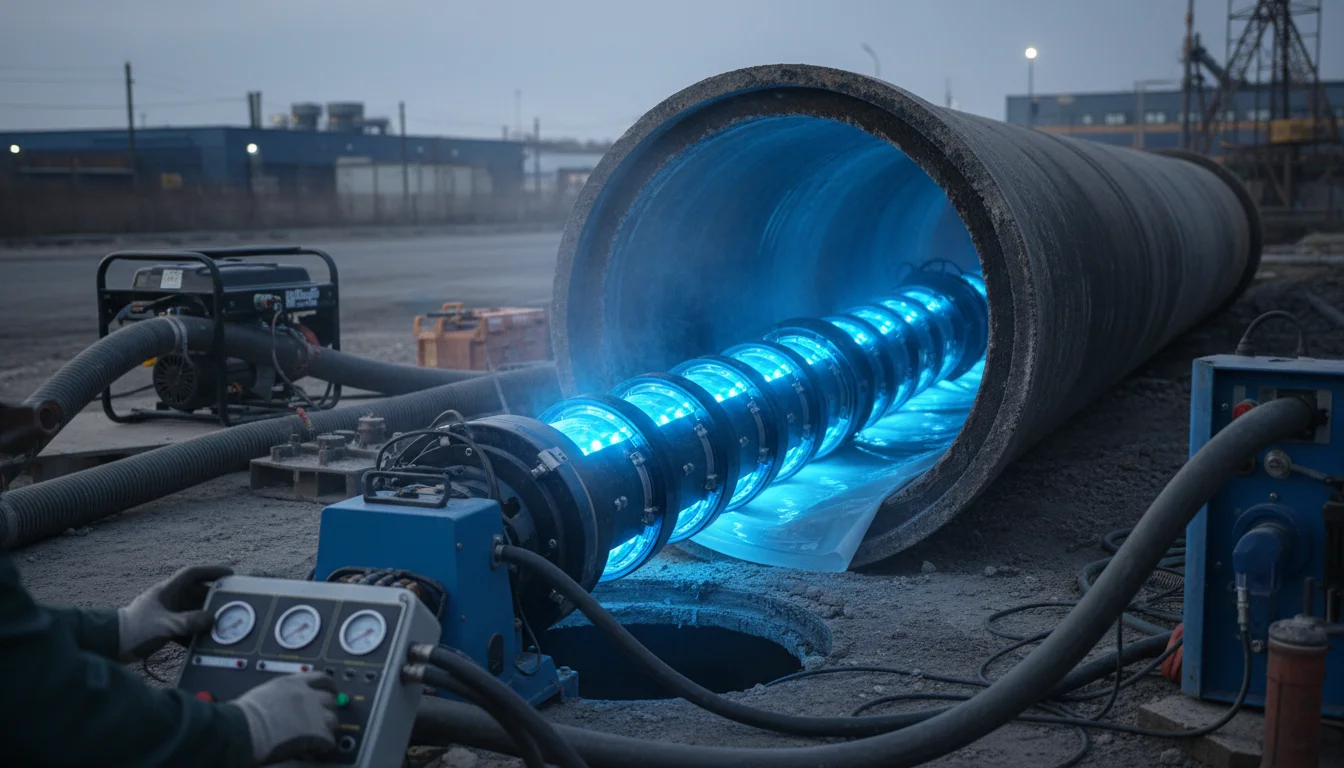
Inflate & Cure
Inflate liner and cure with hot water/steam for 2-4 hours
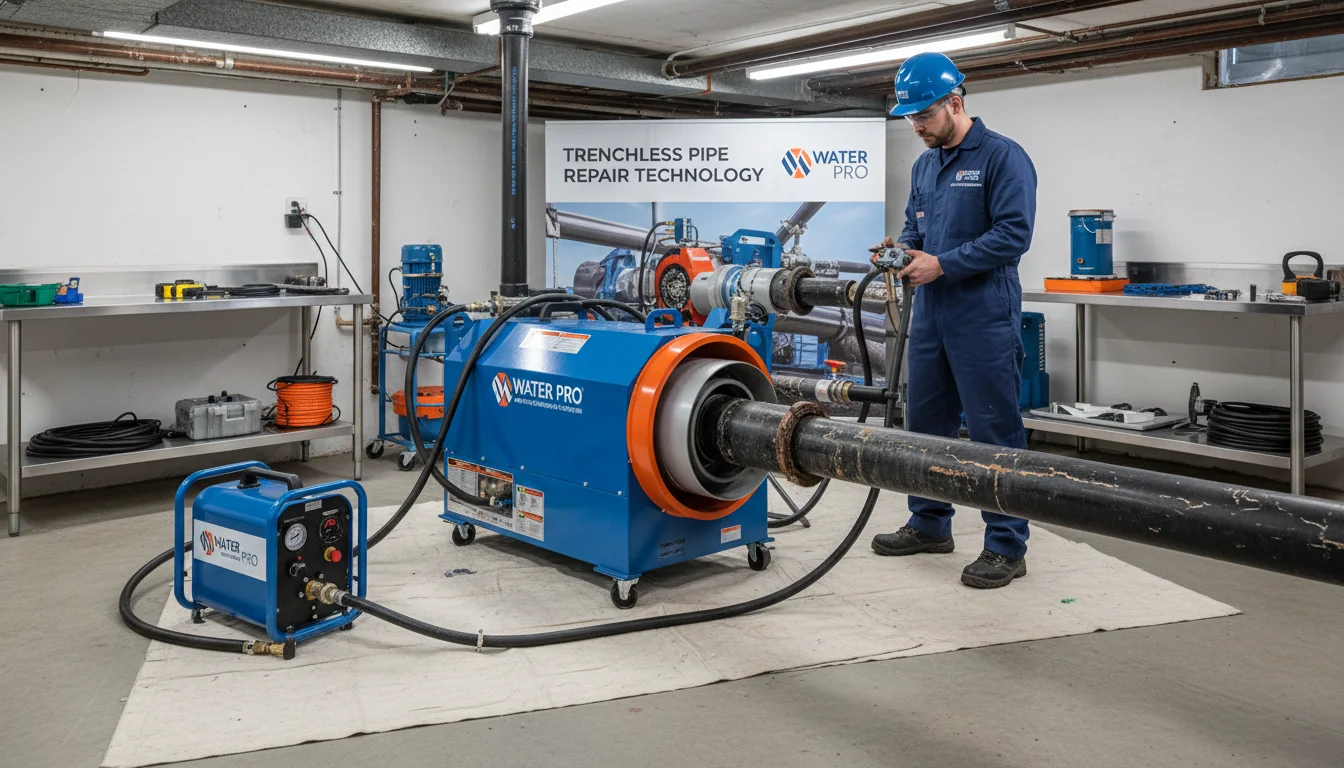
Final Inspection
Camera verification of seamless repair and proper flow
Advantages:
- Absolutely zero digging - no surface disruption
- Fastest method - completes in 4-8 hours
- Works from existing cleanout or small access point
- 50-year warranty standard, can last 50-100 years
- Seamless pipe resists root intrusion permanently
- Lower cost than pipe bursting for most applications
Limitations:
- Cannot fix completely collapsed pipes (50%+ offset)
- Reduces pipe diameter by 5-10% (usually not significant)
- Not ideal for pipes with severe bellying or sagging
- Requires pipe to have some structural integrity remaining
2. Pipe Bursting
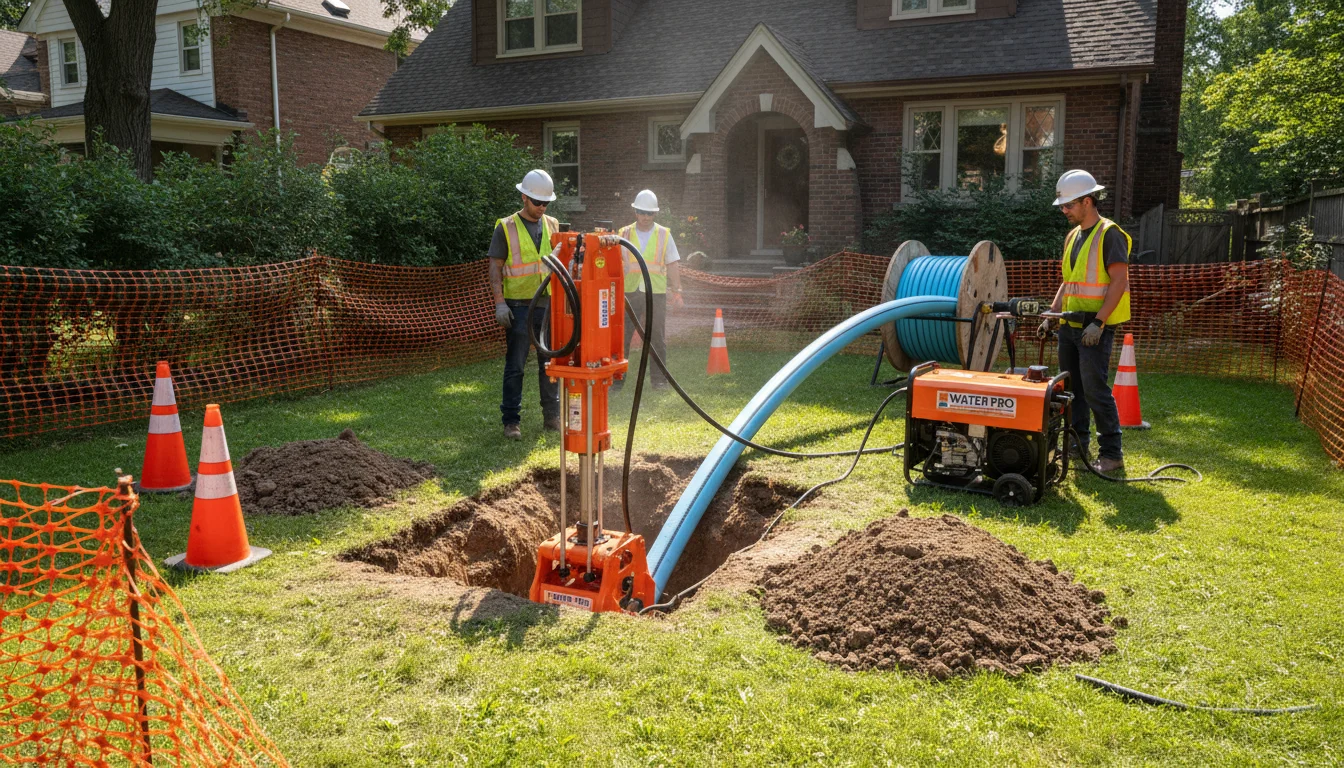
How it works: A cone-shaped bursting head is pulled through your old pipe, fracturing it outward while simultaneously pulling in new HDPE (high-density polyethylene) pipe behind it. The old pipe fragments are pushed into the surrounding soil.
Best for:
- Completely collapsed pipes with 50%+ offset
- Severely deteriorated clay pipes that have lost structural integrity
- Orangeburg (tar paper) pipes common in 1950s-1960s Toronto homes
- Situations requiring pipe diameter increase (upsizing from 4" to 6")
- When you want a complete new pipe (100+ year solution)
Process:
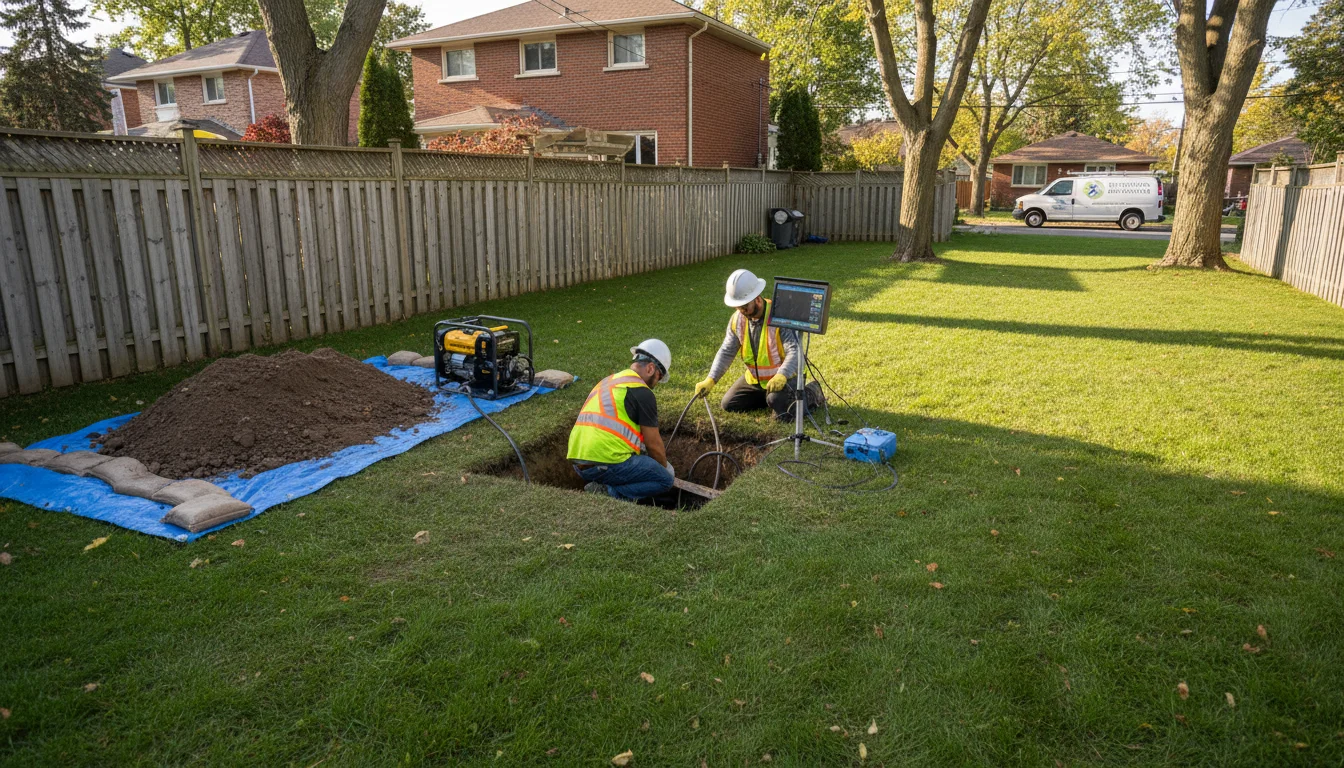
- Dig two small access pits (3×3 feet) at entry and exit points
- Attach bursting head to old pipe and new HDPE pipe
- Use hydraulic power to pull bursting head through, fracturing old pipe
- New pipe is pulled in simultaneously as old pipe is broken
- Connect to existing connections, backfill pits, restore surface
Advantages:
- Completely new pipe - 100+ year lifespan with HDPE
- Can upsize pipe diameter (4" to 6") for improved flow
- Works on fully collapsed pipes where lining can't
- HDPE is immune to root intrusion and corrosion
- Minimal surface disruption (95% less than traditional)
- Often lower cost per foot than CIPP
Limitations:
- Requires two access pits (minimal but still some digging)
- Takes 1-2 days vs 4-8 hours for CIPP
- Cannot navigate multiple sharp bends (90° turns)
- More disruptive than CIPP (though much less than traditional)
Benefits vs Traditional Excavation
Trenchless repair offers overwhelming advantages over traditional dig-and-replace methods, especially in Toronto's established neighborhoods:
| Factor | Trenchless Repair | Traditional Excavation |
|---|---|---|
| Timeline | 4 hours - 2 days | 3-5 days |
| Landscaping Impact | 0-5% disruption | 100% destroyed along trench |
| Driveway Impact | Zero - no removal | Must remove & replace ($2,000-$5,000) |
| Tree Protection | 100% preserved | May damage or kill trees |
| Total Cost | $3,000-$15,000 | $5,000-$20,000+ (includes restoration) |
| Lifespan | 25-100+ years | 30-50 years (PVC/clay) |
| Warranty | 50 years typical | 10-25 years typical |
| Property Access | Minimal - standard gates OK | Wide access needed for excavator |

Real Cost Savings Example
Consider a typical Toronto property with a 40-foot sewer line running under an asphalt driveway and landscaped yard:
Trenchless CIPP Lining:
- Pipe lining: $4,800-$8,000 (40ft × $120-$200)
- Camera inspection: $300
- Permits: $200
- Landscaping restoration: $0
- Driveway repair: $0
- Total: $5,300-$8,500
Traditional Excavation:
- Excavation & pipe replacement: $3,200-$5,000
- Asphalt driveway removal & replacement: $2,500-$4,000
- Landscaping restoration (sod, plants, fence): $1,500-$3,000
- Permits: $200
- Tree damage risk: $500-$2,000
- Total: $7,900-$14,200
When Trenchless Repair Works Best
Trenchless technology is ideal for approximately 80% of sewer line repairs in Toronto. Here's when it's the perfect solution:
Perfect Candidates for Trenchless:
- Clay pipes: Common in Toronto homes built before 1970 (The Annex, High Park, The Beaches, Leaside, etc.)
- Pipes under obstacles: Driveways, patios, garages, pool decks, interlocking stones
- Tree-lined properties: Preserves root systems of mature oaks, maples, and other valuable trees
- Root intrusion: Tree roots growing into pipe joints (extremely common in Toronto)
- Cracks and fractures: Multiple cracks along pipe length
- Corrosion: Deteriorated cast iron or clay with surface damage
- Minor offset: Pipes with 10-40% offset or misalignment
- Limited access properties: Narrow side yards, fenced backyards, small gates
- Heritage properties: Where excavation could damage historical landscaping
- Commercial properties: Minimizes business disruption and parking lot damage
Common Toronto Scenarios:
Pre-1970 Clay Pipe Homes: If your home was built before 1970 in neighborhoods like Riverdale, The Beach, High Park, or Leaside, you almost certainly have clay sewer pipes. These pipes develop cracks over time and are prime candidates for root intrusion. CIPP lining is typically the perfect solution - it reinforces the pipe from inside and creates a seamless barrier that roots can't penetrate.
Sewer Under Driveway: One of the most common scenarios. Traditional excavation means removing and replacing your entire driveway ($2,500-$5,000 for asphalt, $4,000-$8,000 for interlocking). Trenchless CIPP works from your cleanout or basement, preserving your driveway 100%.
Mature Tree Protection: Toronto properties often have 50-100+ year old oak, maple, and other heritage trees. Traditional trenching within the tree's drip line can sever major roots and kill the tree. Trenchless repair preserves the entire root system. Replacing a mature tree can cost $5,000-$15,000+ and takes decades to regain the same size.
When Traditional Repair is Needed
While trenchless works for most repairs, traditional excavation is sometimes necessary for approximately 20% of cases:
- Complete collapse: Pipes with 50%+ offset where sections have separated
- Severe bellying: Significant sagging where pipe has dropped creating major low points
- Multiple sharp bends: Several 90° turns in short distance (pipe bursting can't navigate)
- Orangeburg pipe in poor condition: 1950s tar paper pipes that are completely disintegrated
- Very short pipe sections: Under 10 feet where trenchless setup isn't cost-effective
- Backyard-only lines: Where access is easy and no obstacles exist (traditional may be cheaper)
- Budget constraints: When property has zero landscaping/obstacles and cheapest option is needed
Toronto-Specific Considerations
Several factors unique to Toronto make trenchless repair especially valuable:
1. Clay Pipe Prevalence
Toronto has extensive clay sewer infrastructure installed from the 1880s through the 1970s. These pipes are now 50-140+ years old and commonly develop:
- Cracks from ground settling and freeze-thaw cycles
- Joint separation as mortar deteriorates
- Root intrusion through joints and cracks
- Surface corrosion from acidic soil conditions
CIPP lining is specifically designed for clay pipes - it creates a structural, seamless pipe inside the damaged clay that's actually stronger than new PVC. This is why trenchless has become the go-to solution in Toronto's older neighborhoods.
2. Mature Tree Canopy
Toronto is known as a "city within a park" with extensive mature tree coverage. Neighborhoods like Forest Hill, Rosedale, The Kingsway, and Lawrence Park have 80-150 year old trees worth $10,000-$50,000+ each. Traditional excavation risks:
- Severing major roots (killing or destabilizing trees)
- Soil compaction from heavy equipment
- Damage to surface roots and root flare
Trenchless repair preserves trees completely, which is why it's often required by city arborists for work within tree drip lines.
3. Property Layout Challenges
Toronto's established neighborhoods have:
- Narrow side yards (3-5 feet typical)
- Sewer lines under driveways, garages, and additions
- Limited equipment access through standard 36" gates
- Shared driveways and property line complications
Trenchless works from existing access points (basement cleanout or small excavation), eliminating the need for wide equipment access that traditional methods require.
4. Toronto's Basement Flooding Subsidy Program
The City of Toronto offers rebates up to $3,400 for eligible sewer-related improvements including:
- Sewer line repairs and replacements (including trenchless)
- Backwater valve installation
- Sump pump installation
How to qualify:
- Must be a Toronto homeowner
- Work must be completed by licensed contractor
- Permits must be obtained
- Apply within 12 months of work completion
This subsidy can reduce your net cost by 30-50% for smaller repairs. Learn more at toronto.ca/basementfloodingsubsidy
5. Winter Weather Considerations
Trenchless repair has significant advantages during Toronto's harsh winters:
- No frozen ground issues: CIPP works from inside - no need to excavate frozen soil
- Minimal exposure: Technicians work mostly from basement/truck, not outside
- Faster completion: 4-8 hours means less time in cold weather
- No spring restoration wait: With traditional excavation, you often can't restore landscaping until spring thaw
The Repair Process: Step-by-Step
Here's what to expect when you schedule a trenchless sewer repair in Toronto:
Phase 1: Initial Inspection (1-2 hours)
What happens:
- Technician inserts HD camera through cleanout or access point
- Records video showing exact location and nature of damage
- Measures pipe diameter, length, and depth
- Identifies obstacles (tree roots, debris, grease buildup)
- Determines if trenchless is viable or if traditional is needed
Cost: $200-$400 (often credited toward repair if you proceed)
You receive: Written assessment, video footage, detailed quote with method recommendation
Phase 2: Pre-Repair Preparation (scheduled in advance)
- Contractor obtains City of Toronto plumbing permit
- Schedules city inspection if required
- Orders custom-sized liner (for CIPP) or materials
- You receive 2-3 day notice of repair date
Phase 3: The Repair Day
For CIPP Lining (4-8 hours total):
Hydro-Jetting (1-2 hours)
High-pressure water (3,000-4,000 PSI) cleans pipe of roots, debris, grease
Liner Insertion (30-60 min)
Epoxy-saturated felt liner pulled through pipe from cleanout
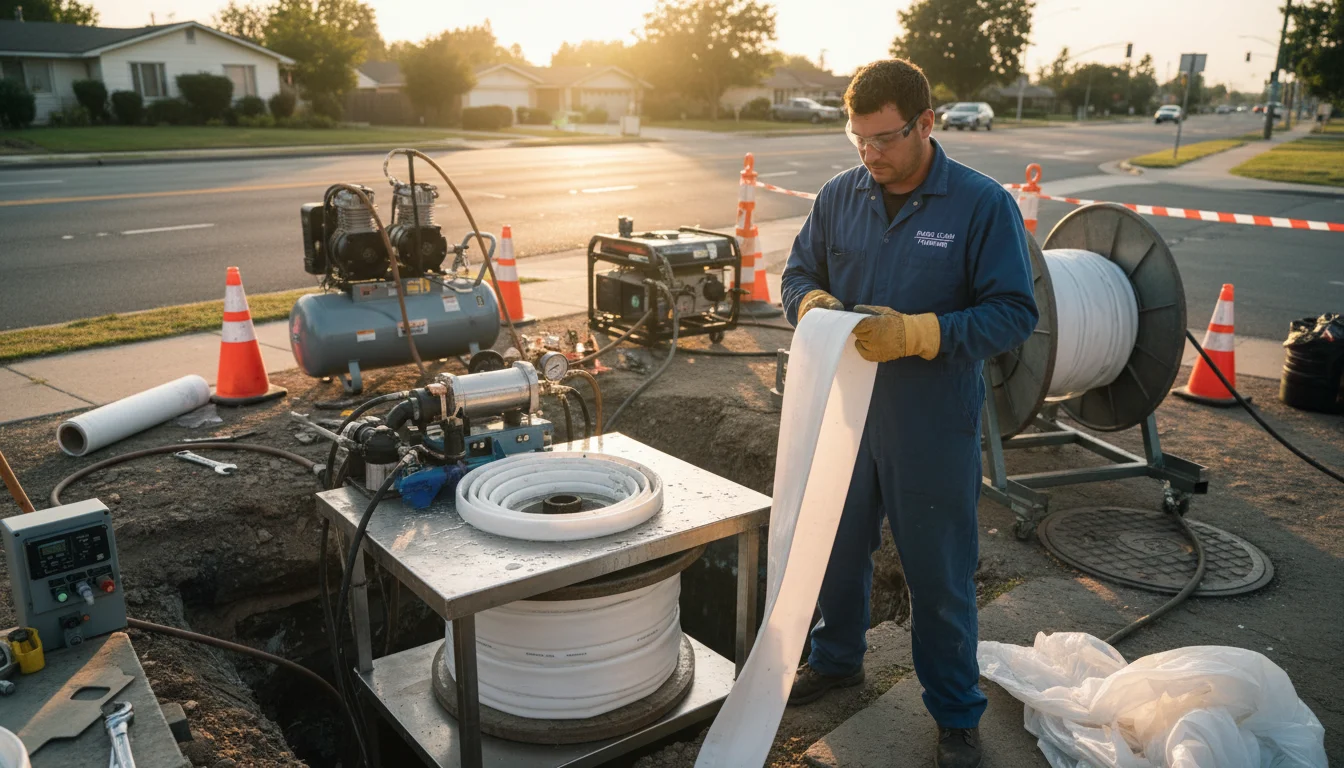
Inflation (15-30 min)
Liner inflated with air/water to press against pipe walls
Curing (2-4 hours)
Hot water or steam circulates to cure epoxy (ambient cure takes 6-12 hours)
Reinstatement (30-60 min)
Robotic cutter opens connections for laterals and cleanouts
Final Inspection
Camera verification that liner is seamless and properly positioned
For Pipe Bursting (1-2 days):
Access Pits (2-4 hours)
Dig two small pits (3×3 ft) at entry/exit points of damaged section
Setup (1-2 hours)
Attach bursting head to old pipe, connect new HDPE pipe to puller
Bursting (2-6 hours)
Hydraulic winch pulls bursting head through, fracturing old pipe while installing new
Connections (1-2 hours)
Connect new pipe to existing system at both ends
Backfill & Restore (2-4 hours)
Fill access pits, compact soil, restore surface (sod, concrete, etc.)
Testing
Pressure test and camera inspection to verify installation
Phase 4: City Inspection & Warranty
- Toronto building inspector verifies work meets code (if required)
- Contractor provides warranty certificate (typically 50 years for CIPP, 25+ for bursting)
- Camera inspection video provided for your records
- Apply for Basement Flooding Subsidy rebate (if eligible)
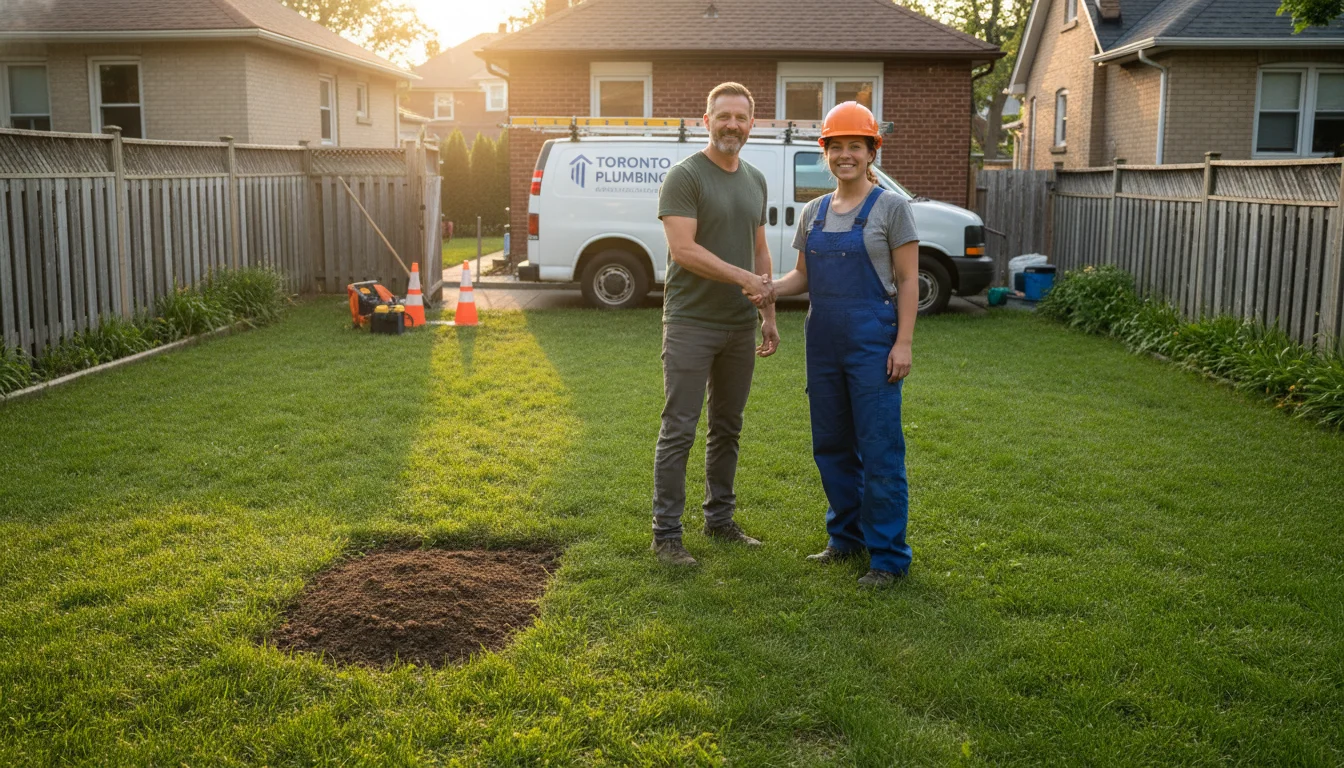
Ready to Preserve Your Property?
Get a free camera inspection and trenchless repair quote. Same-day service available. 50-year warranty included. Licensed & insured Toronto contractors.
📞 Call (647) 554-4356 NowAvailable 24/7 for emergencies • Free estimates • No obligation
Frequently Asked Questions
Trenchless sewer repair costs $3,000-$15,000 in Toronto depending on method, length, and damage severity. CIPP lining costs $80-$250 per foot, while pipe bursting costs $60-$200 per foot. The average job costs $6,500-$9,000 for a typical 30-40 foot residential sewer line.
Cost breakdown:
- 30ft CIPP lining: $4,800-$8,000 total
- 30ft pipe bursting: $3,600-$6,500 total
- Camera inspection: $200-$400 (often included)
- Permits: $150-$400
This is often LESS than traditional excavation when you factor in driveway removal ($2,500-$5,000) and landscaping restoration ($1,500-$3,000).
Trenchless sewer repair takes 1-2 days maximum:
- CIPP pipe lining: 4-8 hours from start to finish (same day completion)
- Pipe bursting: 1-2 days depending on length and site conditions
This compares to 3-5 days for traditional excavation, plus additional time waiting for driveway/landscaping contractors to complete restoration work (often weeks or months later).
Most homeowners can use their plumbing the same evening after CIPP lining, or within 24 hours after pipe bursting.
Yes! Trenchless repair is excellent for Toronto's common clay sewer pipes found in homes built before 1970. Both methods work well:
CIPP lining is ideal for cracked or deteriorating clay pipes. The epoxy liner reinforces the pipe from inside, creating a seamless barrier that's stronger than new PVC. Perfect for pipes with root intrusion, cracks, or minor deterioration.
Pipe bursting completely replaces old clay pipes with modern HDPE that lasts 100+ years. Best for severely deteriorated or collapsed clay pipes that have lost structural integrity.
Clay pipes are actually easier to line than some modern materials because they have a smooth interior surface and consistent diameter.
No, trenchless repair preserves 95-100% of your landscaping:
CIPP lining requires absolutely zero digging. The work is done entirely from inside your existing pipe using your cleanout or a small basement access point. Your lawn, gardens, trees, driveways, and patios remain completely untouched.
Pipe bursting uses two small access pits (3×3 feet) at the entry and exit points only. This is 95% less surface disruption than traditional excavation. These small areas are easily restored with sod or concrete patch.
Compare this to traditional excavation which requires a 3-4 foot wide, 4-6 foot deep trench along your entire sewer line—destroying everything in its path and requiring extensive restoration.
Trenchless sewer repairs last 25-100+ years:
- CIPP liners: 50-100 years expected lifespan with 50-year warranties standard. The cured epoxy is incredibly durable and resistant to root intrusion, corrosion, and ground movement.
- HDPE pipe (from bursting): 100+ years expected lifespan with 25-50 year warranties. HDPE is immune to corrosion, root intrusion, and chemical damage.
Both methods typically outlast traditional pipe replacements:
- PVC pipe: 50-100 years
- Clay pipe: 50-60 years (but prone to cracking)
- Cast iron: 50-75 years (corrodes over time)
Yes! Working under driveways is one of the main advantages of trenchless repair. Neither method requires removing or cutting your driveway:
CIPP lining works entirely from inside the pipe - zero surface work needed. Your asphalt, concrete, or interlocking driveway remains completely intact.
Pipe bursting requires small access pits at the start/end points only, which are typically located before and after the driveway, not in the middle of it.
Cost savings:
- Asphalt driveway removal + replacement: $2,500-$4,000
- Concrete driveway removal + replacement: $3,500-$6,000
- Interlocking driveway removal + replacement: $4,000-$8,000
Trenchless repair saves you $2,000-$8,000 in driveway work alone.
CIPP lining is better for 80% of repairs, pipe bursting for 20%:
Choose CIPP lining when:
- Pipe has cracks, root damage, or minor deterioration but maintains structural shape
- You want absolutely zero surface disruption
- You need the fastest completion (4-8 hours)
- You want lower cost ($80-$250/ft vs $60-$200/ft, but faster = lower total)
- Pipe is under valuable landscaping you want to preserve 100%
Choose pipe bursting when:
- Pipe is completely collapsed (50%+ offset)
- Pipe has severe bellying or sagging
- You want to upsize diameter (4" to 6") for improved flow
- You want a completely new pipe for maximum lifespan (100+ years)
- Orangeburg or severely deteriorated clay pipes
A camera inspection will determine which method is optimal for your specific situation. Both methods are excellent—the choice depends on your pipe's condition and goals.
Sometimes. Standard homeowners insurance typically EXCLUDES sewer line repairs unless you have a specific "sewer line coverage" or "service line coverage" rider added to your policy.
What to check:
- Review your policy for "sewer backup" or "service line" coverage
- This rider typically costs $50-$150/year extra
- Coverage limits usually $5,000-$25,000
- May have deductible ($500-$2,500)
Toronto's Basement Flooding Subsidy: Even if insurance doesn't cover it, you may qualify for Toronto's subsidy program which reimburses up to $3,400 for eligible sewer repairs. This applies to both trenchless and traditional repairs.
Eligibility requirements:
- Toronto homeowner
- Licensed contractor used
- Proper permits obtained
- Apply within 12 months of work completion
Learn more at toronto.ca/basementfloodingsubsidy
Schedule Your Free Camera Inspection
Get expert trenchless repair advice with no obligation. We'll show you exactly what's wrong with your sewer line and provide honest recommendations for the best repair method.
📞 Call (647) 554-4356
✓ Free estimates
✓ 50-year warranty
✓ Licensed & insured
✓ Same-day service available
✓ Toronto's Basement Flooding Subsidy eligible