Quick Answer: How Much Does Water Line Repair Cost in Toronto?
Water line repair in Toronto costs $1,500 to $15,000+ depending on the repair method and extent of damage. Spot repairs run $800-$2,500, while full water line replacements cost $5,000-$15,000. Trenchless pipe bursting typically costs $80-$250 per linear foot. Emergency repairs add 50-100% to these prices. For immediate assistance, call (647) 554-4356.
Key Takeaways
- Spot repairs: $800-$2,500 (localized leaks, minor damage)
- Full replacement (traditional): $5,000-$12,000 (excavation required)
- Trenchless replacement: $6,000-$15,000 (minimal yard disturbance)
- You're responsible for the water line from property line to house
- Toronto permits required: $150-$350 (your plumber handles this)
- Most homeowner insurance does NOT cover water line repairs
- Copper and HDPE are the best replacement materials for Toronto climate
Few plumbing problems cause more anxiety than a failing water line. Unlike a clogged drain or dripping faucet, water line issues can mean no water to your entire home—or worse, thousands of gallons leaking underground. If you're noticing unexplained wet spots in your yard, a sudden spike in your water bill, or mysteriously low water pressure, you might be facing a water line problem.
After 28 years of repairing water lines across the Greater Toronto Area, I've learned that most homeowners have no idea what a water line repair involves—or what it should cost. This guide gives you the complete picture so you can make informed decisions and avoid getting overcharged. For an immediate assessment, call (647) 554-4356.
Understanding Your Water Line: What Every Toronto Homeowner Should Know
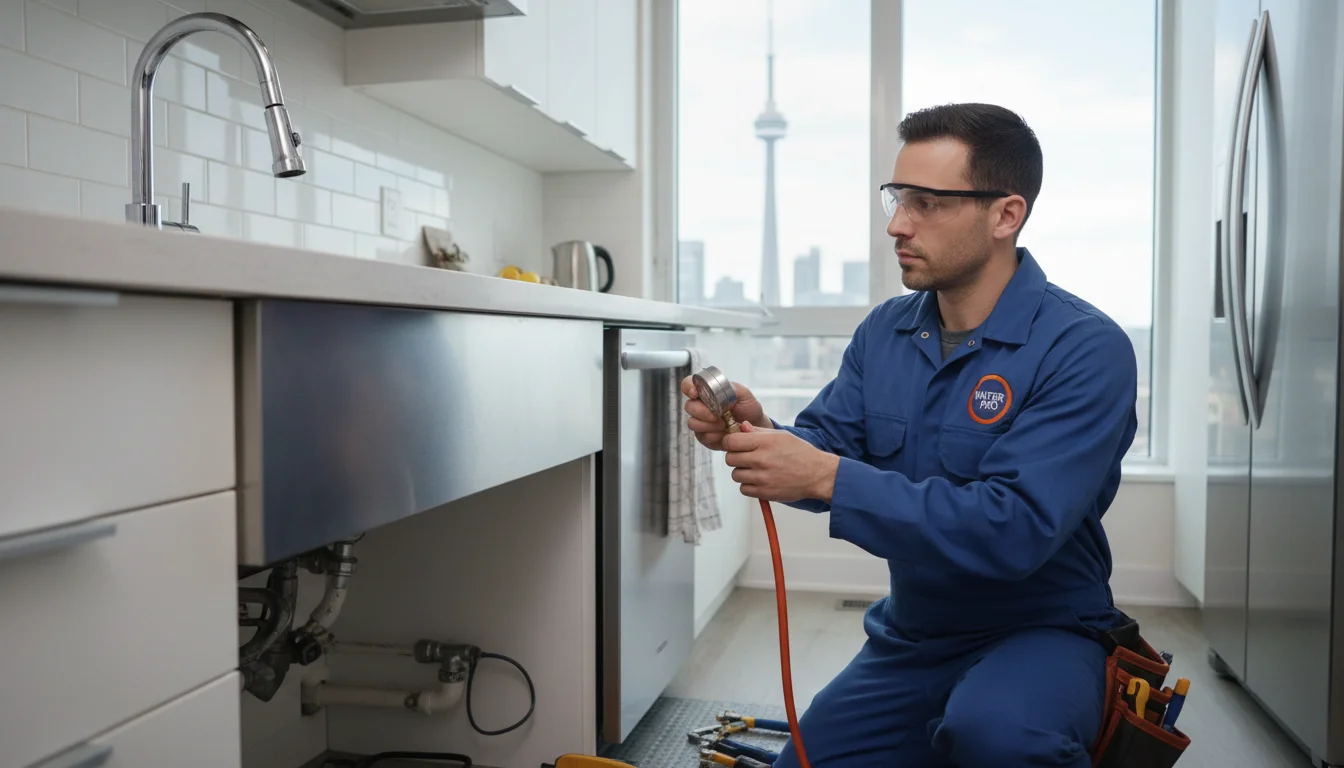
Your water line (also called water service line or water main) is the underground pipe that brings fresh water from the city's main water supply to your home. In Toronto, most residential water lines are 3/4" to 1" in diameter and run 30-80 feet from the street to your house.
Water Line Materials by Era in Toronto
The material of your water line depends largely on when your home was built. Understanding what you have helps predict problems and repair costs:
| Era | Common Material | Expected Lifespan | Common Issues |
|---|---|---|---|
| Pre-1950s | Lead | 80-100 years | Health hazard, corrosion, leaks |
| 1950s-1970s | Galvanized Steel | 40-50 years | Interior rust, reduced flow, leaks |
| 1970s-1990s | Copper | 50-70 years | Pinhole leaks, corrosion at joints |
| 1978-1995 | Polybutylene (Grey) | 10-15 years | Brittle failure, class-action recalls |
| 1990s-Present | Copper / HDPE | 50-100 years | Minimal (freeze damage possible) |
Lead Water Lines in Toronto
Many Toronto homes built before 1955 still have lead water service lines. The City of Toronto offers a Lead Pipe Replacement Program where they'll replace the city-owned portion for free. Homeowners are responsible for the portion on private property ($3,000-$8,000). If you have a lead line, replacement should be a priority—not just for health, but because lead pipes are prone to failure. Learn more at toronto.ca/lead.
Who Owns What: The Property Line Divide
In Toronto, responsibility for the water line is divided at the property line:
- City of Toronto Responsibility: Main water line in the street to the curb stop valve (usually at the property line)
- Homeowner Responsibility: From the curb stop valve to your house, including the water meter
This means if your water line leaks under your front lawn, that repair is your financial responsibility—even though the water comes from the city.
8 Warning Signs You Need Water Line Repair
Water line problems often develop gradually, giving you warning signs before a catastrophic failure. Here's what to watch for:
1. Unexplained Increase in Water Bills
A sudden jump in your water bill—especially $100+ more than usual—often indicates an underground leak. Even a small crack in your water line can waste 6,000-10,000 gallons per month. Compare your bills to the same period last year to spot anomalies.
2. Low Water Pressure Throughout the Home
If pressure drops at all fixtures simultaneously (not just one faucet), the problem is likely in your main water line—not individual supply lines. A partial blockage from corrosion or a leak reducing system pressure are common culprits.
3. Discolored or Rusty Water
Brown, yellow, or rust-colored water when you first turn on taps can indicate corrosion inside your water line. This is especially common with galvanized steel pipes. If the discoloration persists after running water for several minutes, call a plumber immediately at (647) 554-4356.
4. Wet Spots or Puddles in Your Yard
Unexplained wet areas in your lawn—especially in a line between the street and your house—suggest an underground leak. In winter, you might notice areas where snow melts faster or grass stays greener than surrounding areas.
5. Foundation Cracks or Shifting
Water leaking near your foundation can erode soil, causing settling and cracks. If you notice new foundation cracks combined with other water line symptoms, address this immediately—foundation repairs cost far more than water line repairs.
6. Water Pooling Near the Street
Puddles or wet pavement near your property line (especially when it hasn't rained) may indicate a leak at the connection to the city main. This could be on your side or the city's side—call 311 to report it, and they'll determine responsibility.
7. Hissing or Running Water Sounds
If you hear water running when no fixtures are in use, or a hissing sound near your water meter, you likely have a leak. Try this test: turn off all water in your home, then check if your water meter is still moving—if it is, you have a leak.
8. Air Spurting from Faucets
Air in your water lines (sputtering faucets) can indicate a breach in the pipe allowing air to enter. This is often accompanied by inconsistent water pressure and can signal a significant crack or break.
Pro Tip: The Water Meter Test
Here's a simple test to detect hidden leaks: Turn off all water in your home (faucets, dishwasher, ice maker). Check your water meter and note the reading. Wait 2 hours without using any water, then check again. If the meter has moved, you have a leak. This doesn't tell you where, but it confirms a problem exists.
Water Line Repair Methods: Your Options Explained
Not every water line problem requires full replacement. Depending on the location, extent, and type of damage, you have several repair options:
Spot Repair (Clamp or Sleeve)
Most AffordableBest for: Single, localized leaks on otherwise sound pipes
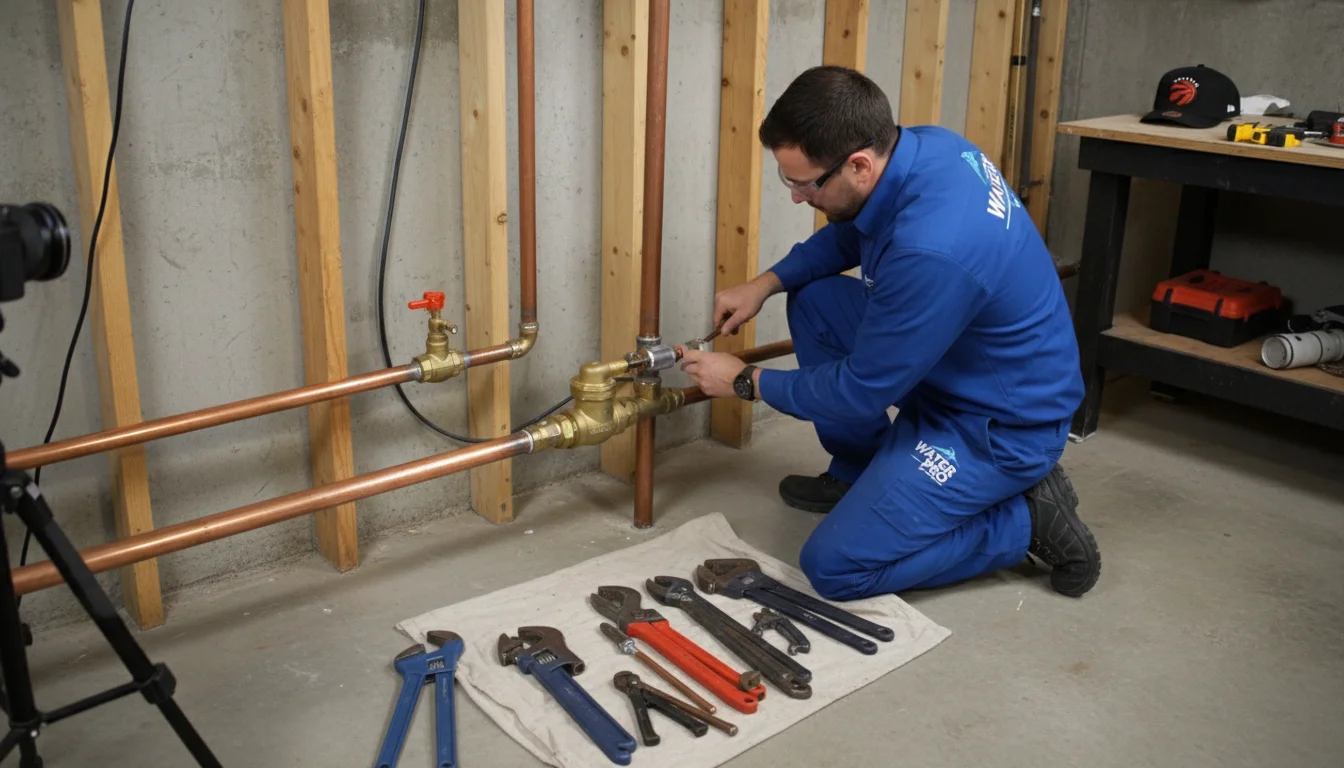
A spot repair involves excavating just the damaged section and fixing it with a repair clamp, coupling, or sleeve. This is the least expensive option when the rest of your water line is in good condition.
Pipe Section Replacement
Mid-RangeBest for: Multiple issues in one area, or severely corroded sections
If damage spans a larger area but doesn't affect the entire line, we can replace just that section. This involves excavation, cutting out the damaged portion, and splicing in new pipe.
Traditional Full Replacement (Excavation)
ComprehensiveBest for: Aged pipes (50+ years), multiple failures, lead/polybutylene lines
Traditional replacement involves digging a trench along the entire water line route, removing the old pipe, and installing new copper or HDPE pipe. This method provides complete access for inspection and ensures a brand-new system.
Trenchless Pipe Bursting
RecommendedBest for: Established landscaping, driveways, or when minimizing disruption is priority
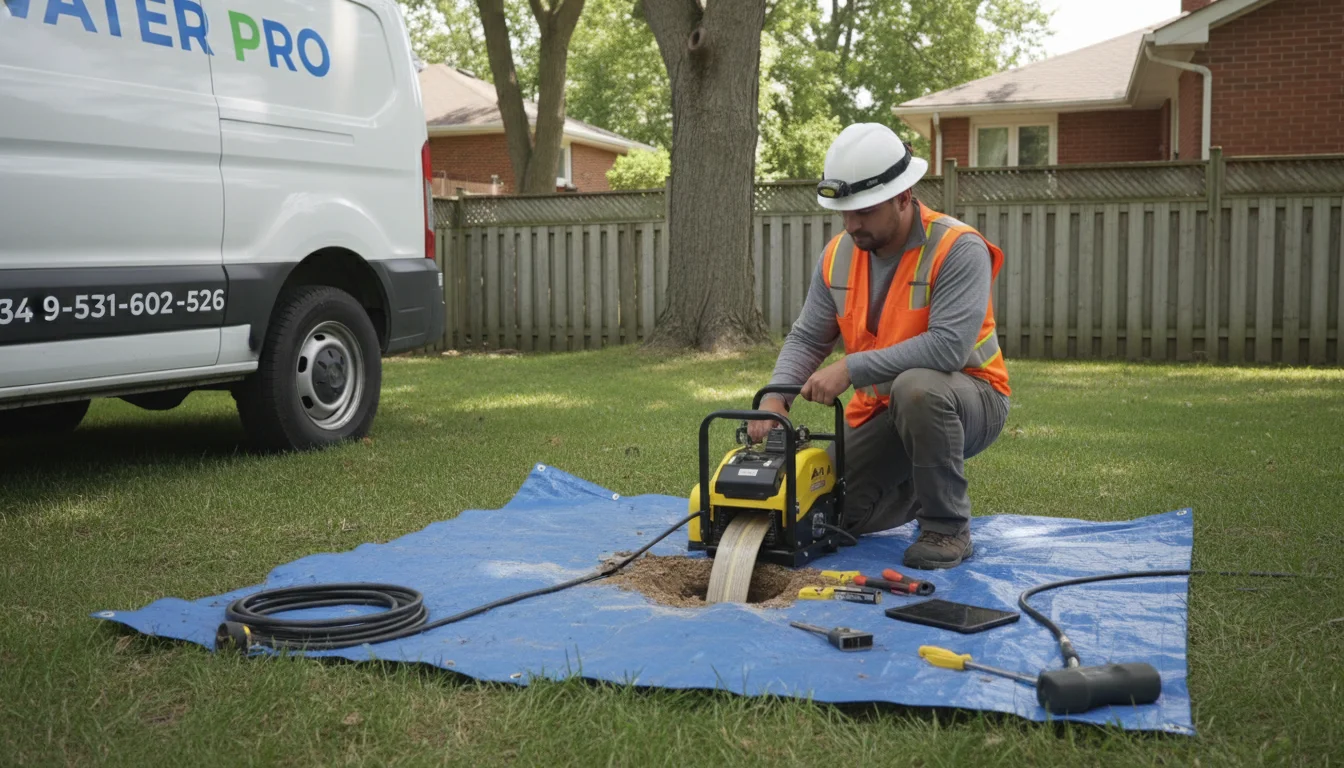
Pipe bursting pulls a new HDPE pipe through the existing line while simultaneously breaking apart the old pipe. Only two small access pits are needed—one at each end. Ideal when preserving landscaping, driveways, or mature trees.
Trenchless vs. Traditional: Which Should You Choose?
| Factor | Traditional Excavation | Trenchless Pipe Bursting |
|---|---|---|
| Cost | $5,000-$12,000 | $6,000-$15,000 |
| Time to Complete | 2-4 days | 1-2 days |
| Yard Disruption | Significant (full trench) | Minimal (2 access points) |
| Driveway/Sidewalk Work | May require breaking | Usually avoided |
| Landscape Restoration | $500-$2,000 extra | Usually included |
| Best For | New construction, open lots | Established properties |
| Pipe Material Options | Copper, HDPE, PEX | HDPE primarily |
Pro Tip: Total Cost Comparison
While trenchless looks more expensive upfront, factor in landscape restoration costs. Traditional excavation through an established lawn, flower beds, or under a concrete driveway can add $1,000-$5,000 in restoration work. In many cases, trenchless ends up costing the same or less when you include restoring your property to its original condition.
Complete Water Line Repair Cost Breakdown
Here's what Toronto homeowners actually pay for water line services in 2025:
| Service | Price Range | What's Included |
|---|---|---|
| Water Line Inspection | $200-$400 | Pressure test, leak detection, assessment |
| Spot Repair (Clamp) | $800-$1,500 | Single leak repair, limited excavation |
| Section Replacement | $1,500-$4,000 | 10-20 feet of pipe, excavation, backfill |
| Full Replacement (Traditional) | $5,000-$12,000 | Complete new line, excavation, inspection |
| Full Replacement (Trenchless) | $6,000-$15,000 | Complete new HDPE line, minimal excavation |
| Water Shut-Off Valve | $300-$600 | New interior shut-off installation |
| Curb Stop Repair | $400-$800 | Repair/replace valve at property line |
| Emergency Service | +50-100% | After-hours, weekends, holidays |
Factors That Affect Your Final Cost
Several variables can push your repair costs higher or lower:
- Line Length: Longer water lines (60+ feet) cost more to replace. Budget $80-$150 per linear foot for traditional, $100-$250 for trenchless.
- Depth: Toronto building code requires water lines to be buried at least 5 feet deep (below frost line). Deeper pipes cost more to access.
- Obstacles: Mature trees, driveways, patios, sidewalks, and garden structures all complicate excavation and increase costs.
- Soil Conditions: Rocky soil (common in North York and Scarborough) is harder to dig than clay or sandy soil.
- Permits: Toronto plumbing permits cost $150-$350 depending on scope. Your plumber should handle this.
- Material Choice: Copper costs more than HDPE but offers different benefits (see below).
Toronto-Specific Water Line Challenges
The GTA presents unique challenges for water line repair that affect both timing and cost:
The Frost Line Factor
In Toronto, water lines must be buried at least 5 feet deep to stay below the frost line. This is deeper than many other regions, which means more excavation work for traditional repairs. However, it also means your water line is better protected from seasonal temperature swings.
Winter Freeze Risks
Despite proper depth, water lines can freeze during extreme cold snaps—especially in areas with poor insulation, shallow lines (older homes), or where heat tape has failed. Frozen water lines are a common emergency call in January and February. If you experience this, call (647) 554-4356 immediately—frozen pipes can burst.
Neighborhood-Specific Issues
Different Toronto neighborhoods face different water line challenges:
- Old Toronto/The Annex/Rosedale: Lead and galvanized steel pipes in pre-1950s homes. High priority for replacement due to age and material concerns.
- Scarborough/North York: Rocky soil conditions make excavation more difficult and expensive. Trenchless often preferred.
- Etobicoke/Mississauga: Mix of 1960s-1980s homes with copper and some polybutylene. Watch for pinhole leaks in copper and brittle failure in polybutylene.
- Vaughan/Richmond Hill/Markham: Newer subdivisions (1990s-2000s) typically have copper or HDPE. Problems usually stem from construction defects or frost damage.
- Downtown Toronto/Condos: High-rise buildings have different systems. Individual units connect to building water risers—common element, often building responsibility.
City Infrastructure Considerations
Toronto's water main infrastructure varies by neighborhood. Some areas have aging city mains that experience pressure fluctuations or require frequent repairs. These fluctuations can stress residential water lines. If your neighborhood frequently sees City crews working on water mains, have your line inspected—the pressure changes may be causing damage.
Insurance, Permits & Who Pays What
Does Homeowner Insurance Cover Water Line Repair?
Standard homeowner insurance typically does NOT cover water line repairs due to wear, corrosion, or age. Insurance policies consider gradual deterioration to be a maintenance issue—your responsibility as a homeowner.
However, insurance may cover:
- Damage caused by a sudden, accidental event (like a tree falling on the line)
- Water damage inside your home resulting from a burst pipe
- Emergency water extraction and restoration
Consider Service Line Coverage
Many insurance companies now offer "service line coverage" as an add-on to your homeowner policy. For $50-$150 per year, this covers repair or replacement of your water line, sewer line, and other underground utilities.
Companies offering this in Ontario include: Aviva, TD Insurance, Intact, and Economical. Call your insurer to ask about adding this coverage—it's one of the best values in home protection.
Toronto Permit Requirements
Water line repair and replacement in Toronto requires a plumbing permit from the City. Here's what you need to know:
- Permit Cost: $150-$350 depending on scope
- Who Applies: Your licensed plumber handles the application
- Inspections Required: Usually one inspection before backfilling
- Timeline: Same-day permits available for emergencies
Never Skip the Permit
Some contractors offer to work "without permits" to save money. Don't do this. Unpermitted work can void your insurance, create problems when selling your home, and result in fines from the City. A legitimate contractor will always pull proper permits.
How to Choose a Water Line Repair Contractor
Water line repair is a significant investment. Here's how to choose the right contractor:
Essential Qualifications
- Licensed Master Plumber: Ontario requires plumbers to be licensed. Ask for their license number and verify at Ontario College of Trades.
- Insured: Minimum $2 million liability insurance. Ask for a certificate.
- WSIB Coverage: Workers' compensation for employees working on your property.
- Experience with Water Lines: Not all plumbers specialize in underground work. Ask specifically about water line experience.
Questions to Ask Before Hiring
- Will you obtain the necessary permits?
- What warranty do you offer on the work?
- Do you have experience with my pipe material (lead/copper/etc.)?
- What restoration is included (lawn, driveway, etc.)?
- Can you provide recent references for similar jobs?
- What's your timeline from start to completion?
- Is the quote all-inclusive, or are there potential add-ons?
Red Flags to Avoid
- Demands cash payment upfront (reasonable: deposit of 10-30%)
- No written contract or detailed quote
- Pressure to make immediate decisions
- Can't provide license/insurance documentation
- Quote significantly lower than other estimates (often means cutting corners)
- Unwilling to pull permits
Best Pipe Materials for Toronto Water Lines
If you're replacing your water line, you'll need to choose a pipe material. Here are your options:
Copper
Premium ChoiceThe traditional gold standard for water lines. Copper is durable, proven, and resistant to corrosion. It handles Toronto's water chemistry well and has a 50-70 year lifespan. Main downsides: higher cost and susceptible to pinhole leaks in certain soil conditions.
HDPE (High-Density Polyethylene)
RecommendedModern choice that's become the industry standard for new installations. HDPE is flexible (reducing freeze burst risk), corrosion-proof, and has fewer joints (fewer potential leak points). Approved by Ontario building code and increasingly preferred by Toronto plumbers.
PEX (Cross-linked Polyethylene)
Budget OptionCommon for interior plumbing, but less common for underground water service lines. PEX is flexible and affordable but may not be approved for direct burial in all municipalities. Check with your plumber about local code compliance.
My Recommendation for Toronto Homeowners
For most Toronto water line replacements, I recommend HDPE. It's freeze-resistant (important in our climate), has no corrosion issues, requires fewer joints, and costs less than copper while lasting just as long. The flexibility also makes it ideal for trenchless installation. Copper remains excellent but at a higher price point.
Preventing Water Line Problems
While you can't prevent all water line issues, these steps can extend the life of your water service:
Know Your System
- Know where your main shut-off valve is located (usually in basement near water meter)
- Know your pipe material and age
- Keep records of any repairs or inspections
Regular Monitoring
- Check your water bill monthly for unexplained increases
- Monitor water pressure—note if it changes significantly
- Visually inspect your yard for wet spots after dry weather
- Listen for running water when nothing is in use
Preventive Maintenance
- Consider a professional inspection every 5-10 years (especially for older homes)
- If you have galvanized steel or lead, plan proactively for replacement
- Ensure heat tape is functional before winter (if installed)
- Maintain proper soil grade around your foundation (prevents saturation)
Winter Protection
- Disconnect garden hoses before first freeze
- Insulate exposed pipes in crawlspaces
- Know how to shut off water quickly if a pipe bursts
- During extreme cold, let a faucet drip to keep water moving
Frequently Asked Questions
Water line repair in Toronto costs $1,500-$15,000+ depending on the repair method. Spot repairs range from $800-$2,500, while full water line replacements cost $5,000-$15,000. Trenchless pipe bursting typically costs $80-$250 per linear foot.
Common signs include unexplained increases in water bills, low water pressure throughout the home, discolored or rusty water, wet spots in the yard, foundation cracks, water pooling near the street, and hissing sounds from pipes. If you notice any of these, call a licensed plumber at (647) 554-4356 immediately.
In Toronto, homeowners are responsible for the water line from where it connects to the city main (typically at the property line or curb stop) to the house. The City of Toronto maintains the main water line in the street. Repairs on your property are your financial responsibility.
Standard homeowner insurance typically does NOT cover water line repairs due to age, wear, or corrosion. However, sudden damage from an insured peril may be covered. Many Toronto homeowners add 'service line coverage' ($50-$150/year) for water line protection—ask your insurance provider.
Spot repairs take 4-8 hours in most cases. Full water line replacement with traditional excavation requires 2-4 days. Trenchless pipe bursting can often be completed in 1-2 days with minimal yard disturbance.
Minor leaks and localized damage can often be spot-repaired for $800-$2,500. However, if your water line is over 50 years old, made of lead or polybutylene, or has multiple problem areas, full replacement is usually more cost-effective long-term.
Copper and high-density polyethylene (HDPE) are the top choices for Toronto water lines. Copper costs more ($15-$25/foot) but lasts 50-70 years. HDPE ($8-$15/foot) is flexible, freeze-resistant, and lasts 50+ years. Both are approved by Ontario building code.
Yes, water line repair and replacement in Toronto requires a plumbing permit from the City. Costs $150-$350 depending on scope. Your licensed plumber should handle the permit application and arrange for required inspections.
The Bottom Line
Water line repair in Toronto costs $1,500-$15,000+ depending on the repair method, pipe material, and extent of damage. For localized leaks on otherwise healthy pipes, spot repairs ($800-$2,500) are cost-effective. For aged pipes, multiple failures, or lead/polybutylene lines, full replacement is the better long-term investment.
The key is acting quickly when you notice warning signs. Small leaks become big problems—and big problems become expensive emergencies. If you're seeing higher water bills, lower pressure, or wet spots in your yard, don't wait. A professional inspection today could save you thousands tomorrow.
Water Line Problems?
Licensed plumbers available 24/7 for water line emergencies across the GTA. Free estimates, no obligation.
Call (647) 554-4356Same-day service • 90-day guarantee • 5,234+ families helped
Related Articles

About Mike Thompson
Master Plumber • License #MP-2847 • 28 Years Experience
Mike has been repairing water lines across the Greater Toronto Area since 1996. He specializes in trenchless technology and underground pipe systems, helping homeowners make informed decisions about their water infrastructure. Member of the Canadian Institute of Plumbing & Heating (CIPH) and Ontario Plumbing Inspectors Association (OPIA).
2023 Best Plumber Award - Toronto Home Services • Featured in Toronto Star, BlogTO