
Quick Answer: How Much Does Water Line Replacement Cost in Toronto?
Water line replacement in Toronto costs $3,500 to $12,000 depending on method and distance. Traditional excavation runs $4,000-$8,000, while trenchless methods (pipe bursting, directional boring) cost $6,000-$12,000. The City of Toronto replaces lead service lines on the public side at no cost; homeowners pay for the private side with rebates up to $3,400.
Key Takeaways
- Traditional excavation: $4,000-$8,000 (full dig, 2-4 days)
- Trenchless replacement: $6,000-$12,000 (minimal dig, 1-2 days)
- City replaces public-side lead pipes FREE when scheduling work
- Homeowner rebates up to $3,400 for private-side lead replacement
- Permits required: Building permit + Plumbing permit + City coordination
- Copper Type K most common; PEX ideal for trenchless installs
- Average timeline: 2-4 weeks (permits) + 2-4 days (installation)
Your water service line is the lifeline connecting your home to Toronto's municipal water supply. When it fails—whether from age, corrosion, or lead contamination—replacement becomes unavoidable. The question isn't if you'll replace it, but when, how, and how much will it cost? For immediate help, call (647) 554-4356 for a free estimate.
After 15 years of replacing water lines across the GTA—from Rosedale's century homes to Scarborough's postwar bungalows—I've learned that informed homeowners make better decisions. This guide covers everything: costs, methods, Toronto's lead pipe program, permits, and how to choose between traditional excavation and trenchless technology.
When to Replace Your Water Line (Not Just Repair)
Water line repair fixes isolated leaks; replacement installs a completely new pipe from the City main to your house. Here's when replacement is necessary:
1. Age of Your Water Line
Lead pipes (pre-1960): If your home was built before 1960, you likely have a lead service line. Toronto installed lead pipes until the mid-1950s. Replace immediately—lead leaches into drinking water, especially in older corroded pipes. Learn more about our water line repair services.
Galvanized steel (1960s-1980s): Lasts 40-60 years. If your home is 40+ years old and you've never replaced the line, it's likely deteriorating from the inside. Low water pressure and rusty water are warning signs.
Copper (post-1980s): Lasts 50+ years. Rarely needs replacement before age 50 unless damaged by soil conditions or construction.
⚠️ Lead Pipe Health Hazard
There is no safe level of lead in drinking water. Lead exposure causes developmental issues in children and cardiovascular problems in adults. If you have a lead service line, replacement should be your top priority. The City of Toronto offers FREE public-side replacement and rebates up to $3,400 for private-side work. Call (647) 554-4356 to test and schedule replacement.
2. Frequent Repairs
If you've repaired your water line twice in 5 years, replacement is more cost-effective. Each repair costs $800-$2,500; full replacement costs $4,000-$12,000 but lasts 50+ years. After the second repair, you're throwing money away.
3. Persistent Low Water Pressure
Low pressure throughout your home (not just one fixture) indicates line deterioration. Corroded pipes narrow from mineral buildup, restricting flow. Replacing an old 1/2-inch line with 3/4-inch or 1-inch copper doubles your pressure.
4. Discolored or Metallic-Tasting Water
Rusty, brown, or orange water signals corroded pipes. Metallic taste indicates metal leaching—especially concerning with lead pipes. Filters won't fix the source problem; you need pipe replacement.
5. City Infrastructure Work
When Toronto Water schedules main replacement on your street, replace your service line simultaneously. You'll save $1,000-$2,000 in excavation costs because the City's crew is already digging. The City notifies residents 6-12 months before work—don't miss this opportunity.
Toronto Water Line Replacement Costs 2025
Here's what GTA homeowners actually pay for complete water line replacement:
| Replacement Method | Cost Range | Timeline | Best For |
|---|---|---|---|
| Traditional Excavation | $4,000 - $8,000 | 2-4 days | Straightforward access, budget-conscious |
| Trenchless Pipe Bursting | $6,000 - $10,000 | 1-2 days | Preserve landscaping, existing pipe path |
| Directional Boring | $8,000 - $12,000 | 1-2 days | Obstacles (driveways, trees), new path needed |
| Lead Service Line (Private Side) | $3,500 - $7,000 (minus rebates) |
2-3 days | Pre-1960 homes, health priority |
| Emergency Replacement | $6,000 - $15,000 | 1-2 days | Burst pipe, water shut-off emergency |
What's Included in These Prices?
- ✓ Permit fees ($300-$600)
- ✓ Excavation or trenchless installation
- ✓ New pipe materials (copper, PEX, or HDPE)
- ✓ Connection to City main (coordinated with Toronto Water)
- ✓ Pressure testing and City inspection
- ✓ Backfill and basic restoration (sod, asphalt patch)
- ✓ 90-day guarantee on workmanship
What Affects Your Cost?
Distance from street to house: Average Toronto lot is 30-50 feet. Longer runs (60+ feet) add $40-$60 per linear foot.
Obstacles: Driveways, mature trees, underground utilities, and concrete walkways increase excavation costs by $1,000-$3,000.
Pipe material: Copper Type K costs $15-$25/foot. PEX costs $8-$15/foot. HDPE costs $10-$18/foot.
Depth of burial: Toronto building code requires 6-foot burial depth to prevent freezing. Rocky soil or deep city mains add excavation time.
Replacement Methods: Traditional vs. Trenchless
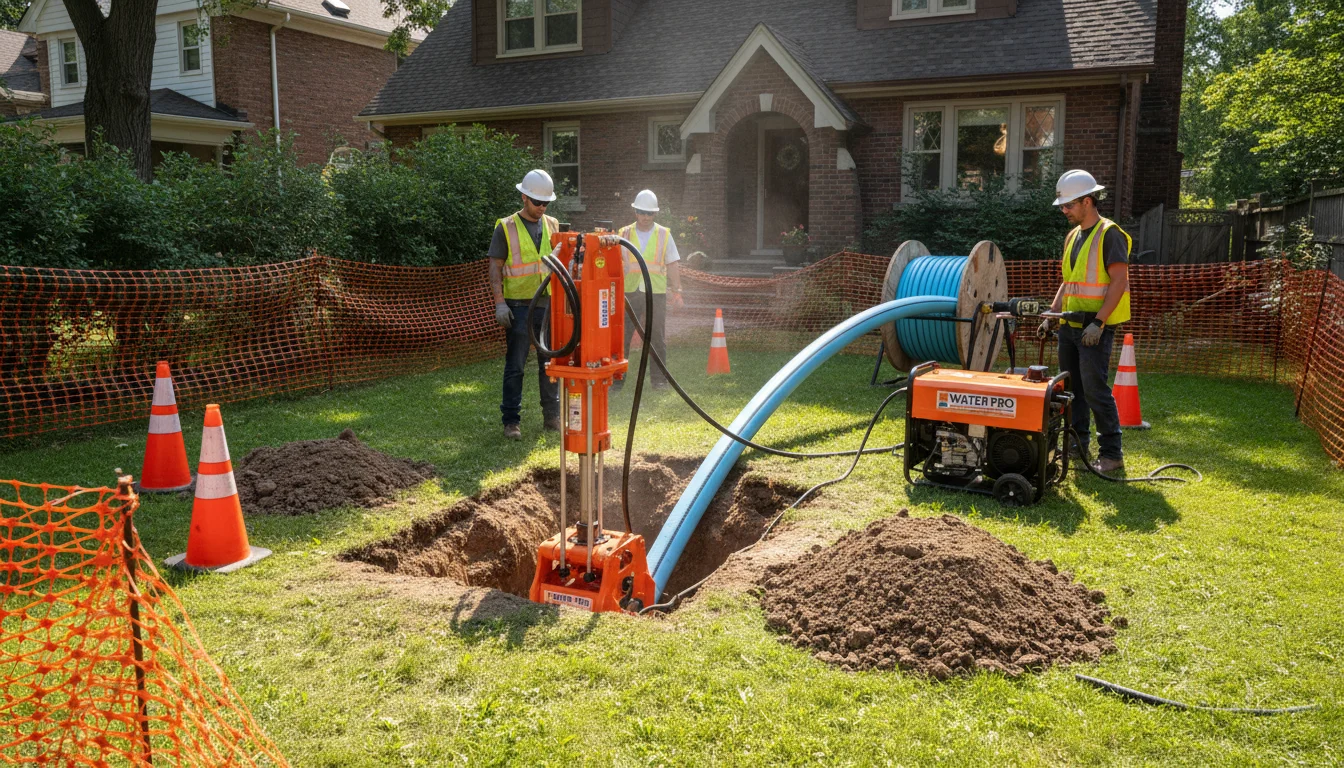
You have three main options for water line replacement in Toronto. Each has trade-offs in cost, disruption, and timeline:
Traditional Excavation ($4,000-$8,000)
How it works: Excavate a continuous trench from street to house, remove old pipe, install new pipe, backfill, restore surface.
Pros:
- Lowest cost option
- Works in all soil conditions
- Allows inspection of entire pipe path
- Can upgrade pipe diameter easily (1/2" → 1")
Cons:
- Destroys landscaping (grass, gardens, walkways)
- Takes 2-4 days with heavy equipment
- Driveway/asphalt requires cutting and repaving ($1,500-$3,000 extra)
- Noisy and disruptive to daily life
Best for: Budget-conscious homeowners with straightforward yard access, no valuable landscaping to preserve.
Trenchless Pipe Bursting ($6,000-$10,000)
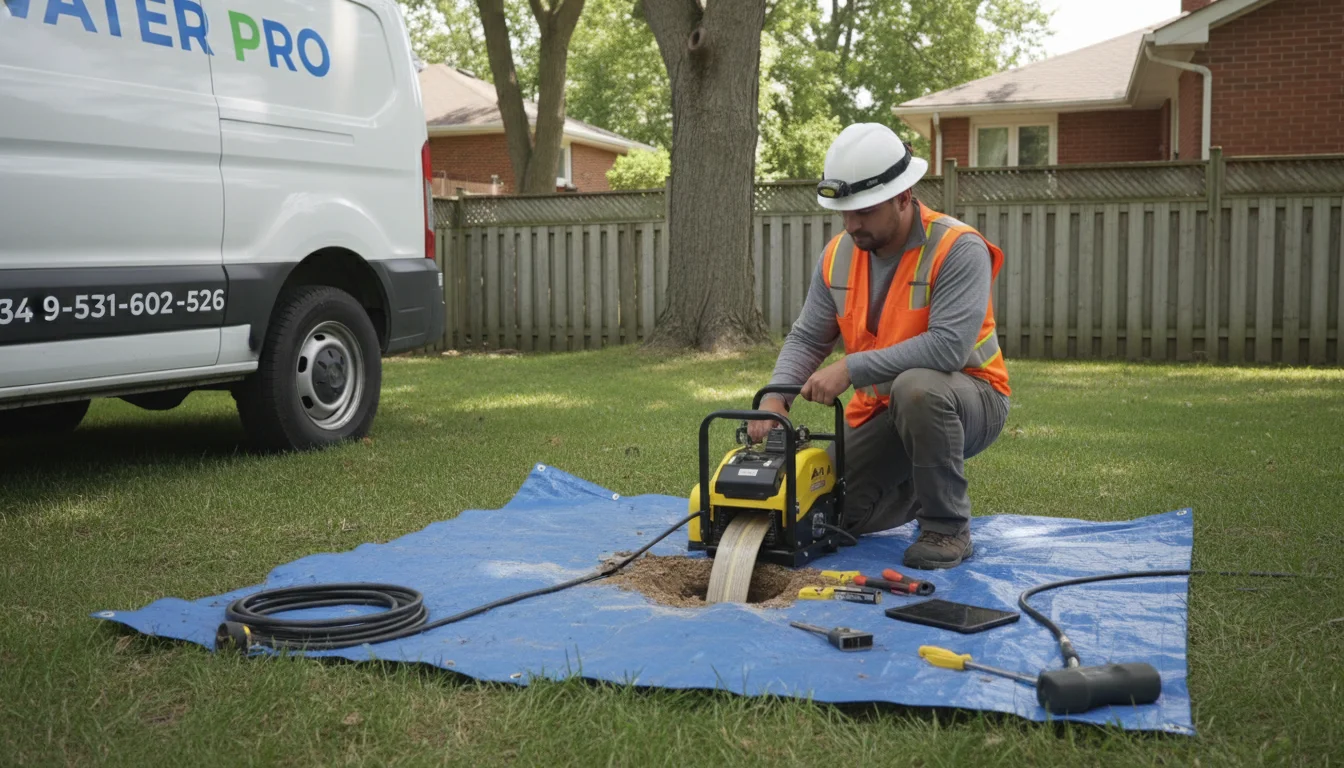
How it works: Dig two small pits (one at house, one at street). Insert bursting head into old pipe, which breaks the old pipe while simultaneously pulling new HDPE or PEX pipe into place.
Pros:
- Minimal surface disruption (two 3×3 ft pits vs. 50-ft trench)
- Preserves driveways, walkways, mature landscaping
- Faster installation (1-2 days vs. 3-4)
- Less restoration cost (patch two pits vs. restore entire trench)
- Ideal for frozen ground in winter (less excavation)
Cons:
- 30-50% more expensive than traditional dig
- Requires existing pipe to follow (can't create new path)
- Not suitable if old pipe is severely collapsed
- Limited to HDPE or PEX (not copper, unless Type K soft copper)
Best for: Homes with established landscaping, driveways over pipe path, or urgent replacement in winter.
💡 Pro Tip: When Trenchless Saves You Money
If your water line runs under a concrete driveway or interlocking stone patio, trenchless pipe bursting costs less than traditional excavation + surface restoration. Breaking and repaving driveways costs $2,000-$4,000—enough to offset the trenchless premium. Call Water Pro at (647) 554-4356 for a site assessment and cost comparison.
Directional Boring ($8,000-$12,000)
How it works: Drill a new underground path using directional boring equipment, avoiding existing obstacles. Pull HDPE pipe through the bored tunnel.
Pros:
- Creates entirely new pipe path (avoid tree roots, utilities, obstacles)
- Zero surface disruption (no digging except entry/exit pits)
- Ideal for complex yard layouts
- Fastest method (1-2 days)
Cons:
- Most expensive option
- Requires specialized equipment (not all plumbers offer it)
- Soil conditions affect feasibility (rocky soil adds difficulty)
- Limited to HDPE pipe only
Best for: Properties with severe obstacles (large trees, underground utilities), high-value landscaping, or where existing pipe path is unusable.
Choosing Pipe Materials: Copper vs. PEX vs. HDPE
The pipe material you choose affects cost, durability, and installation method. Here's how they compare:
| Material | Cost/Foot | Lifespan | Pros | Cons |
|---|---|---|---|---|
| Copper Type K | $15-$25 | 50-70 years | Most durable, City-preferred, proven in Toronto climate | Expensive, requires welding, susceptible to soil acidity |
| PEX (Cross-linked Polyethylene) | $8-$15 | 50+ years | Flexible, freeze-resistant, ideal for trenchless, low cost | Cannot be exposed to sunlight, newer material (less proven) |
| HDPE (High-Density Polyethylene) | $10-$18 | 50-100 years | Corrosion-proof, excellent for trenchless, most durable plastic | Requires heat-fusion welding, stiffer than PEX |
Copper Type K (Most Common in Toronto)
Copper Type K is the thickest, most durable copper pipe—specifically designed for underground water service. Toronto plumbers and the City prefer copper because it has a 70+ year track record in our freeze-thaw climate.
When to choose copper:
- Traditional excavation replacement
- You want maximum longevity (50-70 years guaranteed)
- Neutral/alkaline soil (copper corrodes faster in acidic soil)
- City of Toronto recommends copper for municipal connections
PEX (Best for Trenchless Installation)
PEX is flexible plastic tubing that resists freezing, corrosion, and scaling. It's become popular for trenchless installations because it can bend around obstacles and be pulled through tight spaces.
When to choose PEX:
- Trenchless pipe bursting installation
- Budget-conscious projects ($3,000-$5,000 less than copper)
- Areas with acidic soil (won't corrode like copper)
- Winter installations (freeze-tolerant)
💡 Material Selection Tip
For most Toronto homeowners, Copper Type K offers the best value for traditional excavation. Choose PEX if going trenchless to save on material costs. Avoid galvanized steel (outdated) and standard PVC (not rated for underground water service in cold climates). Water Pro can test your soil pH and recommend the ideal material—call (647) 554-4356.
HDPE (Premium Trenchless Option)
HDPE is the most durable plastic pipe, used in municipal water systems worldwide. It's corrosion-proof, lasts 100+ years, and ideal for directional boring.
When to choose HDPE:
- Directional boring or pipe bursting
- Highly corrosive soil conditions
- Maximum longevity in trenchless installations
- Commercial or high-flow applications
Toronto Lead Pipe Replacement Program
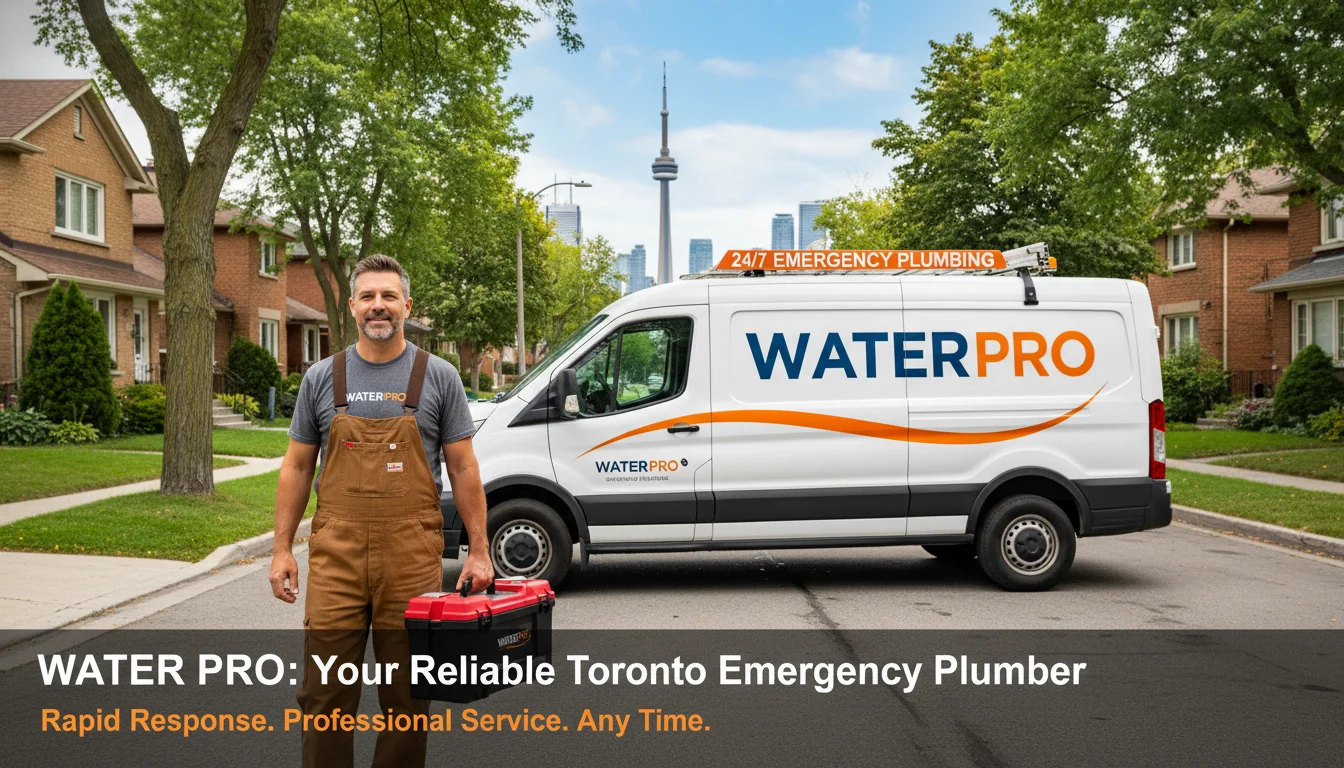
Toronto has approximately 50,000 homes with lead water service lines—remnants from infrastructure built before 1960. The City is working to eliminate all lead pipes by 2030, and homeowners can get significant financial help.
How the Program Works
Step 1: Determine If You Have Lead Pipes
Check where your water line enters your basement:
- Lead pipe: Dull gray color, soft (scratches easily with a coin), non-magnetic, dull thud when tapped
- Copper pipe: Bright orange/brown, shiny, harder surface, metallic ring when tapped
- Galvanized steel: Silver/gray, magnetic, threaded connections
Not sure? Call 311 or use the City's online Water Service Line Map to check City records. Or call Water Pro at (647) 554-4356 for free pipe identification.
Step 2: Understand Public vs. Private Side Responsibility
Your water service line has two sections:
- Public side: Street to property line (City-owned, City replaces FREE)
- Private side: Property line to your house (homeowner responsibility)
The City of Toronto replaces the public side at no cost when they schedule work in your area (6-12 months' notice). You're responsible for replacing the private side—but rebates help significantly.
ℹ️ City of Toronto Lead Pipe Replacement Schedule
Toronto Water prioritizes neighborhoods with the highest concentration of lead pipes. Check the Lead Service Replacement Program page to see if your street is scheduled for 2025-2026. If your area isn't scheduled, you can still apply for rebates and replace privately at any time. Don't wait—lead exposure has immediate health impacts.
Step 3: Apply for Homeowner Rebates
Toronto offers up to $3,400 in rebates for private-side lead pipe replacement:
- Full replacement rebate: Up to $3,400 for replacing your entire private-side lead service line
- Partial replacement: Pro-rated rebate if only a section needs replacement
- Low-income assistance: Additional support available through Toronto Water Equity Program
Eligibility:
- Property located in Toronto with confirmed lead service line
- Work performed by licensed plumber
- Building permit obtained
- City inspection passed
- New line installed within 12 months of City replacing public side (if applicable)
How to Apply:
- Contact Toronto Water at 416-392-8200 or email water@toronto.ca
- Submit rebate application with proof of lead pipe (photos or City records)
- Hire licensed plumber (Water Pro handles permits and paperwork)
- Schedule replacement and City inspection
- Receive rebate payment within 6-8 weeks after inspection approval
Need help navigating the rebate process? Water Pro handles everything—rebate application, permits, City coordination, and replacement. Call (647) 554-4356 for a free lead pipe assessment and rebate estimate.
Why Full Replacement Is Essential (Not Partial)
Some homeowners consider replacing only the public side (when the City does their work) or only the private side. Don't do this. Partial replacement can actually increase lead levels in your drinking water due to galvanic corrosion where dissimilar metals meet.
A Health Canada study found that partial lead service line replacement temporarily spikes lead levels by 2-5x for 6-12 months. Replace both sides simultaneously for maximum health protection.
Toronto Water Line Replacement Permits
All water line replacement in Toronto requires permits and City coordination. Here's what's required and how the process works:
Required Permits
- Building Permit ($300-$500): Required for any modification to your water service line. Applied through Toronto Building. Takes 2-3 weeks to approve.
- Plumbing Permit ($100-$200): Required for licensed plumber to perform work. Usually bundled with Building Permit application.
- Road Allowance Permit ($200-$400): Required if work involves excavation in City right-of-way (street, sidewalk, boulevard). Issued by Transportation Services.
Total permit costs: $300-$600 (included in most plumber quotes).
City Inspection Requirements
Toronto Building requires two inspections:
- Rough-in inspection: After new pipe is installed but before backfill. Inspector verifies proper depth (6 ft), material (copper/PEX/HDPE), and connection points.
- Final inspection + pressure test: After backfill and restoration. Pipe pressurized to 150 PSI for 2 hours to verify no leaks. Inspector witnesses test and approves connection to City main.
Both inspections must pass before Toronto Water connects your new line to the City main.
City of Toronto Water Connection Coordination
Your plumber must coordinate with Toronto Water Operations to shut off the City main and make final connection:
- Submit connection request 5-10 business days before installation
- City schedules shut-off window (usually 2-4 hours)
- Neighboring properties may experience brief water interruption
- City crew makes final connection to municipal main
- Pressure test performed on-site
Important: Only licensed plumbers are authorized to coordinate City connections. DIY water line replacement is illegal in Toronto and voids insurance coverage.
💡 Permit Pro Tip
Choose a plumber who handles all permit applications and City coordination. Water Pro includes permits, inspections, and City coordination in our flat-rate pricing—no surprises. We have direct relationships with Toronto Building and Toronto Water, expediting approvals. Call (647) 554-4356 for turnkey service.
Water Line Replacement Timeline
Here's the complete timeline from decision to completion:
Full Replacement Timeline: 3-5 Weeks
• Plumber inspects existing line, confirms material/depth
• Choose replacement method (excavation vs. trenchless)
• Submit Building Permit and Plumbing Permit applications
• Apply for lead pipe rebate (if applicable)
• Mark underground utilities (call Ontario One Call: 1-800-400-2255)
• Toronto Building reviews permit application (10-15 business days)
• Utility locates completed (gas, hydro, Bell, Rogers)
• Schedule installation date with homeowner
• Coordinate City water shut-off window
• Mark pipe path and access points
• Excavate trench (or dig access pits for trenchless)
• Shut off water at City main (2-4 hour window)
• Remove old pipe
• Install new pipe (copper/PEX/HDPE)
• Rough-in inspection scheduled for next day
• City inspector arrives for rough-in inspection
• Pressure test performed (150 PSI for 2 hours)
• Inspector approves or requests corrections
• Backfill excavation (if approved)
• Restore surface (sod, gravel, asphalt patch)
• Toronto Water crew connects new line to City main
• Final inspection and pressure test
• Water service restored
• Flush lines for 10-15 minutes to clear debris
• Homeowner walkthrough and documentation provided
• Monitor water quality and pressure for first week
• Final landscaping restoration (if delayed for weather)
• Rebate claim submitted (if lead pipe replacement)
• Receive Certificate of Completion and warranty documents
Faster timeline possible? Yes. If permits are pre-approved and you choose trenchless installation, work can be completed in 1-2 days after permit issuance. Emergency replacements (burst pipes) can be done same-day with expedited permitting.
Frequently Asked Questions
Water line replacement in Toronto costs $3,500-$12,000 depending on method and distance. Traditional excavation runs $4,000-$8,000, while trenchless methods (pipe bursting, directional boring) cost $6,000-$12,000. Costs include permits, City coordination, and street-to-house connection.
Yes. The City of Toronto replaces the public portion (street to property line) at no cost when scheduling work in your area. Homeowners must replace the private portion (property line to house). Apply for the Residential Subsidy Program for up to $3,400 in rebates on private-side replacement.
Check your water line where it enters your basement. Lead pipes are dull gray, soft (scratches easily with a coin), and non-magnetic. Copper is bright/orange, steel is silver and magnetic. Homes built before 1960 in Toronto are most likely to have lead service lines. Contact 311 or use the City's online map to check records.
Yes. Water line replacement requires a Toronto Building permit and Plumbing Permit. Your licensed plumber handles permit applications. The City requires coordination for work in the road allowance, inspection after installation, and pressure testing before connection to the City main.
Trenchless replacement uses pipe bursting or directional boring to install new water lines with minimal digging. Pipe bursting breaks the old pipe while pulling in new pipe. Directional boring drills a new path underground. Both methods avoid full excavation, preserving landscaping and driveways while costing 30-50% more than traditional dig.
Traditional excavation takes 2-4 days: Day 1 (excavation, old line removal), Day 2 (new line installation, pressure testing), Day 3-4 (City inspection, backfill, restoration). Trenchless methods take 1-2 days with less disruption. Add 2-4 weeks for permit approval before work begins.
Copper (Type K) is most durable and City-preferred for Toronto installations, lasting 50+ years. PEX is flexible and freeze-resistant, ideal for trenchless installation. HDPE is durable and corrosion-proof. Most Toronto replacements use copper due to code requirements and proven longevity in our climate.
Yes, if low pressure was caused by corroded or undersized pipes. Replacing a deteriorated 1/2-inch lead line with 3/4-inch or 1-inch copper can double your water pressure. However, if low pressure is due to City supply issues, pipe replacement won't help—contact Toronto Water at 416-392-8200 to test street pressure first.
The Bottom Line on Water Line Replacement
Water line replacement is a major investment—but it's unavoidable when your service line fails, corrodes, or contains lead. For Toronto homeowners, the decision comes down to method (traditional vs. trenchless), material (copper vs. PEX vs. HDPE), and timing (emergency vs. planned).
Key takeaways:
- Budget $4,000-$12,000 depending on method and distance
- Trenchless costs more upfront but saves landscaping and time
- Lead pipe replacement is urgent—take advantage of City rebates up to $3,400
- Permits and inspections are mandatory; hire a licensed plumber who handles coordination
- Copper Type K offers best longevity; PEX is ideal for trenchless installs
- Plan for 3-5 weeks total (permits + installation + inspections)
The most important decision? Don't delay replacement if you have lead pipes, frequent leaks, or low water pressure. These problems only get worse—and emergency replacements cost 50-100% more than planned work.
Need Water Line Replacement?
Licensed plumbers available 24/7. Free estimates, upfront pricing, City permit coordination included.
📞 Call (647) 554-4356Same-day emergency service • Lead pipe testing • Rebate application assistance
Related Articles

About Sarah Martinez
Licensed Plumber • License #LP-4129 • 15 Years Experience
Sarah specializes in water line replacement and trenchless technology across the Greater Toronto Area. She's helped over 300 Toronto families navigate lead pipe replacement programs and City rebate applications. Certified in copper soldering, PEX installation, and HDPE fusion welding. Member of the Canadian Institute of Plumbing & Heating (CIPH) and active volunteer with Toronto Environmental Alliance on lead pipe awareness campaigns.
🏆 2024 Excellence in Plumbing Award - Ontario College of Trades • Featured in Toronto Star