🚨 PIPE BURST? DO THIS IMMEDIATELY:
-
1
SHUT OFF MAIN WATER VALVE — Usually in basement near water meter. Turn clockwise until fully closed. If you can't find it, call (647) 554-4356 NOW
-
2
CUT POWER TO AFFECTED AREA — Turn off circuit breaker if water is near outlets, electrical panels, or appliances
-
3
OPEN ALL FAUCETS — Hot and cold, upstairs and down, to drain remaining water from pipes and reduce pressure
-
4
CALL EMERGENCY PLUMBER — (647) 554-4356 — Water Pro responds in 60 minutes or less, 24/7
-
5
DOCUMENT EVERYTHING — Take photos/videos of water damage for insurance before moving items or starting cleanup
Every minute counts. Water damage increases exponentially—a delay of just 2-3 hours can add $2,000-$5,000 to total repair costs due to structural damage and mold growth.
Quick Answer: What You Need to Know Right Now
Burst pipe repair in Toronto costs $300-$1,500+ depending on pipe location and severity. Emergency plumbers can arrive within 60 minutes. Simple exposed pipe repairs run $300-$500. Hidden pipes behind walls cost $600-$1,200. Underground or main water line repairs range $1,000-$2,500+. After-hours emergency service adds 50-75% premium. Most Ontario home insurance covers water damage but NOT the pipe repair itself.
Emergency Action Checklist
- Turn off main water FIRST—this stops damage from escalating
- Exposed basement pipe repair: $300-$500 (2-3 hour repair)
- Behind-wall repair with drywall: $600-$1,200 (4-6 hours)
- Insurance covers water damage, usually NOT pipe repair itself
- Toronto sees 300% more burst pipes in January-February vs. summer
- Delay = exponential cost: First hour $500 damage, 6 hours $5,000+ damage
A burst pipe transforms your peaceful Toronto home into a disaster zone in minutes. Water erupts from walls, floods basements, destroys belongings, and threatens your home's structural integrity. In my 22 years responding to plumbing emergencies across the GTA, I've witnessed burst pipes cause over $75,000 in damage when homeowners didn't know what to do or hesitated to call for help. Speed and proper response are everything.
This comprehensive guide covers everything Toronto homeowners need to know about burst pipe emergencies: immediate response steps, repair costs, insurance coverage, prevention strategies, and how to get professional help fast. If you're experiencing a burst pipe emergency RIGHT NOW, call (647) 554-4356 immediately. Water Pro responds within 60 minutes anywhere in Toronto, Mississauga, Brampton, and throughout the GTA—24/7, including holidays.
What Exactly Is a Burst Pipe?
A burst pipe occurs when a water supply line cracks, splits, or completely ruptures, allowing pressurized water to escape into areas of your home where it doesn't belong. Unlike slow leaks that drip gradually, burst pipes release water rapidly—often under municipal water pressure of 40-80 PSI in Toronto neighborhoods.
Types of burst pipe failures we see in GTA homes:
- Complete rupture — Pipe separates into two pieces, spraying water forcefully
- Longitudinal split — A crack runs along the length of the pipe, creating a water stream
- Pinhole burst — Small hole expands rapidly under pressure, shooting water like a fountain
- Joint failure — Connections between pipes separate, flooding areas quickly
- Freeze burst — Ice expansion creates internal cracks that explode when thawed
The location determines severity. An exposed pipe in your basement utility area is relatively straightforward to repair. A pipe hidden inside an exterior wall or buried underground requires extensive detective work and invasive repairs—dramatically increasing costs and damage potential.
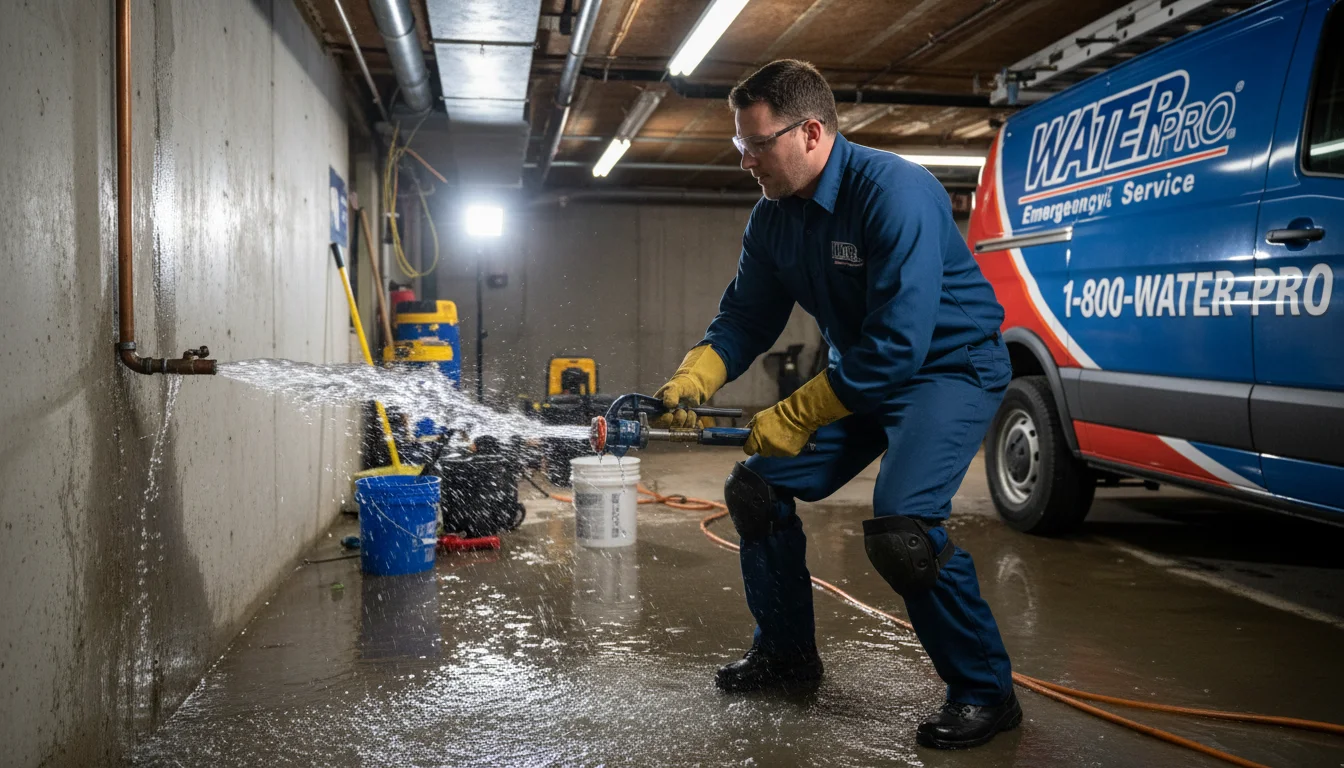
Burst Pipe Repair Costs in Toronto: Complete 2025 Breakdown
Here's what GTA homeowners actually pay for emergency burst pipe repairs based on our 5,234+ service calls in the past year:
| Repair Type & Location | Cost Range | Repair Time |
|---|---|---|
| Exposed Pipe (Basement Ceiling/Utility Room) | $300 - $500 | 1-3 hours |
| Behind Drywall (Interior Wall) | $600 - $1,200 | 4-6 hours |
| Inside Exterior Wall (With Insulation) | $800 - $1,500 | 5-8 hours |
| Under Concrete Slab Foundation | $1,200 - $3,000 | 1-2 days |
| Main Water Line (Underground Yard) | $1,500 - $4,000 | 1-3 days |
| Copper Pipe Material Cost (per linear foot) | $25 - $50 | — |
| PEX Pipe Material Cost (per linear foot) | $15 - $30 | — |
| Emergency After-Hours Premium (Nights/Weekends/Holidays) | +50% to +75% | Same response time |
| Drywall Repair & Painting (per wall section) | $200 - $500 | Additional 2-4 hours |
⚠️ Critical Cost Factor Most Homeowners Miss
These prices cover ONLY the pipe repair. Water damage restoration—extraction, structural drying, mold prevention, flooring replacement, drywall replacement beyond immediate repair area—is separate and typically costs $2,000-$15,000+ depending on how long water flowed. This is why shutting off your main water valve immediately is so crucial. Every hour of delay can add $500-$2,000 to your total bill.
What Affects Your Repair Cost?
Five factors determine final price:
- Pipe accessibility — Exposed pipes are simple. Hidden pipes require opening walls, floors, or excavation
- Pipe material — Copper costs more than PEX but lasts 50+ years. Old galvanized steel often requires full section replacement
- Time of day — After-hours, weekends, and holidays add 50-75% premium (but prevent $5,000+ in additional water damage)
- Extent of damage — Single small crack vs. multiple burst points or corroded sections requiring longer replacement
- Code compliance upgrades — Older homes may need valve additions or pressure regulation to meet current Ontario Building Code
💡 Pro Tip: When Emergency Rates Save Money
Yes, calling a plumber at 2 AM costs 50-75% more than daytime rates. But consider: Municipal water pressure in Toronto is 50-70 PSI. At that pressure, a burst pipe releases approximately 6-12 gallons per minute. Over 6 hours (waiting until morning), that's 2,160-4,320 gallons flooding your home. Water damage restoration for that volume costs $8,000-$20,000+. The $200-$400 emergency premium suddenly seems like a bargain. Call (647) 554-4356 immediately—don't wait.
Why Do Pipes Burst? Toronto-Specific Causes
Understanding why pipes burst helps you prevent future emergencies, identify high-risk areas in your home, and explain circumstances to your insurance company. Here are the primary culprits we see in Greater Toronto Area properties:
1. Freezing Temperatures (Toronto's #1 Cause)
Toronto's harsh winter climate is the leading cause of burst pipes, responsible for approximately 65% of emergency calls between December and March. When outdoor temperatures drop below -7°C, uninsulated or poorly insulated pipes can freeze. As water transitions from liquid to ice, it expands by approximately 9% in volume. In a confined pipe, this expansion creates pressure exceeding 2,000 PSI—far beyond what residential plumbing is designed to withstand.
High-risk freeze locations in Toronto homes:
- Exterior walls — Especially north-facing walls in neighborhoods like North York, Scarborough, and Etobicoke where cold winds penetrate
- Unheated crawl spaces and attics — Common in older Cabbagetown, The Annex, and East York homes built before modern insulation standards
- Garage pipes — Detached or attached garages where pipes run through unheated spaces
- Outdoor hose bibs (sill cocks) — Should be shut off from inside and drained by November 1st
- Basement perimeter pipes — Near foundation walls where cold transfers from frozen ground
- Vacant home pipes — Properties left unheated during winter vacation or extended absence
The damage often doesn't appear until temperatures rise. Ice inside the pipe may hold back water pressure temporarily. When thawing begins, the structural damage becomes apparent—suddenly releasing pressurized water throughout your home.
2. Pipe Corrosion and Material Degradation
Many Toronto homes constructed between 1940-1980 contain aging plumbing materials that deteriorate over time. Toronto's water, sourced primarily from Lake Ontario and treated by municipal facilities, has a hardness level around 124 mg/L (milligrams per liter) of calcium carbonate—considered "moderately hard." This mineral content gradually builds up inside pipes, accelerating corrosion in vulnerable materials.
Common aging pipe materials in GTA homes:
- Galvanized steel — Lifespan 40-50 years. Homes built before 1970 often have these pipes, now past their useful life
- Older copper (pre-1970) — While copper lasts 50-70 years, older installations may have failed soldered joints
- Cast iron — Primarily drain pipes, but some older homes used it for water supply. Rusts from inside out
- Lead pipes — Extremely old Toronto homes (pre-1950s) may still have lead service lines. These are brittle and crack easily
Warning signs of corroding pipes:
- Rusty, discolored water when you first turn on faucets
- Progressively decreasing water pressure over months/years
- Visible corrosion, green staining (copper oxidation), or rust on exposed pipes
- Small pinhole leaks appearing with increasing frequency
- Metallic taste in drinking water (sign of dissolved metals)
3. Excessive Water Pressure
Toronto's municipal water system delivers varying pressure depending on neighborhood topography and proximity to water towers. Areas near elevated storage tanks—particularly in North York, Willowdale, parts of Markham, and Richmond Hill—can experience pressure exceeding 80 PSI (pounds per square inch). Residential plumbing systems are designed for 40-60 PSI optimal operation.
Chronic high pressure stresses pipe joints, weakens soldered connections, and accelerates material fatigue. Over years, this stress creates weak points that eventually fail—often without warning.
💡 Check Your Home's Water Pressure
Buy a simple pressure gauge ($15-$25 at Home Depot or Canadian Tire) that screws onto an outdoor hose bib. Check pressure when no water is running inside your home. If it exceeds 60 PSI, install a pressure-reducing valve (PRV). Installation costs $400-$700 but can prevent a $5,000+ burst pipe emergency and extends the life of all your plumbing fixtures, appliances, and water heater.
4. Water Hammer and Pressure Surges
"Water hammer" is the loud banging sound that occurs when flowing water suddenly stops—like when a washing machine valve closes or you quickly shut off a faucet. This creates a pressure shockwave that travels backward through your pipes. In Toronto's older homes with long plumbing runs and no shock arrestors (air chambers or mechanical dampeners), repeated water hammer events weaken pipes and joints.
Municipal pressure fluctuations from fire hydrant use, water main work, or seasonal demand changes also create stress. In summer 2024, several Toronto neighborhoods experienced burst pipes following pressure surges when the city brought new water mains online in the Liberty Village and Leslieville areas.
5. Tree Root Intrusion (Underground Pipes)
Toronto is known as a "City Within a Park" for good reason—we have one of the largest urban forests in North America. While beautiful, our mature trees pose serious threats to underground water supply lines. Tree roots naturally seek moisture sources. They exploit tiny cracks in underground pipes, infiltrating and expanding the openings.
Highest risk neighborhoods for tree root damage:
- Forest Hill — Mature estates with 60-100 year old trees and extensive root systems
- Rosedale — Large properties with old maples, oaks, and willows near underground pipes
- High Park area — Proximity to parkland means aggressive root spread into private properties
- The Beaches — Mature tree canopy and sandy soil allow roots to travel far distances
- Lawrence Park — Old-growth trees throughout this established neighborhood
Once roots crack a pipe, Toronto's freeze-thaw cycles in winter expand the damage. By spring thaw, what started as a small crack becomes a major rupture.
6. Ground Movement and Soil Settling
Underground water supply lines in Toronto are buried at least 6 feet deep—below the frost line to prevent freezing. But this depth means pipes are subjected to ground movement from frost heave (ground expansion from freezing), soil settling around foundations, and pressure from construction activity. Older rigid pipes (copper, galvanized steel) cannot flex with ground movement and eventually crack or separate at joints.
New construction in previously undeveloped areas—like parts of Scarborough, North York, and Etobicoke near the waterfront—often shows ground settling in the first 5-10 years, stressing newer underground pipes.
Insurance Coverage for Burst Pipes in Ontario
Understanding what your home insurance covers—and doesn't cover—is critical when dealing with burst pipe damage. The financial stakes are enormous: while pipe repair itself might cost $500-$1,500, associated water damage can reach $20,000-$50,000+ for extensive flooding.
✅ What Most Ontario Home Insurance Policies Cover:
- Water damage to structure — Floors, walls, ceilings, insulation, framing damaged by burst pipe water
- Water damage to contents — Furniture, electronics, clothing, stored items destroyed by water
- Emergency water extraction — Professional cleanup companies removing standing water
- Structural drying and dehumidification — Industrial fans and dehumidifiers preventing mold
- Mold remediation — If mold results directly from the sudden water damage
- Temporary living expenses — Hotel, meals, storage if your home becomes uninhabitable during repairs
- Contents storage — Moving and storing belongings during renovation
❌ What's Typically NOT Covered:
- The pipe repair itself — Considered normal home maintenance, not insurable damage
- Gradual or slow leaks — Must be "sudden and accidental" to qualify for coverage
- Lack of maintenance damage — If old, corroded pipes burst due to deferred upkeep
- Freezing in vacant homes — If home was unoccupied for 4+ consecutive days in winter without maintaining 15°C heat OR draining all pipes
- Sewer backup — Requires separate sewer backup endorsement (highly recommended for Toronto homes)
- Flood water — Overland flooding requires separate flood insurance
Critical Ontario Policy Requirements
The "Vacant Home in Winter" Clause: Nearly all Ontario insurance policies include a winter vacancy clause. If your home will be vacant (unoccupied) for 4 or more consecutive days during winter heating season (typically November 1 - April 1), you MUST either:
- Maintain heat at minimum 15°C (59°F), verified by having someone check daily, OR
- Drain the entire water system (all pipes, water heater, appliances)
Many Toronto homeowners going to Florida or the Caribbean for winter vacation don't realize this requirement. If a pipe bursts while you're away and you haven't met these conditions, your entire claim can be denied—leaving you with $30,000-$100,000+ in damage to cover out-of-pocket.
⚠️ Going Away This Winter? Do This NOW
If you'll be away from your Toronto home for more than 4 days between November-April:
- Notify your insurance company in writing (email is fine) of your travel dates
- Arrange daily home checks by a friend, neighbor, or property management service
- Set thermostat to 18-20°C minimum (higher than required 15°C for safety margin)
- Install a WiFi-connected water leak detector ($80-$200) that alerts your phone
- Know your main water shutoff location and leave instructions for your home checker
- Consider installing an automatic water shutoff system ($600-$1,200) that detects leaks and closes main valve
Document everything. Keep email confirmations, photos of thermostat settings, and visitor logs. If a claim occurs, this documentation proves you took reasonable precautions.
Maximizing Your Insurance Claim
Steps to document damage properly for maximum recovery:
- Photograph EVERYTHING before any cleanup — Water on floors, damaged items, wet walls, source of burst. Take hundreds of photos from multiple angles
- Video walkthrough — Narrate what you're seeing: "This is January 15th, 2:30 PM, showing water throughout basement from burst pipe"
- Note the timeline — Record when you discovered the burst, when water was shut off, when you called plumber, when plumber arrived
- Keep ALL receipts — Emergency plumber, water extraction company, temporary lodging, replacement items, cleaning supplies
- Don't throw away damaged items immediately — Your adjuster needs to see them for valuation
- Get written documentation from your plumber — Water Pro provides detailed reports including cause, repair performed, and professional opinion on whether damage was sudden vs. gradual
- Report the claim immediately — Most policies require "prompt" notification. Call within 24-48 hours
Water Pro has worked with hundreds of insurance adjusters across all major Ontario insurance companies. We provide comprehensive documentation to support your claim, including:
- Detailed photos of the burst pipe and failure point
- Written report explaining cause (freeze, age, pressure, etc.)
- Professional opinion on whether damage was sudden vs. gradual
- Itemized repair invoice with parts and labor breakdown
- Timeline documentation of our emergency response
Toronto Neighborhood Burst Pipe Risk Map
Based on our 5,234+ burst pipe service calls in the past year, certain Toronto neighborhoods experience significantly higher burst pipe rates than others. Three factors drive this concentration: housing age, construction materials, and infrastructure challenges.
HIGHEST RISK: Historic Neighborhoods (Built Pre-1960)
These areas account for 45% of our emergency burst pipe calls despite representing only 20% of Toronto's housing stock:
- The Annex — Victorian and Edwardian homes (1890s-1920s) with original cast iron, lead, and early copper pipes. Many basement apartments have exposed older piping. Mature tree canopy creates underground root pressure. Risk level: Very High
- Cabbagetown — Similar vintage to The Annex. Row houses share plumbing walls, so one burst often indicates neighbors' pipes are equally at risk. Limited insulation in exterior walls. Risk level: Very High
- Rosedale — Large estate homes with complex plumbing systems. Long pipe runs from street to house create more failure points. Extensive mature trees (oaks, maples 80-100 years old) aggressively seek underground pipes. Risk level: High
- Forest Hill — Similar issues to Rosedale. High-value properties often have multiple bathrooms and additions with plumbing extensions vulnerable to pressure issues. Risk level: High
- East York — Post-war boom construction (1945-1960) used galvanized steel pipes now 60-80 years old—well past 40-50 year lifespan. Bungalows with crawl spaces see frequent freeze bursts. Risk level: Very High
- Long Branch (Etobicoke) — Many homes were originally summer cottages converted to year-round residences. Inadequate insulation and exposed pipe runs in unheated areas. Lakefront properties see temperature extremes. Risk level: High
MODERATE RISK: Suburban Development (1960s-1990s)
These areas have newer construction but face different challenges:
- North York (1960s-1980s areas) — Mix of aging copper and newer PEX. Some areas experience high water pressure from elevated storage tanks. Risk level: Moderate
- Scarborough (Bungalow belt) — Many bungalows have crawl spaces where pipes are vulnerable to freezing. Aging copper approaching 40-50 year lifespan. Risk level: Moderate
- Etobicoke (central areas) — Mixed housing stock. Waterfront properties near Lake Ontario see significant temperature swings—freeze-thaw cycles stress pipes. Risk level: Moderate
- Mississauga (Port Credit, Streetsville, Meadowvale) — Older sections of Mississauga have aging infrastructure. Newer developments (post-1990) have better materials but rapid temperature changes near the lake still cause issues. Risk level: Low to Moderate
LOWER RISK: Modern Construction (Post-1990)
Newer builds use better materials and meet current building codes, but aren't immune:
- Vaughan, Richmond Hill, Markham — Newer subdivisions (1990s-2020s) predominantly use PEX plumbing, which is more freeze-resistant and flexible than copper. Better insulation standards. Risk level: Low
- Downtown Toronto condos — Climate-controlled buildings with shared plumbing infrastructure. However, common areas (parking garages, mechanical rooms) can have issues. Older condo buildings (1970s-1980s) aging into moderate risk. Risk level: Very Low (individual units) / Low to Moderate (building common elements)
💡 Know Your Home's Plumbing Age
When buying a Toronto-area home, ask about plumbing age during inspection. If copper pipes are 40+ years old or you have galvanized steel pipes, budget $8,000-$25,000 for eventual repiping. Better yet, negotiate with the seller to repipe before purchase or get a price reduction. A camera inspection costs just $200-$400 and reveals hidden problems before they become your $20,000 emergency.
How to Prevent Burst Pipes in Your Toronto Home
Prevention costs a fraction of emergency repairs and water damage restoration. Here's a comprehensive seasonal prevention plan for Greater Toronto Area homeowners:
Fall Preparation (October-November)
Complete these tasks before first freeze (typically early November):
- Disconnect all outdoor hoses — Drain completely and store indoors. Hoses left connected can trap water that freezes and bursts the hose bib
- Shut off and drain outdoor faucets (hose bibs) — Most Toronto homes have interior shutoff valves for exterior faucets. Close the valve, go outside, open the outdoor faucet, and let remaining water drain out. Leave the outdoor faucet open all winter
- Insulate exposed pipes — Foam pipe insulation ($2-$5 per linear foot at hardware stores) for exposed pipes in basements, crawl spaces, attics, and garages. Pay special attention to pipes along exterior walls
- Seal air leaks around pipes — Use expanding foam or caulk to seal gaps where pipes penetrate exterior walls. These gaps let cold air infiltrate insulation and freeze pipes
- Service your furnace — Most burst pipes occur when furnaces fail during extreme cold. Annual maintenance ($150-$250) is cheap insurance. If your furnace is 15+ years old, consider replacement before winter
- Locate your main water shutoff valve — Make sure everyone in your household knows where it is and how to turn it off. Practice operating it. If it's stuck or corroded, call a plumber to replace it now—not during an emergency
- Install a smart water leak detector — WiFi-connected sensors ($80-$200) alert your smartphone when water is detected. Place them near water heater, under sinks, in basement, near washing machine
During Extreme Cold Snaps (Below -15°C)
When Environment Canada issues extreme cold warnings for Toronto:
- Let faucets drip overnight — Open faucets on exterior walls to a steady drip (pencil-lead width stream). Moving water resists freezing. The water "waste" costs $2-$5 vs. $10,000 in burst pipe damage
- Open cabinet doors — Under kitchen and bathroom sinks on exterior walls. This allows warm room air to circulate around pipes
- Maintain minimum 18°C throughout your home — Don't turn heat down to save money when away for a day or two. The $5-$10 in heating costs prevent $5,000+ in damage
- Keep garage doors closed — If water supply pipes run through your garage (common in some Toronto homes), minimize cold air exposure
- Run bathroom and kitchen faucets — Use faucets throughout your home periodically to keep water moving in all pipes
Winter Vacation Precautions
If leaving your Toronto home for 4+ days in winter:
- Notify your insurance company — Email or call to inform them of travel dates and your winterization plan. Keep confirmation
- Arrange daily home checks — Friend, neighbor, or professional property manager should visit inside your home daily. Provide emergency contact numbers and main water shutoff location
- Set thermostat to 18-20°C minimum — Higher than insurance-required 15°C for safety margin
- Consider shutting off main water — Drain all pipes if home will be vacant extended period. Flush toilets after draining to remove tank water. Pour RV antifreeze in toilet bowls and all drain traps
- Install automatic water shutoff system — Devices like Flo by Moen or Phyn Plus ($600-$1,200 installed) detect leaks and automatically close main valve. Worth considering if you travel frequently
Year-Round Maintenance
Ongoing tasks to reduce burst pipe risk:
- Monitor water pressure — Test annually with pressure gauge ($15-$25). If consistently above 60 PSI, install pressure-reducing valve ($400-$700)
- Inspect visible pipes quarterly — Look for corrosion, green staining (copper oxidation), rust (galvanized steel), small leaks, or moisture around joints
- Address small leaks immediately — Pinhole leaks are early warning signs. A $200-$400 repair now prevents a $5,000+ burst later
- Consider repiping aging systems — If your home has galvanized steel pipes over 40 years old or copper pipes over 50 years old, budget for proactive replacement. Full-home repipe costs $8,000-$25,000 but eliminates burst risk for 50+ years
- Schedule camera inspections for older homes — Every 3-5 years for homes over 30 years old. Camera inspection reveals internal corrosion, cracks, and root intrusion before catastrophic failure
- Replace rubber washing machine hoses — Use braided steel hoses ($30-$50/pair). Rubber hoses burst frequently, flooding laundry areas
- Maintain water heater — Annual flush and inspection. Burst water heater supply lines flood homes. Replace water heaters over 10-12 years old
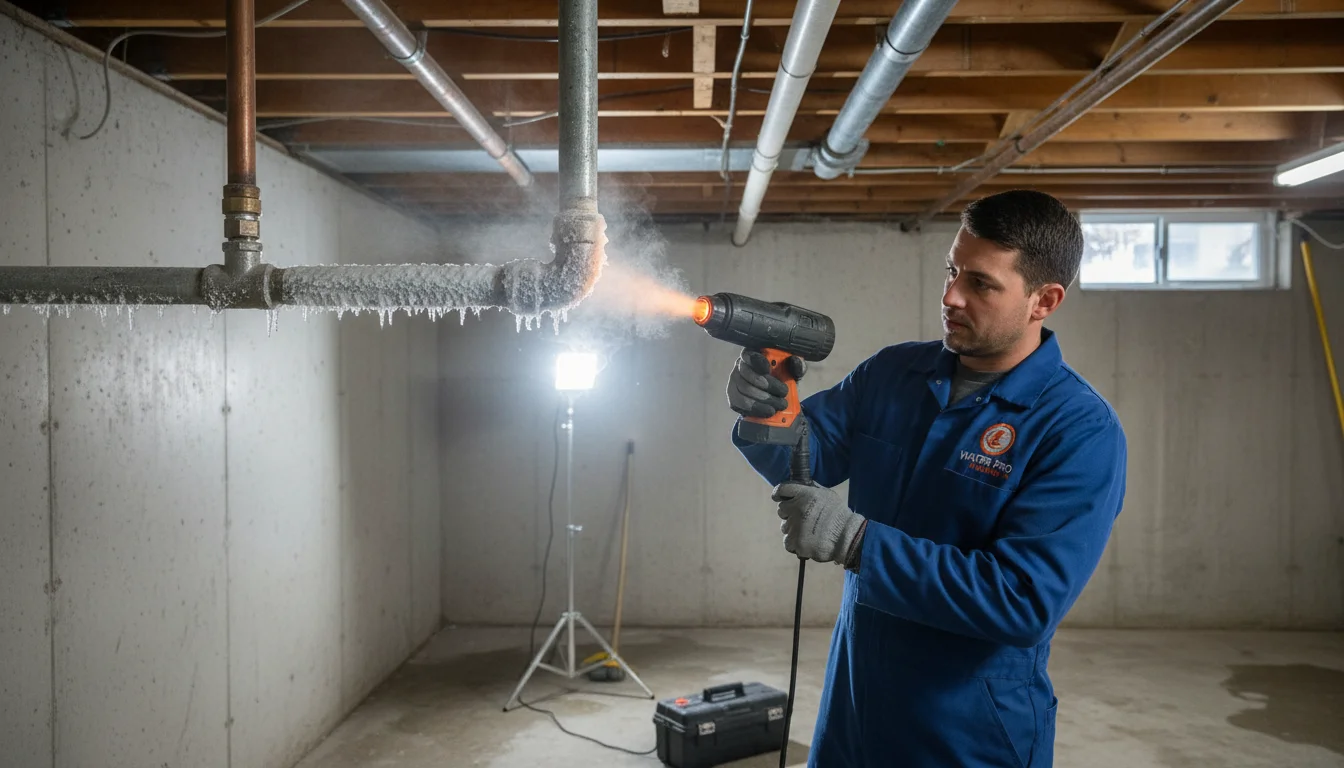
Emergency Temporary Fixes While Waiting for Plumber
After you've shut off the main water and called an emergency plumber at (647) 554-4356, you may want to attempt a temporary fix for small leaks to minimize damage during the 30-60 minute wait for arrival. These are strictly temporary measures—not permanent repairs.
Pipe Repair Clamp (Best Temporary Solution)
Available at Home Depot, Canadian Tire, or Rona for $15-$30. These metal or plastic sleeves with rubber gaskets wrap around the damaged pipe section. Tighten the screws to compress the gasket against the pipe, creating a temporary seal.
Works for: Cracks up to 2-3 inches long, pinhole leaks, small splits
Effective duration: 24-48 hours
How to apply: Dry the pipe completely (use towels and hair dryer). Position clamp over leak. Tighten screws evenly in alternating pattern until gasket compresses fully
Rubber Sheet + Hose Clamp Method
Use a piece of rubber (old inner tube, rubber glove, gasket material) wrapped around the leak and secured with automotive hose clamps or C-clamps.
Works for: Small to medium leaks on accessible pipes
Effective duration: 12-24 hours
How to apply: Dry pipe completely. Wrap rubber around leak area, extending 2-3 inches on each side. Secure with hose clamps, tightening until leak stops
Epoxy Putty (J-B Weld, Plumber's Epoxy)
Two-part epoxy putty that sets hard when kneaded together. Available at hardware stores for $8-$15.
Works for: Pinhole leaks, very small cracks
Effective duration: 24-72 hours
How to apply: Water must be OFF. Dry pipe completely—epoxy won't bond to wet surfaces. Cut equal amounts of both putty components. Knead until uniform color. Press firmly over leak, extending 1-2 inches around damaged area. Smooth with wet fingers. Sets in 25-30 minutes, fully cured in 2-3 hours
Duct Tape or Waterproof Tape (Least Effective)
Only for the tiniest pinhole leaks and only until better solutions arrive.
Works for: Extremely small pinhole leaks only
Effective duration: 2-6 hours
How to apply: Dry pipe completely. Wrap tape tightly around leak area with 50% overlap, extending 3-4 inches on each side
⚠️ Critical Temporary Fix Warnings
- These are NOT permanent repairs. Professional pipe repair is mandatory within 24-48 hours
- Do not restore full water pressure after temporary fix. If you must have water, keep pressure low
- Monitor constantly. Temporary fixes can fail suddenly, causing immediate flooding
- For major splits or breaks, don't attempt temporary repair—keep water off and wait for professional
- Document your temporary fix with photos for insurance—shows you took reasonable steps to minimize damage
What to Expect When Water Pro Arrives
Understanding our emergency response process helps you prepare and sets realistic expectations. Here's exactly what happens when you call (647) 554-4356 for burst pipe emergency service:
Step 1: Emergency Dispatch (0-5 minutes)
Our 24/7 emergency line answers within 3 rings. You'll speak immediately with a dispatcher—never voicemail. They'll ask:
- Your address and best callback number
- Whether main water is shut off (if not, they'll guide you through it on the phone)
- Location of the burst (basement, wall, underground, etc.)
- Approximate severity (spray, stream, drip)
- Any safety concerns (water near electrical panels, flooding depth)
Based on your location, we dispatch the nearest available licensed plumber. Most Toronto, Mississauga, and Brampton locations receive response within 30-45 minutes. Outer GTA areas (Markham, Vaughan, Oakville, Burlington) typically within 60 minutes.
Step 2: Arrival and Assessment (5-15 minutes)
Our plumber arrives in a fully-stocked emergency vehicle carrying all common pipe repair materials, tools, and safety equipment. First actions:
- Confirm water is shut off — If you couldn't locate or operate the main valve, we shut it off immediately
- Safety assessment — Check for electrical hazards, structural concerns, flooding depth
- Locate burst source — Identify exactly where pipe failed. May require opening walls or cutting into drywall
- Determine cause — Freeze, corrosion, pressure, age—understanding cause informs repair approach
- Assess extent — Is it one burst or multiple weak points? Will one repair suffice or is section replacement needed?
Step 3: Transparent Pricing Before Work Begins
Before touching your plumbing, we provide clear written pricing:
- Exact repair method (clamp, pipe section replacement, full line replacement)
- Materials needed and costs
- Labor time estimate
- Total cost including emergency premium (if after-hours)
- Additional costs if wall/floor repair is required
You approve before we proceed. No surprises, no hidden fees. If you decline, you pay only the $85-$125 emergency service call fee. But in 22 years, I've never had a homeowner decline repair when water is actively damaging their home.
Step 4: Repair Execution (1-6 hours)
Repair timeline varies by complexity:
- Exposed pipe, simple crack: 1-2 hours — Cut out damaged section, install new pipe, test under pressure
- Behind drywall: 3-5 hours — Cut access hole, repair pipe, temporary drywall patch (full drywall repair scheduled separately)
- Underground or under slab: 4-8 hours or multi-day — Excavation, pipe replacement, backfill. May require specialized equipment
All repairs include pressure testing before closing walls and restoring water. We run water at full pressure for 15-30 minutes to ensure no leaks and verify repair integrity.
Step 5: Cleanup and Documentation
We clean work area, dispose of damaged pipe sections and materials. You receive:
- Detailed written invoice with parts, labor, timestamps
- Photos of the burst, cause, repair process
- Professional opinion letter for insurance (cause, whether damage was sudden vs. gradual)
- 90-day repair warranty
- Recommendations for preventing future bursts
Step 6: Water Damage Referral (If Needed)
If flooding was extensive, we refer you to certified water damage restoration companies we've worked with for years. They handle:
- Professional water extraction
- Structural drying (industrial fans and dehumidifiers)
- Mold prevention treatment
- Flooring and drywall replacement
- Insurance coordination and direct billing
You're not alone in this process. We guide you through every step, from emergency repair to insurance claim to full restoration.
Frequently Asked Questions About Burst Pipes
Immediately locate and turn off your main water shutoff valve, usually found near the water meter in your basement or utility room. Turn clockwise to close. Next, turn off the electrical circuit breaker if water is near outlets or appliances. Open all faucets to drain remaining water. Call an emergency plumber at (647) 554-4356. Move valuables away from water and document damage with photos for your insurance claim.
Emergency burst pipe repair in Toronto ranges from $300-$1,500 depending on severity and location. Simple exposed pipe repairs (basement ceiling) cost $300-$500. Pipes hidden behind walls cost $600-$1,200 including drywall repair. Underground or main line bursts cost $1,000-$2,500+. Emergency service after-hours adds 50-75% to base rates. Water Pro provides transparent pricing before starting work.
Most Ontario home insurance policies cover sudden and accidental burst pipe water damage to your home and belongings. Coverage typically includes water extraction, structural drying, damaged flooring and drywall replacement. However, the pipe repair itself is usually considered maintenance and not covered. Gradual damage from slow leaks is also excluded. If your home was vacant for 4+ days in winter without maintaining heat above 15°C, your claim may be denied.
Water Pro guarantees emergency response within 60 minutes anywhere in the Greater Toronto Area, 24 hours a day, 7 days a week, including all holidays. We dispatch the nearest available licensed plumber immediately upon your call to (647) 554-4356. Our plumbers carry fully-stocked emergency repair vehicles and can handle most burst pipe repairs on the first visit.
Frozen water is the #1 cause of burst pipes in Toronto. When temperatures drop below -7°C, water in pipes freezes and expands by approximately 9%, creating internal pressure exceeding 2,000 PSI. This pressure causes pipe walls to crack or completely rupture. Most vulnerable are pipes in exterior walls, unheated crawl spaces, attics, and garages. Older homes in neighborhoods like The Annex, Cabbagetown, and East York with inadequate insulation see significantly higher burst pipe rates.
For small cracks or pinhole leaks, temporary fixes include pipe repair clamps ($15-$30 at hardware stores), rubber sheeting secured with hose clamps, or epoxy putty (water must be off and pipe completely dry). These are strictly temporary measures good for 24-48 hours maximum. Do NOT consider them permanent repairs. For major splits or complete pipe breaks, shut off water immediately and wait for professional repair—attempting DIY fixes can worsen damage.
Toronto's older neighborhoods see 3-4 times more burst pipe emergencies than newer suburbs. Highest risk areas include: The Annex (Victorian homes with original pipes), Cabbagetown (1890s-1920s construction), Rosedale (large homes with extensive plumbing), East York (post-war galvanized steel pipes), and Long Branch (cottage conversions). These areas combine aging infrastructure, inadequate insulation, mature tree root systems, and temperature extremes.
Prevention steps for Toronto homeowners: Before winter, disconnect outdoor hoses, shut off exterior faucets, insulate exposed pipes in basements and crawl spaces ($2-$5/foot), seal air leaks around pipes in exterior walls. During cold snaps below -15°C, let faucets on exterior walls drip, open cabinet doors under sinks, maintain 18°C minimum heat. Year-round: check water pressure (install PRV if over 60 PSI), schedule camera inspections every 3-5 years for homes over 30 years old.
Get Emergency Help Now—Don't Wait
A burst pipe is one of the most time-sensitive home emergencies you'll face. Unlike a leaky faucet or slow drain, a burst pipe releases hundreds of gallons per hour, causing exponential damage with each passing minute. Water destroys flooring, drywall, insulation, electrical systems, and personal belongings. Mold begins growing within 24-48 hours in damp conditions, creating health hazards and adding thousands to restoration costs.
If you're experiencing a burst pipe emergency RIGHT NOW, stop reading and call (647) 554-4356 immediately. Water Pro responds within 60 minutes anywhere in Toronto, Mississauga, Brampton, Scarborough, North York, Etobicoke, Markham, Vaughan, Richmond Hill, Oakville, and Burlington—24 hours a day, 7 days a week, 365 days a year including Christmas, New Year's, and all holidays.
If you're reading this for prevention or future reference, take action now before emergency strikes:
- Schedule a winter-readiness inspection ($150-$300) to identify vulnerable pipes before first freeze
- If your home is over 30 years old, book a camera inspection ($200-$400) to catch problems before they burst
- If you have galvanized steel pipes over 40 years old or copper pipes over 50 years old, get a repiping quote ($8,000-$25,000) to eliminate risk permanently
- Install foam pipe insulation ($2-$5/foot) on exposed pipes in basements, crawl spaces, and garages this weekend
- Test your water pressure and install a pressure-reducing valve ($400-$700) if it exceeds 60 PSI
Prevention costs a fraction of emergency repair and water damage restoration. A $300 inspection can prevent a $20,000 disaster. A $5,000 proactive repipe eliminates burst pipe risk for 50+ years and increases your home's value.
🚨 Burst Pipe Emergency? We're Already On The Way
Licensed master plumbers available 24/7 across the GTA. 60-minute response guaranteed. Fully-stocked emergency vehicles ready to repair any burst pipe on first visit.
📞 Call (647) 554-4356 NOW90-day repair warranty • Transparent pricing before work begins • Insurance documentation provided • 5,234+ families helped
Related Emergency Guides

About James Wilson
Emergency Plumbing Specialist • License #EP-3421 • 22 Years Experience
James has responded to over 3,000 burst pipe emergencies across the Greater Toronto Area since 2003. He specializes in rapid emergency response, winter freeze prevention, and training new plumbers in advanced burst pipe repair techniques. James holds master plumber certification from the Ontario College of Trades and is an active member of the Canadian Institute of Plumbing & Heating.
🏆 2024 Emergency Response Excellence Award - GTA Plumbing Association • 🎓 Certified Backflow Prevention Specialist