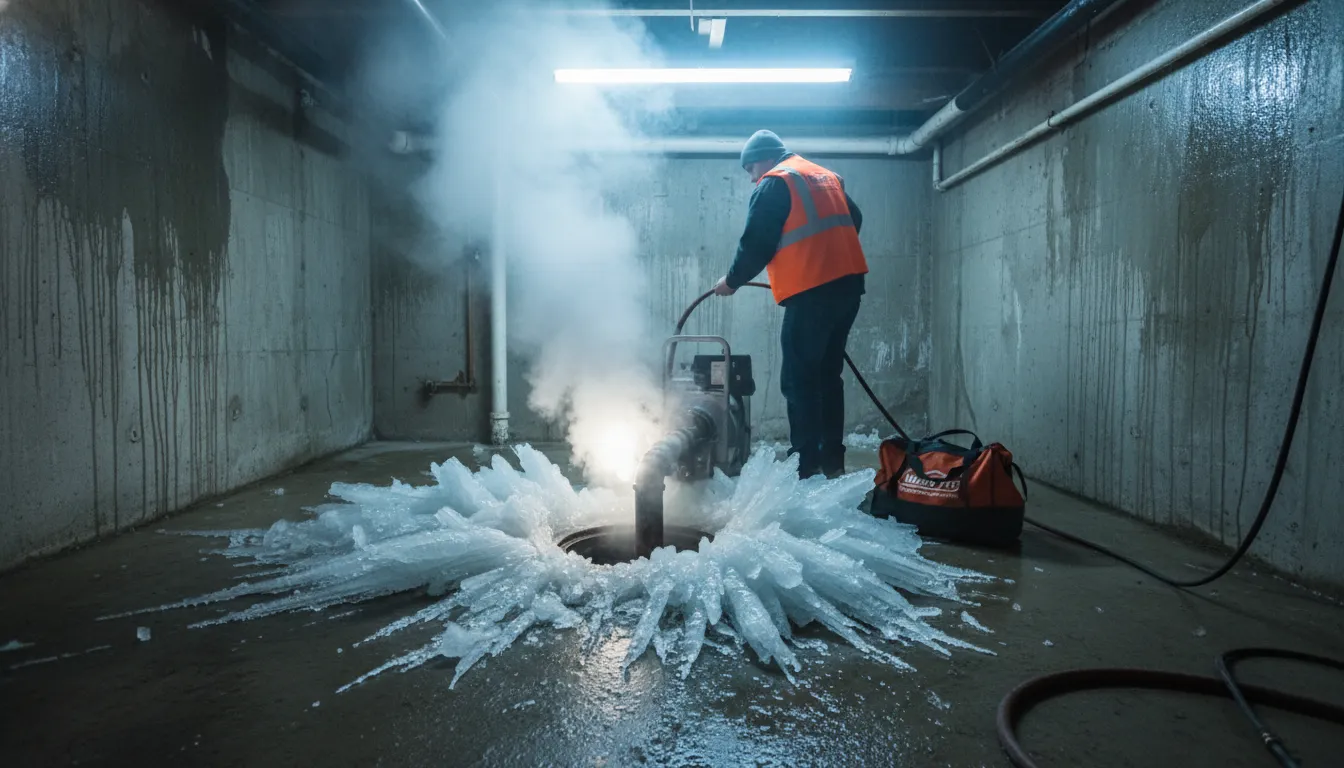
🥶 Quick Answer: Are Your Drain Pipes Frozen?
Signs of frozen drain pipes: Water backing up into sinks/tubs, gurgling sounds when flushing, slow or no drainage from multiple fixtures, frost on exposed pipes, and sewage odors. If temperatures are below -10°C and you notice these signs, your drain pipes may be frozen. For emergency thawing, call (647) 554-4356—we're available 24/7 with 60-minute response times across the GTA.
Key Takeaways
- Drain pipes freeze at -10°C or below (faster in unheated spaces)
- Warning signs: backup, gurgling, slow drainage, frost on pipes
- Safe thawing: hair dryer or heat lamp—NEVER open flames
- Professional thawing costs $200-$600 in Toronto
- Prevention: insulation + heat tape costs $50-$200
- P-traps are most vulnerable—keep water in all drains
It's 6 AM on a January morning in Toronto. You step into the shower and the water pools around your feet instead of draining. You try the sink—same problem. The toilet flushes but gurgles ominously. Your drain pipes are frozen.
Unlike frozen water supply pipes that get all the attention, frozen drain pipes are the sneaky winter plumbing problem that catches Toronto homeowners off guard. They don't burst as dramatically, but they can cause serious backup problems—and expensive damage.
After 28 years of emergency winter plumbing calls across the GTA, I've seen frozen drains in every type of home—from 1920s Rosedale Victorians to new builds in Vaughan. Here's everything you need to know about identifying, thawing, and preventing frozen drain pipes.
Warning Signs Your Drain Pipes Are Frozen
🚨 5 Signs of Frozen Drain Pipes
- Water backing up into sinks, tubs, or floor drains
- Gurgling sounds when you flush toilets or run water
- Slow or no drainage from multiple fixtures simultaneously
- Visible frost on exposed drain pipes in basement or crawl space
- Sewage odors coming from drains (frozen P-trap blocking sewer gas)
The key distinction: if one drain is slow, you probably have a clog. If multiple drains are affected at the same time during cold weather, frozen pipes are likely the culprit.
💡 Pro Tip from Mike
The first sign of frozen drains is often in the lowest fixtures—basement floor drains or laundry sinks. Ice forms in low spots where water pools. If your basement drain backs up but upstairs works fine, check for freezing in the drain line leaving your house.
Why Drain Pipes Freeze (It's Different from Supply Pipes)
Most homeowners know that water supply pipes can freeze and burst. But drain pipes? They're often overlooked because they're not under pressure and they're not always full of water.
The Science of Frozen Drains
Supply pipes are constantly full of water under pressure. Drain pipes only contain water in specific spots:
- P-traps under sinks, showers, and tubs (holds 1-2 cups of water)
- Low spots where pipes sag or weren't installed with proper slope
- Main drain lines where wastewater flows slowly
- Vent stack connections where condensation collects
When temperatures drop, the standing water in these locations freezes first. Ice then builds up from the edges, eventually blocking the entire pipe diameter.
Toronto's Freeze Risk Zones
| Temperature | Risk Level | Time to Freeze | Action Required |
|---|---|---|---|
| 0°C to -5°C | Low | 24+ hours | Monitor unheated spaces |
| -5°C to -10°C | Moderate | 12-24 hours | Run water periodically |
| -10°C to -15°C | High | 6-12 hours | Active prevention needed |
| Below -15°C | Severe | 3-6 hours | Emergency preparedness |
Toronto typically experiences 15-25 days per winter with temperatures below -10°C. The coldest months—January and February—see most frozen drain calls. Environment Canada's Toronto weather forecast can help you prepare for cold snaps.
Most Vulnerable Areas in Toronto Homes
Not all pipes are equally at risk. Based on our service calls across the GTA, here's where drain pipes freeze most often:
1. Exterior Wall Drains (Highest Risk)
Kitchen sinks and bathroom fixtures on exterior walls in older Toronto homes—especially in neighborhoods like The Beaches, Riverdale, and High Park—often have drain pipes running through poorly insulated exterior walls. These can freeze even when indoor temperatures are comfortable.
2. Crawl Space Drains
Many Scarborough and North York homes built in the 1950s-70s have drain lines running through vented crawl spaces. Cold air flowing through foundation vents can freeze these pipes in hours during extreme cold.
3. Garage and Mudroom Drains
Floor drains in attached garages are notorious for freezing. The P-trap sits in an unheated space, and homeowners often forget these drains exist until sewage backs up.
4. Basement Drains Near Rim Joists
The rim joist area (where floor joists meet the foundation) is one of the coldest spots in a basement. Drain pipes running close to this area are vulnerable, especially in older homes in Etobicoke and Mississauga.
Based on 847 frozen drain calls, Water Pro internal data 2022-2024
How to Safely Thaw Frozen Drain Pipes
If you've identified frozen drain pipes, here's the step-by-step process for safe thawing. Warning: Improper thawing can crack pipes or cause sudden flooding. When in doubt, call a professional at (647) 554-4356.
Locate the Frozen Section
Check exposed pipes in the basement, crawl space, or garage for frost, bulging, or visible ice. Feel pipes with your hand—frozen sections will be noticeably colder than surrounding pipe.
Open a Drain to Relieve Pressure
Remove the P-trap under a sink or open a cleanout plug. This allows melted water and any built-up pressure to escape safely rather than backing up into your home.
Apply Gentle Heat
Safe heat sources for thawing drain pipes:
- Hair dryer – Most common and safest method
- Heat lamp – Good for large areas
- Heat tape – Wrap around pipe, plug in
- Warm towels – Soak in hot water, wrap pipe
- Space heater – Keep away from combustibles
Work from Drain Toward Frozen Section
Start applying heat at the drain opening and work your way toward the frozen section. This allows melted water to drain away rather than building up behind the ice dam.
Test and Monitor
Once water flows freely, run hot water for several minutes to clear any remaining ice. Check for leaks at pipe joints—freezing can cause connections to loosen.
🔥 NEVER Use These to Thaw Pipes
- Open flames (torches, lighters) – Fire hazard, can melt plastic pipes
- Boiling water poured directly on pipes – Thermal shock can crack cold pipes
- Propane heaters in enclosed spaces – Carbon monoxide risk
- Electric space heaters touching pipes – Fire hazard
When to Call a Professional
DIY thawing works for accessible pipes with minor freezing. Call a professional plumber when:
- Pipes are in walls or underground – You can't safely access them
- Multiple areas are frozen – Indicates serious cold penetration
- You smell sewage – Main line may be affected
- Pipes are visibly cracked or bulging – Risk of burst when thawed
- DIY methods don't work after 2+ hours – Ice may be too extensive
- Sewage is backing up into your home – Health hazard requiring immediate attention
Professional plumbers have specialized equipment—electric pipe thawers, high-capacity heat guns, and camera inspection equipment—that can safely thaw pipes you can't access and identify any damage.
Frozen Drain Thawing Costs in Toronto
| Service Type | Price Range | Time Required |
|---|---|---|
| Accessible pipe thawing | $200 - $350 | 1-2 hours |
| In-wall pipe thawing | $350 - $500 | 2-4 hours |
| Underground drain thawing | $400 - $600+ | 3-5 hours |
| Emergency after-hours service | +50-100% premium | Same day |
| Camera inspection (diagnostic) | $150 - $300 | 30-60 min |
Need emergency thawing right now? Call Water Pro at (647) 554-4356. We offer 60-minute response times for frozen pipe emergencies across Toronto, Mississauga, Brampton, and the GTA.
How to Prevent Frozen Drain Pipes
The best approach to frozen drains is preventing them in the first place. Here's what works for Toronto winters:
1. Insulate Vulnerable Pipes ($50-$150)
Foam pipe insulation costs $1-$3 per linear foot at any Toronto hardware store. Focus on:
- Drain pipes in crawl spaces and unheated basements
- Pipes along exterior walls
- Exposed pipes near rim joists
- Garage and mudroom floor drain connections
2. Install Heat Tape ($75-$200)
Self-regulating heat tape (also called heat cable) wraps around pipes and automatically turns on when temperatures drop. It's particularly effective for drain pipes in unheated spaces. Make sure to use drain-safe heat tape—some products are only rated for water supply lines.
3. Seal Cold Air Infiltration
Cold air entering your home is often the root cause of frozen pipes. Check and seal:
- Gaps around pipes where they enter the house
- Foundation cracks and gaps
- Crawl space vents (consider temporary covers in extreme cold)
- Rim joist insulation gaps
4. Keep P-Traps Full of Water
An empty P-trap freezes faster because there's no thermal mass. Run water in all drains at least weekly, including:
- Guest bathroom sinks and showers
- Basement floor drains
- Laundry tubs
- Garage floor drains
💡 Pro Tip: RV Antifreeze for Unused Drains
For drains you rarely use (vacation homes, basement floor drains), pour 1/2 cup of RV antifreeze (propylene glycol—NOT automotive antifreeze) into the P-trap. It's non-toxic, won't evaporate as quickly as water, and protects to -50°C.
5. Maintain Indoor Temperature
Keep your home heated to at least 15°C (60°F), even when away. For unheated spaces with drain pipes, consider a small electric heater with a thermostat. The cost of running a heater is far less than emergency plumbing repairs.
📋 Case Study: Scarborough Bungalow Saves $2,800
Problem: A 1965 Scarborough bungalow had frozen drain pipes every January. The main drain line ran through a vented crawl space. Previous years: emergency thawing + burst pipe repair = $3,200.
Our Solution: Installed self-regulating heat tape on 40 feet of drain pipe ($325), added R-13 pipe insulation ($85), and sealed crawl space vents with removable covers ($50).
Result: No freezing in 3 winters. Annual electricity cost for heat tape: ~$45. Total investment: $460 vs. $3,200/year in emergency repairs.
Frequently Asked Questions
Signs of frozen drain pipes include: water backing up into sinks or tubs, gurgling sounds when you flush, slow or no drainage from multiple fixtures, frost visible on exposed pipes, and sewage odors from drains. If temperatures drop below -10°C and you notice any of these signs, your drain pipes may be frozen.
Yes, drain pipes can freeze in Toronto when temperatures drop below -10°C for extended periods. Unlike supply pipes that are always full of water, drain pipes are most vulnerable where water pools—in P-traps, low spots, and pipes running through unheated spaces like crawl spaces, exterior walls, or garages.
To safely thaw frozen drain pipes: 1) Open the drain to relieve pressure, 2) Apply gentle heat using a hair dryer, heat lamp, or warm towels starting from the drain and working toward the frozen section, 3) Never use open flames or boiling water on frozen pipes. For pipes in walls or underground, call a professional plumber.
Thawing frozen drain pipes typically takes 30-90 minutes with proper heat application. Factors affecting time include: severity of freeze, pipe material (metal thaws faster than PVC), pipe accessibility, and ambient temperature. Severely frozen or inaccessible pipes may take several hours with professional equipment.
Drain pipes in Toronto typically freeze when temperatures stay below -10°C for 6+ hours. Pipes in uninsulated spaces (crawl spaces, exterior walls, garages) can freeze at higher temperatures around -5°C. Interior pipes rarely freeze unless heating fails or temperatures drop below -20°C for extended periods.
Professional frozen drain pipe thawing in Toronto costs $200-$600 depending on accessibility and severity. Accessible pipes cost $200-$350. Pipes in walls or underground cost $350-$600+. Emergency after-hours service adds 50-100% to these prices. Prevention (insulation, heat tape) costs $50-$200.
Don't Let Frozen Drains Ruin Your Winter
Frozen drain pipes are a preventable problem. A few hours of preparation before winter—insulating pipes, installing heat tape, and sealing cold air leaks—can save you thousands in emergency repairs and the misery of sewage backup in your home.
If you're dealing with frozen drains right now, don't wait. The longer ice remains in the pipe, the more extensive the blockage becomes—and the higher the risk of cracking when temperatures eventually rise.
🥶 Frozen Drain Emergency?
24/7 emergency service across the GTA. 60-minute response time. No extra charge for diagnosis.
📞 Call (647) 554-4356Licensed plumbers • 90-day guarantee • 5,234+ families helped
Related Winter Plumbing Guides

About Mike Thompson
Master Plumber • License #MP-2847 • 28 Years Experience
Mike has handled over 2,000 frozen pipe emergencies across the GTA. He specializes in winter plumbing problems and preventive solutions for Toronto's harsh winters. Member of the Canadian Institute of Plumbing & Heating (CIPH).
View Full Profile →