🛡️ Quick Answer: How Do I Prevent Frozen Pipes in Toronto?
Prevent frozen pipes by insulating exposed pipes, maintaining home temperature above 13°C, letting faucets drip during extreme cold, and winterizing outdoor faucets before November. Focus on high-risk areas: exterior walls, garages, crawl spaces, and pipes under sinks. Prevention costs $50-600 vs. $5,000-50,000+ for burst pipe damage. For professional winterization, call (647) 554-4356.
Key Takeaways: Your Frozen Pipe Prevention Checklist
- Pipes typically freeze below -7°C (20°F)—take action before cold snaps
- Insulate vulnerable pipes in exterior walls, garages, and crawl spaces
- Never set thermostat below 13°C (55°F), even when away
- Let faucets drip during extreme cold (-15°C or below)
- Winterize outdoor faucets by mid-November
- Open cabinet doors under sinks during cold snaps
- Seal gaps around pipes where cold air enters
- Prevention costs $50-600 vs. $5,000-50,000+ for burst pipe repairs
Every winter, we receive hundreds of calls from Toronto homeowners dealing with frozen and burst pipes. The damage ranges from minor inconvenience to complete basement floods destroying furnishings, flooring, and family heirlooms. After 28 years of emergency plumbing in the GTA, I can tell you: almost every frozen pipe disaster was preventable.
This guide gives you the exact same advice I share with our regular maintenance customers—the homeowners who never call us for frozen pipe emergencies because they followed these 12 prevention steps.
Understanding Toronto's Freeze Risk
Toronto's climate creates a unique freeze risk pattern. Lake Ontario moderates temperatures in some areas, but inland neighborhoods experience significantly colder conditions. Knowing your freeze risk helps you prioritize prevention efforts.
Temperature Thresholds: When to Take Action
| Temperature | Risk Level | Required Action |
|---|---|---|
| 0°C to -4°C | Low Risk | Normal precautions; ensure insulation is intact |
| -4°C to -7°C | Moderate Risk | Open cabinet doors; check vulnerable areas |
| -7°C to -15°C | High Risk | Let faucets drip; increase monitoring; close garage |
| Below -15°C | Extreme Risk | All precautions active; consider heat cable activation |
💡 Toronto Weather Tip
Monitor Environment Canada's Toronto forecast for wind chill warnings. A -10°C day with 30 km/h winds creates a wind chill of -18°C—that's extreme risk for exposed pipes, even if the actual temperature seems moderate.
High-Risk Areas in Your Home
Not all pipes face equal freeze risk. Focus your prevention efforts on these vulnerable locations first:
Exterior Walls
North-facing especially
Attached Garages
Unheated space risk
Crawl Spaces
Ground-level cold
Under Sinks
Cabinet cold traps
Outdoor Faucets
Most vulnerable
Near Windows
Draft exposure
12 Expert Prevention Tips
These are the same tips I give to customers during fall maintenance visits. Follow all 12 for complete protection, or prioritize based on your home's specific vulnerabilities.
1 Insulate Exposed Pipes
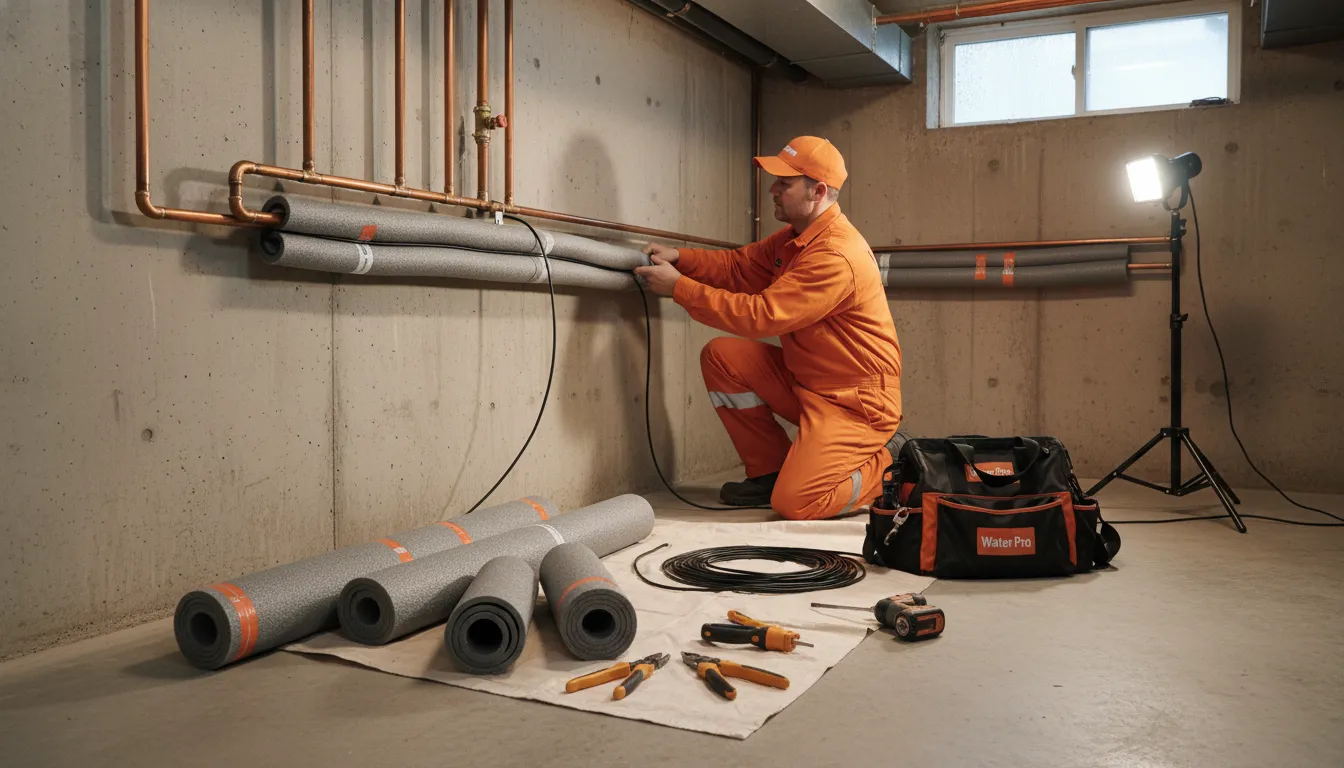
The single most effective prevention method. Foam pipe insulation costs $2-5 per meter and takes minutes to install. Focus on pipes in unheated areas: crawl spaces, basements near exterior walls, garages, and under bathroom/kitchen sinks on exterior walls.
DIY Difficulty: Easy • Cost: $50-150 for typical home • Time: 1-3 hours
2 Install Heat Cable on High-Risk Pipes
For pipes that repeatedly freeze despite insulation, heat cable (also called heat tape) provides active protection. Self-regulating heat cables adjust their output based on temperature—they use more power when cold and less when warm, making them energy-efficient.
DIY Difficulty: Moderate • Cost: $150-400 per area • Best For: Crawl spaces, garage pipes, exterior wall pipes
3 Winterize Outdoor Faucets
Complete by mid-November. Outdoor hose bibs are the #1 cause of burst pipes in Toronto homes. The process: 1) Disconnect all hoses, 2) Shut off the indoor supply valve, 3) Open the outdoor faucet to drain, 4) Leave outdoor faucet slightly open, 5) Install an insulated faucet cover.
DIY Difficulty: Easy • Cost: $10-25 per faucet cover • Time: 10 minutes per faucet
4 Maintain Minimum Temperature (Never Below 13°C)
Critical for vacant homes and vacations. Even if you're away, never set your thermostat below 13°C (55°F). The cost of extra heating is trivial compared to burst pipe damage. For extended absences, consider asking a neighbor to check your home every 48-72 hours.
Recommended: 16-18°C when away, 20°C when home • Never Below: 13°C (55°F)
5 Let Faucets Drip During Extreme Cold
When temperatures drop below -15°C, let faucets drip at a pencil-lead thickness (about 5 drops per minute). Focus on faucets connected to pipes in exterior walls. Running water freezes at a lower temperature than still water. Yes, your water bill increases slightly—but $10-20 beats $5,000+ in repairs.
When: Below -15°C • Which Faucets: Exterior wall pipes, kitchen/bath on north side • Flow Rate: Pencil-lead thickness
6 Open Cabinet Doors Under Sinks
Kitchen and bathroom sinks on exterior walls are hidden freeze risks. Cabinet doors trap cold air and prevent warm house air from reaching pipes. During cold snaps, leave these doors open to allow heated air circulation. Remove any household chemicals first if you have children or pets.
Focus Areas: Kitchen sink on exterior wall, bathroom vanity on exterior wall, any cabinet hiding pipes near cold zones
7 Seal Gaps and Cracks Around Pipes
Cold air infiltration through gaps around pipes dramatically increases freeze risk. Use caulk, expanding foam, or weatherstripping to seal gaps where pipes enter your home or pass through exterior walls. Check around electrical, cable, and dryer vents too—anywhere air can enter.
DIY Difficulty: Easy • Cost: $10-30 for supplies • Common Gaps: Cable entry, dryer vent, exterior faucet penetrations
8 Keep Garage Door Closed
If you have water supply lines running through your garage (common for laundry hookups or utility sinks), keep the garage door closed—especially during cold snaps. An open garage door drops interior temperatures rapidly, and garage pipes are often poorly insulated.
Temperature Impact: Open garage door can drop garage temp by 10-20°C in minutes • Also Check: Garage windows, door seals
⚠️ Common Mistake: Closing Vents to Save Heat
Never close heating vents in rooms with plumbing to "save energy." This creates cold pockets where pipes can freeze even when the rest of your home is warm. Keep all vents open, especially in bathrooms, kitchens, and utility rooms.
9 Add Insulation to Attic and Crawl Spaces
General home insulation improvements reduce pipe freeze risk throughout your home. Attic insulation keeps heat inside; crawl space insulation protects pipes below. Many Toronto homes built before 1980 have inadequate insulation by modern standards.
Professional Cost: $500-2,500 depending on area • Bonus: Lower heating bills, rebates may apply
10 Install a Smart Thermostat with Alerts
Smart thermostats like Nest or Ecobee can alert you via smartphone if your home temperature drops unexpectedly—critical if you're away during a furnace failure or power outage. Some models also detect unusual temperature patterns that could indicate pipe freeze risk.
Cost: $200-350 installed • Key Feature: Low-temperature alerts • Bonus: Energy savings, remote control
11 Know Your Main Water Shut-Off Location
If a pipe does freeze or burst, you need to shut off water immediately to minimize damage. Find your main shut-off valve now—usually in the basement near the front of the house, or in a utility closet. Test it annually to ensure it works. Label it clearly.
Common Locations: Basement near street-facing wall, mechanical room, utility closet • Test: Turn off and back on annually
12 Schedule Fall Plumbing Inspection
A professional fall inspection identifies vulnerabilities before winter hits. We check insulation, test shut-off valves, inspect outdoor faucets, and recommend specific improvements for your home. Book before November—our schedule fills quickly as temperatures drop.
Cost: $150-250 for comprehensive inspection • Best Time: September-October • Call (647) 554-4356 to schedule
Prevention vs. Repair Costs
The math is simple: a few hundred dollars in prevention saves thousands in repairs. Here's what Toronto homeowners actually pay:
| Prevention Measure | Cost | Protection Level |
|---|---|---|
| Pipe Insulation (DIY) | $50-150 | High - Primary defense |
| Outdoor Faucet Covers | $10-50 | Essential - #1 freeze point |
| Heat Cable Installation | $150-400 | Maximum - Active protection |
| Gap Sealing (DIY) | $10-30 | Moderate - Blocks cold air |
| Smart Thermostat | $200-350 | Alert system + energy savings |
| Professional Winterization | $200-600 | Comprehensive protection |
Repair Costs When Prevention Fails
| Damage Type | Repair Cost | Additional Damage |
|---|---|---|
| Thaw Frozen Pipe (No Damage) | $200-400 | None if caught early |
| Repair Burst Pipe (Accessible) | $500-1,500 | Minor water damage possible |
| Repair Burst Pipe (In Wall) | $1,500-4,000 | Drywall repair required |
| Major Flood from Burst Pipe | $5,000-50,000+ | Flooring, furniture, mold remediation |
💡 Insurance Reality Check
Most home insurance policies cover sudden pipe bursts but may deny claims if you failed to maintain adequate heat or winterize properly. Some policies also have high deductibles ($2,500-5,000) for water damage. Prevention is always cheaper than relying on insurance.
Your Complete Winter Checklist
Print this checklist and complete it by mid-November each year:
🗓️ Fall Winterization Checklist (Complete by November 15)
- Disconnect all garden hoses from outdoor faucets
- Shut off indoor valves to outdoor faucets
- Install insulated covers on all outdoor faucets
- Inspect pipe insulation in crawl spaces and basement
- Add insulation to any exposed pipes
- Seal gaps around pipes entering the home
- Test main water shut-off valve (turn off and on)
- Mark shut-off valve location clearly
- Check thermostat is working properly
- Set smart thermostat temperature alerts (if applicable)
- Inspect garage door seals
- Schedule professional inspection (if needed)
❄️ Cold Snap Protocol (When Temps Drop Below -10°C)
- Open cabinet doors under sinks on exterior walls
- Let faucets drip (pencil-lead thickness) on exterior wall pipes
- Keep garage door closed
- Ensure all heating vents are open
- Check on vulnerable areas morning and evening
- Activate heat cables if installed
- If leaving home, set thermostat no lower than 16°C
Toronto Neighborhood Considerations
Different Toronto neighborhoods have varying freeze risks based on housing age, construction style, and microclimate factors:
Older Neighborhoods (Pre-1970 Homes)
Areas like The Beaches, Leslieville, East York, High Park, and Roncesvalles have many older homes with galvanized steel or copper pipes in poorly insulated walls. These homes often have pipes routed through exterior walls out of convenience—a practice avoided in modern construction.
- Focus on insulating pipes in exterior walls
- Consider heat cable for chronic problem areas
- Budget for potential pipe relocation during renovations
Suburban Areas
Scarborough, North York, Etobicoke, Mississauga, and Brampton often have homes with pipes running through attached garages—a significant freeze risk if garages aren't properly sealed. Newer subdivisions may have better insulation but often have longer pipe runs to exterior hose bibs.
- Inspect garage pipe insulation carefully
- Ensure garage-to-house wall is well sealed
- Don't forget multiple outdoor faucets (front and back)
Lakefront Properties
Homes near Lake Ontario may experience higher humidity that can accelerate freeze damage, but also benefit from the lake's temperature moderating effect. However, these homes often have exposed pipes for boat/cottage-style features that need extra attention.
📋 Case Study: Etobicoke Family Prevents $8,500 in Damage
Situation: 1978 bungalow with history of frozen pipes in crawl space. Previous winter had a burst pipe causing $6,200 in damage (after $2,500 deductible paid out of pocket).
Our Solution: Comprehensive winterization including crawl space pipe insulation, heat cable on two vulnerable sections, sealing around foundation penetrations, and outdoor faucet winterization. Total cost: $485.
Result: Zero frozen pipe incidents in three winters since. Family estimates $8,500+ saved (one prevented incident + lower heating bills). They're now on our annual maintenance program at $199/year.
What If Pipes Freeze Despite Prevention?
Even with good prevention, extremely cold conditions or unusual circumstances can cause freezing. If you suspect frozen pipes, act immediately:
Identify the Frozen Section
Turn on faucets throughout the house. If only one fixture has no water or reduced flow, the freeze is likely near that fixture. If multiple fixtures are affected, the freeze may be in the main line—a more serious situation.
Check for Visible Damage
Before attempting to thaw, look for cracks, bulges, or frost on exposed pipes. If you see damage, do NOT thaw—the pipe will burst when water flows again. Call (647) 554-4356 immediately.
Thaw Safely (If No Visible Damage)
Use a hair dryer, heat lamp, or warm towels—never open flame. Start from the faucet end and work toward the frozen section. Keep the faucet open so water can flow as ice melts. This process can take 30-60 minutes.
Know When to Call a Professional
Call immediately if: the frozen section is in a wall, multiple pipes are frozen, you can't locate the freeze, you see any pipe damage, or thawing doesn't restore flow within 60 minutes. We offer 24/7 emergency service: (647) 554-4356.
For detailed thawing instructions, see our complete guide: Frozen Water Pipes Toronto: Signs, Risks & Safe Thawing Guide
Frequently Asked Questions
Pipes typically begin freezing when temperatures drop below -7°C (20°F) for extended periods. Uninsulated pipes in exterior walls, crawl spaces, or garages can freeze at milder temperatures around -4°C (25°F). Wind chill accelerates freezing, making -10°C with wind feel like -20°C to exposed pipes.
Yes, during extreme cold snaps (below -15°C), letting faucets drip at a pencil-lead thickness can prevent freezing. Moving water freezes at a lower temperature than still water. Focus on faucets connected to pipes running through exterior walls or unheated spaces. This may increase your water bill by $5-15 but saves thousands in burst pipe repairs.
Foam pipe insulation costs $2-5 per linear meter for DIY installation. Professional pipe insulation for a typical Toronto home costs $200-600 depending on accessibility and pipe length. Heat cable installation costs $150-400 per high-risk area. These investments typically pay for themselves by preventing one frozen pipe incident.
Yes, outdoor faucets (hose bibs) are the most vulnerable to freezing. Shut off the indoor supply valve, drain the line completely, leave the outdoor faucet open, and install an insulated cover. Frost-free hose bibs should still be covered. Complete this by mid-November before the first hard freeze.
Absolutely. Never set your thermostat below 13°C (55°F) when away during Toronto winters. Ideally, keep it at 16-18°C. Consider a smart thermostat that alerts you if temperatures drop. Have a trusted neighbor check your home every 48-72 hours. The heating cost is minimal compared to burst pipe damage ($5,000-50,000+).
The most vulnerable pipes in Toronto homes are: 1) Pipes in exterior walls (especially north-facing), 2) Pipes in unheated garages, 3) Pipes in crawl spaces, 4) Kitchen sink pipes against exterior walls, 5) Outdoor hose bibs, 6) Pipes in unfinished basements, 7) Pipes near windows or vents. Focus prevention efforts on these high-risk areas first.
Take Action Before Winter Hits
Frozen pipes are one of the most predictable and preventable plumbing emergencies in Toronto. The homeowners who call us in panic at 2 AM with a burst pipe flooding their basement almost always say the same thing: "I knew I should have done something before winter."
Don't be that homeowner. The 12 tips in this guide cover everything from $10 DIY fixes to professional winterization. Even implementing half of them dramatically reduces your risk.
Not sure where your vulnerabilities are? Our fall plumbing inspection ($150-250) identifies exactly what your home needs—often catching issues you'd never find on your own. We've been protecting Toronto homes from winter damage since 2000.
Schedule Your Winter Prep Now
Beat the rush—our fall schedule fills fast. Professional winterization protects your home all season.
📞 Call (647) 554-435624/7 Emergency Service • 90-Day Guarantee • 5,234+ Families Protected
Related Winter Plumbing Guides

About Mike Thompson
Master Plumber • License #MP-2847 • 28 Years Experience
Mike has been helping Toronto families prevent frozen pipe disasters since 1996. His fall winterization program has protected thousands of homes, with customers reporting zero frozen pipe incidents when following his recommendations. Member of the Canadian Institute of Plumbing & Heating (CIPH).
View Full Profile →