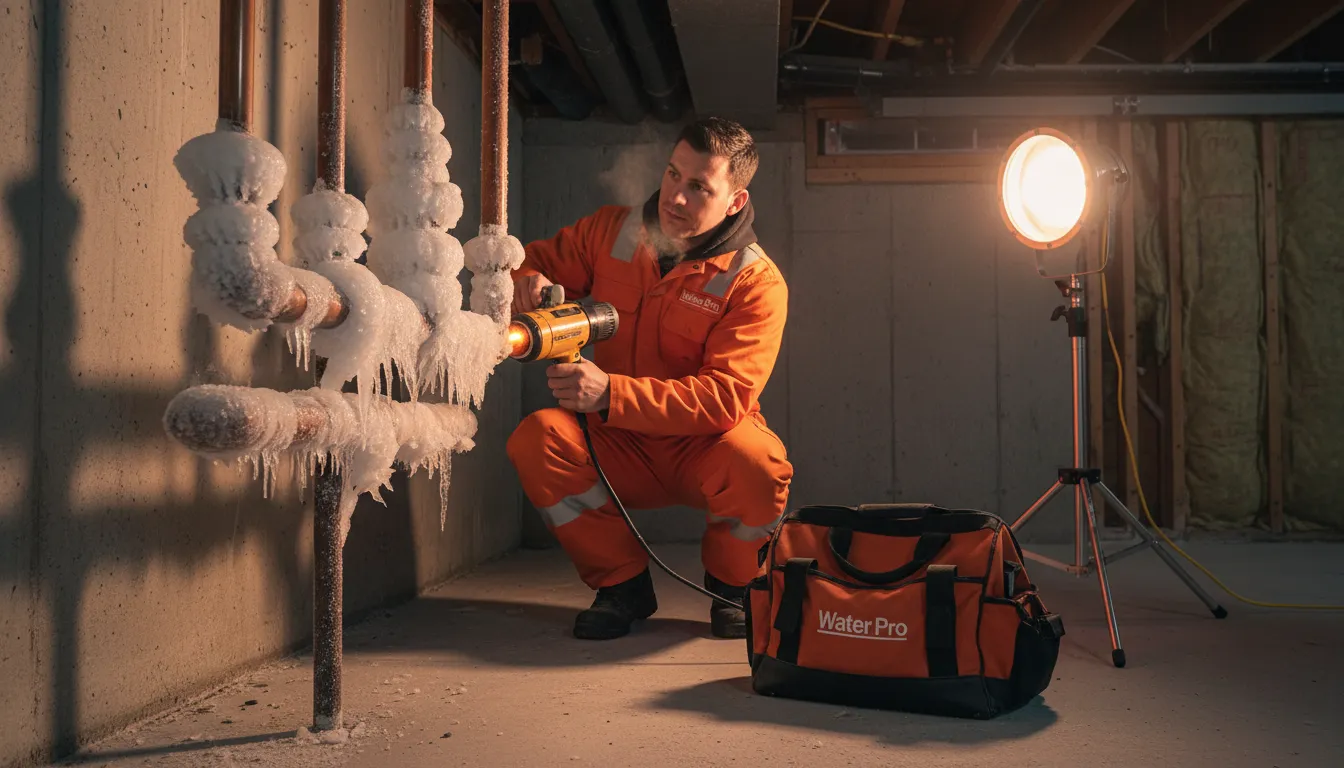
Quick Answer: How Do I Know If My Water Pipes Are Frozen?
Signs of frozen water pipes include: no water or a trickle from faucets, frost on exposed pipes, strange sounds when turning taps, and bulging pipe sections. If only one fixture is affected while others work, that specific supply line is likely frozen. Don't wait—frozen pipes can burst within hours. Call (647) 554-4356 for emergency service.
Key Takeaways
- Water pipes can freeze at -7°C (20°F) or higher in unheated spaces
- No water from faucets is the #1 sign of frozen supply lines
- Use hair dryers or heating pads—NEVER open flames
- Frozen pipes can burst within 4-6 hours if not addressed
- Copper pipes are more burst-prone than PEX plastic pipes
- Professional thawing costs $200-$500; burst repairs cost $500-$3,000+
It's 6 AM in January. You turn on your bathroom faucet to brush your teeth, but nothing comes out—not even a drip. You check the kitchen sink. Same problem. Meanwhile, the toilet won't refill after flushing. That sinking feeling? Your water supply pipes are frozen.
This scenario plays out hundreds of times across Toronto every winter. After responding to over 400 frozen pipe emergencies last season, I can tell you: what you do in the next few hours determines whether you're facing a $200 thawing bill or a $3,000+ burst pipe disaster. For immediate assistance, call (647) 554-4356—we're available 24/7.
Warning Signs of Frozen Water Pipes
Frozen water pipes (supply lines) behave differently than frozen drain pipes. Knowing the signs helps you act fast:
1. No Water or Reduced Flow
This is the most obvious sign. When water freezes inside supply pipes, it blocks the entire water flow. You'll notice:
- Complete lack of water from specific faucets
- Weak trickle instead of normal pressure
- Sputtering or air bursts when opening taps
- Toilet tank won't refill after flushing
💡 Pro Tip: Isolate the Problem
Check multiple faucets. If only one fixture has no water, the freeze is in that specific supply line (easier fix). If the whole house has no water, the freeze is at the main water line entry point or your water main—call a professional immediately at (647) 554-4356.
2. Frost on Exposed Pipes
Check exposed pipes in your basement, crawl space, or under sinks. Visible frost or condensation on cold pipes indicates they're at or below freezing. Even without visible frost, a pipe that's "sweating" in winter is too cold.
3. Unusual Sounds
Listen for these warning sounds when operating fixtures:
- Banging or clanking when turning water on/off
- Hissing or whistling at the tap
- Gurgling in the water heater
4. Bulging or Cracked Pipe Sections
Ice expanding inside pipes creates enormous pressure—enough to split copper and crack plastic. Inspect exposed pipes for:
- Visible bulges or deformation
- Hairline cracks or splits
- Moisture around fittings (may indicate micro-leaks from ice pressure)
⚠️ Burst Pipe Warning
If you see bulging or cracks, shut off your main water valve immediately and call (647) 554-4356. A visibly damaged pipe will likely burst when it thaws. Having a plumber present during thawing prevents catastrophic water damage.
When Do Water Pipes Freeze? Temperature Guide
Understanding temperature thresholds helps you prepare before pipes freeze:
| Temperature | Risk Level | Action Required |
|---|---|---|
| Above -4°C (25°F) | Low Risk | Normal precautions; ensure heat tape is working |
| -4°C to -7°C (20-25°F) | Moderate Risk | Let faucets drip; open cabinet doors |
| -7°C to -15°C (5-20°F) | High Risk | Continuous drip; check pipes every few hours |
| Below -15°C (5°F) | EXTREME Risk | Active monitoring; consider leaving water running slowly |
Important: These thresholds assume normal home heating. Pipes in unheated spaces (crawl spaces, garages, exterior walls) can freeze at much higher outdoor temperatures. Check Environment Canada's Toronto forecast for cold weather alerts.
High-Risk Pipe Locations in Toronto Homes
Certain areas in your home are far more vulnerable to freezing. Knowing these locations helps you focus prevention efforts:
Copper vs. PEX: Which Pipes Are More Freeze-Resistant?
Your pipe material significantly affects freeze risk and burst likelihood:
🟠 Copper Pipes
- Pros: Long-lasting, proven track record
- Cons: Rigid—cannot expand when water freezes
- Burst Risk: HIGH—splits under ice pressure
- Common in: Older Toronto homes (pre-1990)
- Thaw Time: Faster (conducts heat well)
🔵 PEX Pipes
- Pros: Flexible—can expand slightly when frozen
- Cons: UV-sensitive, newer material
- Burst Risk: LOWER—flexibility reduces splitting
- Common in: Newer builds, renovations since 2000
- Thaw Time: Slower (insulates ice)
Important: Even PEX pipes can burst under extreme conditions. The flexibility helps, but it's not a guarantee. If you're unsure of your pipe material, our technicians can assess your plumbing system. Call (647) 554-4356 for an inspection.
Safe Thawing Methods: Step-by-Step
If you've identified a frozen water pipe and it's accessible (not inside a wall), you can attempt to thaw it yourself. Always work from the faucet toward the frozen section—this allows melting water to escape and prevents pressure buildup.
Open the Faucet
Turn on both hot and cold handles of the affected faucet. As the pipe thaws, water needs somewhere to go. The running water also helps melt ice from the inside.
Locate the Frozen Section
Follow the supply line from the faucet. Look for frost, bulging, or feel for ice-cold sections. The freeze is usually near an exterior wall, under a sink, or where the pipe enters from outside.
Apply Heat (Safe Methods Only)
Approved heat sources:
- ✅ Hair dryer (most common, very effective)
- ✅ Heat lamp or portable space heater (directed at pipe)
- ✅ Electric heating pad wrapped around pipe
- ✅ Hot towels (re-wet as they cool)
- ✅ Heat tape (if already installed)
Work from Faucet to Frozen Section
Start heating near the open faucet and move toward the ice blockage. This allows steam and melting water to escape through the faucet rather than building pressure toward the blockage.
Monitor Until Full Flow Returns
Continue applying heat until water flows normally. This typically takes 30-60 minutes for minor freezes. Keep the faucet running for several minutes after full flow to flush any remaining ice crystals.
🔥 NEVER Use These Methods
- ❌ Propane or butane torches — Fire hazard, can melt pipe fittings
- ❌ Blowtorches or open flames — Extreme fire risk, especially near insulation
- ❌ Boiling water directly on pipe — Thermal shock can crack pipes
- ❌ Kerosene or space heaters with flames — Fire and carbon monoxide risk
When to Call a Professional
DIY thawing works for accessible pipes. Call a licensed plumber immediately if:
- The frozen pipe is inside a wall or ceiling — Requires specialized detection equipment and possibly drywall access
- You can't locate the frozen section — Our thermal imaging cameras pinpoint hidden freezes
- The pipe shows bulging, cracks, or leaks — Burst imminent; don't attempt thawing without professional presence
- Multiple pipes are frozen — Indicates a larger issue with your heating or insulation
- Your main water line is frozen — This requires specialized thawing equipment
- You've been thawing for 30+ minutes with no results — The ice blockage may be extensive
Frozen Pipe Costs in Toronto
| Service | Cost Range | Notes |
|---|---|---|
| Accessible Pipe Thawing | $200 - $400 | Exposed pipes in basement/crawl space |
| Hidden Pipe Thawing | $400 - $800 | Pipes in walls; may require access holes |
| Main Line Thawing | $500 - $1,200 | Specialized electric thawing equipment |
| Burst Pipe Repair | $500 - $3,000+ | Includes pipe replacement, water damage varies |
| Emergency/After-Hours | +50-100% | Premium for nights, weekends, holidays |
Water Pro offers upfront pricing with no surprises. Call (647) 554-4356 for a free estimate before we start any work.
📋 Case Study: Etobicoke Townhouse Prevents $4,200 Damage
Situation: January 2025, -18°C overnight. Homeowner woke to no water in master bathroom only. Other fixtures worked fine.
Our Response: Thermal imaging located a 3-foot freeze in the copper supply line running through an exterior wall cavity. Using controlled electric thawing, we safely melted the ice in 45 minutes. Inspection revealed a hairline crack that hadn't yet started leaking.
Repair: Replaced 4 feet of copper with PEX ($380 total). Added pipe insulation to prevent recurrence.
Savings: If the pipe had burst, estimated repair + water damage restoration would have been $4,200+. Early intervention saved $3,820.
Preventing Frozen Water Pipes
Prevention is far cheaper than emergency repairs. Before the next cold snap:
Insulation
- Pipe insulation sleeves — Foam tubes ($2-5 per 6ft section) on all exposed pipes
- Heat tape — Electric heating cable ($30-100) for high-risk areas; connect to thermostat for automatic activation
- Wall insulation — Consider adding insulation to exterior walls with plumbing (significant renovation, but eliminates freeze risk)
During Cold Snaps
- Let faucets drip — A pencil-thick stream prevents pressure buildup
- Open cabinet doors — Allows warm air to reach under-sink pipes
- Keep garage above 4°C — If you have water lines in the garage
- Never set heat below 13°C (55°F) — Even when away; frozen pipes cost more than heating
Before Winter
- Winterize outdoor faucets — Shut off interior valve, drain exterior hose bib
- Disconnect garden hoses — Left-connected hoses trap water that freezes back into the supply line
- Service your furnace — A heating failure during a cold snap = frozen pipes
- Know your main shut-off — If a pipe bursts, you need to stop water flow immediately
For a complete winterization checklist, see our Toronto Winterization Guide or call (647) 554-4356 to schedule professional winterization.
Frequently Asked Questions
Signs of frozen water pipes include: no water or reduced flow from faucets, frost visible on exposed pipes, unusual sounds when turning on taps, and bulging or cracked pipe sections. If only certain fixtures are affected (not the whole house), the freeze is likely in that specific supply line.
Water pipes can begin freezing when exterior temperatures drop below -7°C (20°F). However, pipes in unheated spaces like crawl spaces, attics, or exterior walls can freeze at higher temperatures. Extended cold snaps below -15°C create the highest freeze risk for Toronto homes.
Yes, for accessible pipes you can use a hair dryer, heat lamp, or heating pad. Start near the faucet and work toward the frozen section. Never use open flames, propane torches, or boiling water—these can damage pipes or cause fires. Call a plumber if the pipe is hidden in a wall or ceiling.
Professional pipe thawing in Toronto costs $200-$500 for accessible pipes. Hidden pipes requiring wall access cost $400-$800. Emergency after-hours service adds 50-100%. If a pipe bursts, repair costs $500-$3,000+ depending on location and damage extent.
Frozen pipes burst due to pressure buildup between the ice blockage and closed faucet. Water expands 9% when freezing, creating tremendous pressure. The burst often occurs in a weak spot downstream from the ice, not at the frozen section itself. Copper pipes are more prone to bursting than PEX.
Highest risk pipes include: water supply lines in exterior walls, pipes in unheated garages or crawl spaces, outdoor hose bibs not winterized, pipes near windows or poorly insulated areas, and water lines in attics. Older Toronto homes with minimal wall insulation are especially vulnerable.
Don't Wait—Frozen Pipes Become Burst Pipes
Frozen water pipes are a race against time. Every hour that ice remains in your supply lines increases the risk of a catastrophic burst. The difference between a $300 thawing call and a $3,000+ burst pipe disaster often comes down to acting within that first few hours.
If you wake up to no water this winter, don't panic—but don't delay. Check for obvious freeze locations, attempt safe thawing on accessible pipes, and call for professional help if you can't locate or resolve the problem quickly.
Frozen Pipes? We're Here 24/7
Licensed plumbers with thermal imaging equipment. Serving all of Toronto and the GTA.
📞 Call (647) 554-4356Average response: 45 minutes • 90-day guarantee • 5,234+ families helped
Related Winter Plumbing Guides

About Mike Thompson
Master Plumber • License #MP-2847 • 28 Years Experience
Mike has handled over 400 frozen pipe emergencies in the GTA. He specializes in thermal imaging diagnosis and trenchless repair technology. Member of the Canadian Institute of Plumbing & Heating (CIPH).
View Full Profile →