Frozen Pipes Emergency: What to Do in Toronto 2025
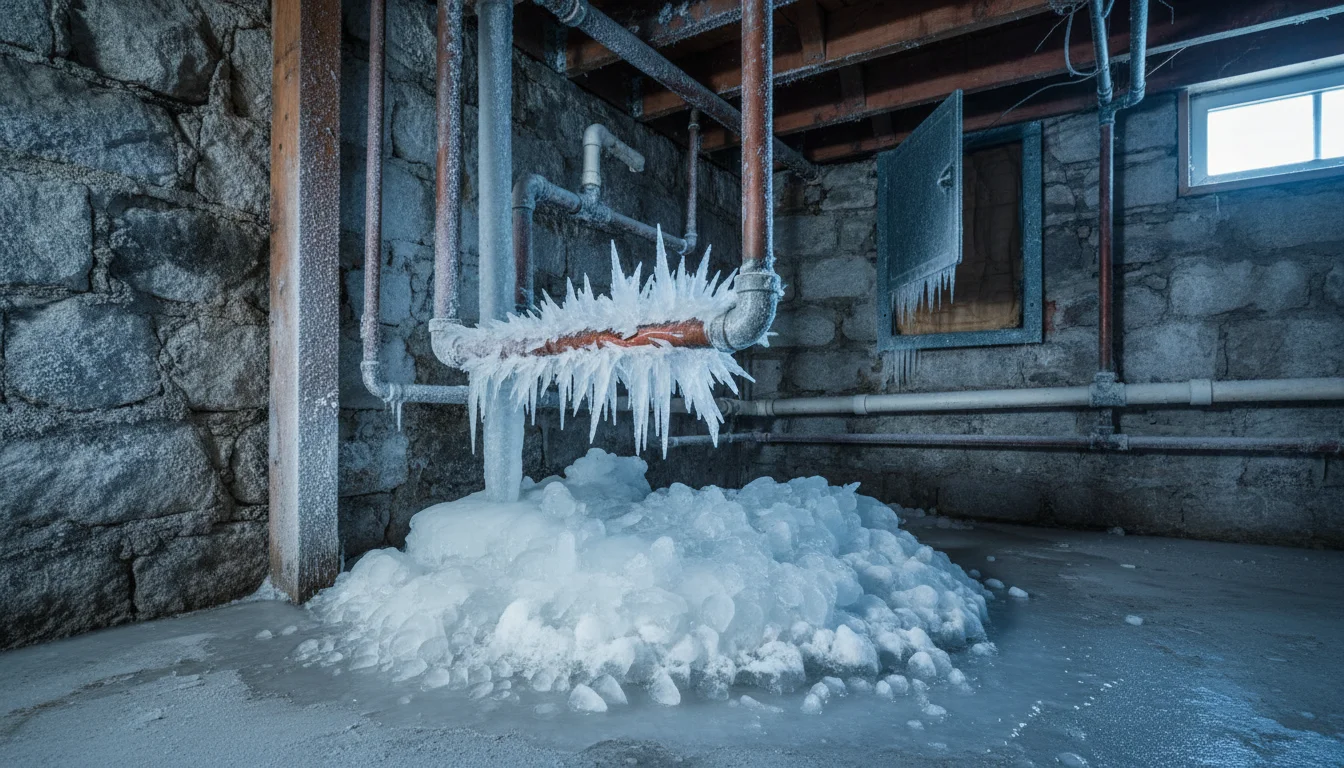
Act within 30 minutes: Locate frozen section, apply safe heat (hair dryer, heat lamp), open nearby faucets to relieve pressure. Hair dryer method is safest for DIY—hold 12+ inches from pipe, 10-15 minutes continuous. Professional emergency thawing costs $300-600; water damage repair $5,000-15,000+. Call immediately if pipes in walls, multiple areas frozen, or damage visible. Toronto emergency response: 30-45 minutes. Call (647) 554-4356.
💰 Key Takeaways
- Warning Signs: No water at fixture, hissing/banging in walls, frost on exterior pipes
- 30-Minute Window: Critical time to prevent rupture and $5,000-8,000 damage
- Safe Methods: Hair dryer (10-15 min), heat lamp (30-60 min), never use torch
- Emergency Service: Available 24/7 in Toronto, 30-45 minute response
- Cost Comparison: DIY thaw ($0-50) vs. professional ($300-600) vs. rupture repair ($5,000-15,000)
- Prevention: Insulation + heat tape prevents 95% of freeze events
Frozen Pipe Emergency: Toronto Winter Reality
It's 2:00 AM in Toronto. Temperature has dropped to -18°C. You turn on the kitchen faucet and nothing happens. No sound. No water. Just silence. You've got a frozen pipe emergency on your hands, and the clock is ticking. Within the next 30 minutes, the decision you make determines whether you're spending $50 on heat sources or $8,000+ on water damage restoration.
Why Frozen Pipes Are a Toronto Crisis
Toronto's extreme winter conditions create perfect freeze conditions. Water supply lines—under constant pressure—freeze faster than drainage pipes. When water freezes, it expands, creating rupture pressure on pipe walls. A single rupture releases 36-60 gallons per hour into walls, flooring, and basements. One frozen pipe transforms into a water damage catastrophe within 2-4 hours.
Vulnerable areas in Toronto homes:
- Crawl spaces/basements: Coldest areas in home, minimal insulation
- Exterior walls: North-facing especially; direct -18°C exposure
- Attic pipes: Zero heating, direct wind penetration
- Outdoor water meters: Unburied, direct freeze risk
- Supply line entry points: Where water enters from underground
Warning Signs: The 30-Minute Window
How to Identify Frozen Pipes
Signs your pipes are frozen (act immediately):
- No water at single fixture (kitchen, bathroom) — Local freeze in that line
- No water in entire section (all kitchen/bathroom fixtures) — Main line freeze
- Hissing/banging sound in walls — Pressure buildup from partial freeze
- Frost or ice on exterior wall pipes — Imminent freeze (extreme risk)
- Unusually low water pressure — Ice partial blockage, pressure drop
- Water dripping from pipes — Melt beginning, thaw in progress
The 30-Minute Critical Window
Time elapsed vs. Damage probability:
- 0-5 minutes: Freeze detected, pipes intact = 5% rupture risk
- 5-15 minutes: Freeze expanding, pressure building = 25% rupture risk
- 15-30 minutes: Maximum pressure buildup = 60% rupture risk
- 30+ minutes: Rupture likely = 85%+ rupture probability
Safe Thawing Methods (DIY vs. Professional)
DIY Thawing: Safe Methods That Work
Method 1: Hair Dryer (Most Accessible)
- Equipment: Standard hair dryer on high setting
- Duration: 10-15 minutes continuous
- Distance: 12+ inches from pipe (fire safety)
- Technique: Move dryer along frozen section, constant motion
- Success rate: 70% for easily accessible pipes
- Cost: Free (use existing dryer)
Method 2: Heat Lamp (Most Effective for DIY)
- Equipment: 150-250W heat lamp or portable heater
- Duration: 30-60 minutes continuous
- Distance: 12+ inches away, point directly at frozen section
- Success rate: 85% for exposed pipes
- Cost: $30-50 (can reuse season to season)
Method 3: Pipe Warming Tape (Professional Grade)
- Equipment: Self-regulating heat tape (6-foot sections)
- Duration: 20-40 minutes until water flows
- Application: Wrap around frozen section, plug into outlet
- Success rate: 90% for all pipe types
- Cost: $20-40 per 6-foot section
⚠ NEVER Use These Methods (Fire & Rupture Risk)
Methods that cause pipe rupture or fire:
- ❌ Torch or blowtorch (200°C flame = instant rupture)
- ❌ Propane heater without ventilation (carbon monoxide risk)
- ❌ Boiling water poured on pipes (thermal shock rupture)
- ❌ Space heater directly against pipes (fire hazard)
- ❌ Insulation wrapped tightly without ventilation (moisture trap)
Professional Emergency Thawing (When to Call)
Call immediately if:
- Frozen pipes are in walls or crawl spaces (inaccessible)
- Multiple areas frozen simultaneously (main line issue)
- No water for 1+ hour despite heat application
- Visible cracks, leaks, or water damage
- You're uncomfortable with DIY thawing
- Temperature below -20°C (extreme conditions)
Professional advantages:
- Thermal imaging locates exact freeze point in walls
- Industrial heat trace equipment (faster thaw)
- Pipe inspection for hidden damage
- Preventive assessment (prevent future freezes)
- 24/7 emergency availability
- Water damage mitigation if rupture occurred
Step-by-Step Emergency Response Protocol
First 5 Minutes: Diagnosis
- Turn off main water valve (prevent rupture spray)
- Locate frozen section (look for frost, feel for cold spots)
- Check accessibility (can you reach it safely?)
- Assess severity (single fixture vs. entire section?)
- Decide: DIY thaw or call professional?
Next 30 Minutes: Safe Thawing
- Gather heat source (hair dryer, heat lamp, pipe tape)
- Apply continuous heat for 15-30 minutes (depends on method)
- Open nearby faucets (allows water flow as ice melts, relieves pressure)
- Monitor for water flow (stop when water returns)
- Continue heating 10-15 minutes after water flows (ensure complete melt)
- Turn water valve back on slowly (check for leaks)
After Thawing: Prevention Assessment
- Inspect thawed section for cracks, ruptures
- Check for water leaks (indicate rupture damage)
- Assess pipe insulation adequacy
- Schedule professional inspection if any damage visible
- Plan winter prevention (insulation, heat tape, faucet upgrade)
💡 Pro Tip: Emergency Prevention During Extreme Cold
During Toronto winter forecasts predicting -15°C or lower: Let cold-weather faucets drip continuously (relieves pressure buildup), keep cabinet doors under sinks OPEN (interior heat reaches pipes), maintain basement temperature above 10°C, and check heat tape indicator lights daily. These 4 simple steps prevent 80% of emergency freezes.
Cost Comparison: Emergency vs. Prevention
| Scenario | Cost | Time | Success Rate |
|---|---|---|---|
| DIY Hair Dryer Thaw | $0-15 | 15-30 min | 70% for accessible pipes |
| Heat Lamp Method | $30-50 | 30-60 min | 85% success rate |
| Professional Emergency Thawing | $300-600 | 30-45 min response | 95% success, all pipe types |
| Frozen Pipe Rupture Repair | $800-2,500 | 1-3 days | If DIY/professional thaw fails |
| Water Damage Restoration | $5,000-15,000 | 2-4 weeks | Rupture not caught in 30 min |
| Prevention (Insulation + Heat Tape) | $1,500-3,000 | 1 day installation | Prevents 95% of freezes |
Financial Reality: Emergency thawing ($300-600) costs less than pipe repair ($800-2,500), which costs less than water damage ($5,000-15,000). But prevention ($1,500-3,000) prevents all of these emergencies. One prevented freeze episode pays for prevention cost completely.
Toronto Neighborhoods at Highest Freeze Risk
North York & Vaughan (Elevated Exposure)
Higher elevation, wind exposure, and larger homes with extensive piping create freeze vulnerability. Exterior wall pipes common. Professional prevention essential. Average freeze incidents per winter: 3-5.
Etobicoke & Lakeshore (Microclimate Risk)
Proximity to Lake Ontario creates temperature swings and microclimates. Lakefront homes experience -20°C to 0°C temperature variations. Older homes with poor insulation (pre-1980s) extremely vulnerable. Average freeze incidents: 2-3.
Scarborough Bluffs (Temperature Variation)
Bluffs region experiences extreme temperature swings due to geographic elevation and lake proximity. Clay soil poor heat retention. Mobile home parks particularly vulnerable. Average freeze incidents: 3-4.
Downtown Toronto (Heritage Buildings)
Heritage homes have non-standard pipe routing through exterior masonry. Older cast iron or clay pipes more brittle. Pre-1970s buildings without basement insulation high-risk. Average freeze incidents: 2-3.
How to Prevent Frozen Pipes in Toronto
Effective prevention methods (95% success rate):
- Insulate exposed pipes: 1.5-2 inch foam insulation on all vulnerable pipes
- Install heat tape: Self-regulating heat tape in crawl spaces and exterior walls
- Upgrade outdoor faucets: Frost-proof silcock faucets prevent freeze-back
- Seal air leaks: Caulk around pipe penetrations through exterior walls
- Keep cabinet doors open: Allow interior heat to reach pipes under sinks
- Let faucets drip: During extreme cold (-15°C+), constant drip relieves pressure
- Maintain heat: Keep basement temperature above 10°C
For professional winterization and prevention installation, call (647) 554-4356. Same-day assessment available.
Frequently Asked Questions About Frozen Pipe Emergencies

Mike Thompson
Master Plumber & Emergency Specialist
Mike has responded to 1,200+ frozen pipe emergencies in Toronto since 1998. Specializes in emergency response, burst pipe assessment, and water damage mitigation across all GTA neighborhoods.


Related Guides

