
Quick Answer: Where Can My Sump Pump Discharge Go in Toronto?
Your sump pump discharge CANNOT connect to the sanitary sewer in Toronto—it's illegal under Municipal Code Chapter 681. Discharge must go to: (1) surface drainage at least 6 feet from foundation with 2% slope, (2) approved storm sewer connection, or (3) proper yard drainage system. Violations carry fines up to $5,000. Need compliant installation? Call (647) 554-4356.
Key Takeaways
- Illegal to discharge to sanitary sewer in Toronto—up to $5,000 fine
- Minimum 6 feet from foundation, 10-15 feet preferred, 2% downward slope required
- Buried lines must be 4 feet deep (below frost line) to prevent freezing
- Never discharge onto sidewalks, roads, or neighboring properties
- Storm sewer connections require permits and inspection
- Freeze protection critical: ice blockages cause pump failure and flooding
I've seen it a hundred times: a homeowner proudly shows me their new sump pump, then asks, "Can I just run this into my floor drain?" The answer is a hard NO—and here's why that mistake could cost you thousands. For emergency sump pump issues, call (647) 554-4356 anytime 24/7.
After 28 years of installing sump pumps across Toronto, Scarborough, North York, and the entire GTA, I've learned that proper discharge line routing is the #1 thing homeowners get wrong. Not only does improper routing violate Toronto bylaws, but it also causes frozen lines in winter, flooded basements, and burned-out pumps.
This guide covers everything you need to know about sump pump discharge lines in Toronto—from legal requirements to winterization strategies to installation costs.
Toronto Bylaw Requirements: What's Legal (and What's Not)
⚠️ CRITICAL: Illegal Discharge Can Cost You $5,000
Toronto Municipal Code Chapter 681, Article II explicitly prohibits connecting sump pumps, foundation drains, or any groundwater discharge to the sanitary sewer system. Violations are subject to fines up to $5,000 for first offenses. The City actively enforces this through inspections and complaints. Read the full bylaw at Toronto.ca Municipal Code.
Why is this illegal? Toronto's sanitary sewer system is designed for wastewater from toilets, sinks, and showers—not groundwater. When hundreds of homes discharge sump pumps into the sanitary sewer, it overloads treatment plants and causes basement backups across entire neighborhoods during heavy rain.
Legal Discharge Options in Toronto
✅ Approved Discharge Locations
- 1. Surface Drainage: Discharge to yard/lawn at least 6 feet from foundation with 2% downward slope (1/4 inch per foot)
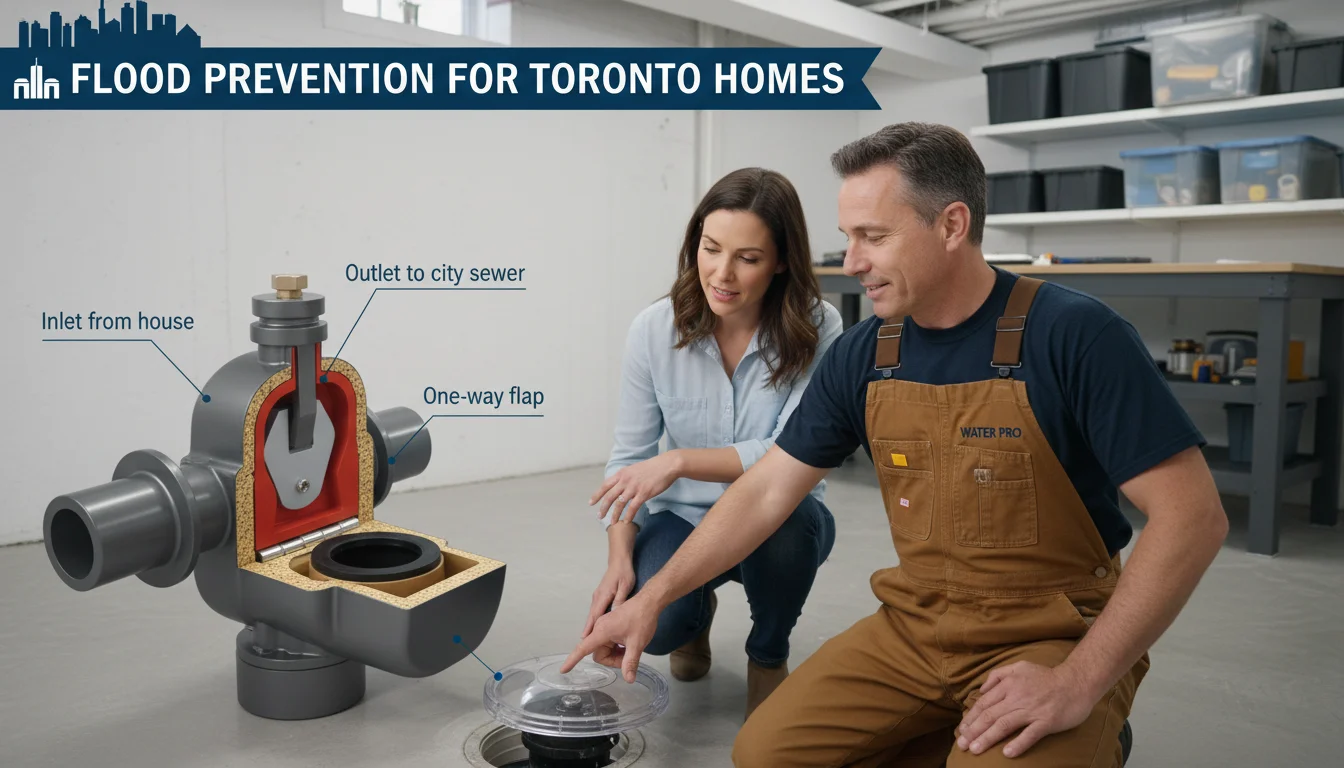
- 2. Storm Sewer Connection: Direct connection to municipal storm sewer with proper permit and backflow prevention
- 3. Drainage Ditch/Swale: Discharge to municipal drainage ditches or natural watercourses (with approval)
- 4. Dry Well/Infiltration System: Underground dispersal system (site conditions permitting, inspected by City)
❌ Prohibited Discharge Locations
- Sanitary Sewer: Floor drains, toilets, laundry drains—all illegal
- Public Sidewalks/Roads: Creates ice hazards and drainage issues
- Neighboring Properties: Directing water onto adjacent lots is illegal and actionable
- Direct to Foundation: Discharging within 6 feet re-enters your drainage system

Critical Distance and Slope Requirements
Getting the right distance and slope prevents water from flowing back toward your foundation. Here's what Toronto Building Code and best practices require:
Minimum Distance from Foundation
- Code Minimum: 6 feet (1.8 meters) from foundation wall
- Best Practice: 10-15 feet (3-4.5 meters) for optimal drainage
- Ideal: 20+ feet (6+ meters) if site allows—prevents any recirculation
Need professional discharge line installation? Learn more about our sump pump services.
Required Slope for Proper Drainage
- Minimum Grade: 2% slope (1/4 inch per foot) away from house
- Optimal Grade: 3-5% slope ensures complete drainage and prevents standing water
- Buried Lines: 1% minimum slope (1/8 inch per foot) to prevent ice buildup
💡 Pro Tip from Mike
Use a 4-foot level and a tape measure to verify slope. For every 4 feet of horizontal run, your discharge line should drop 1 inch (for 2% grade) or 2 inches (for 5% grade). Mark the termination point before digging—it prevents rework. Call (647) 554-4356 for professional grade verification and installation.
Freeze Prevention: Toronto's Biggest Discharge Line Challenge
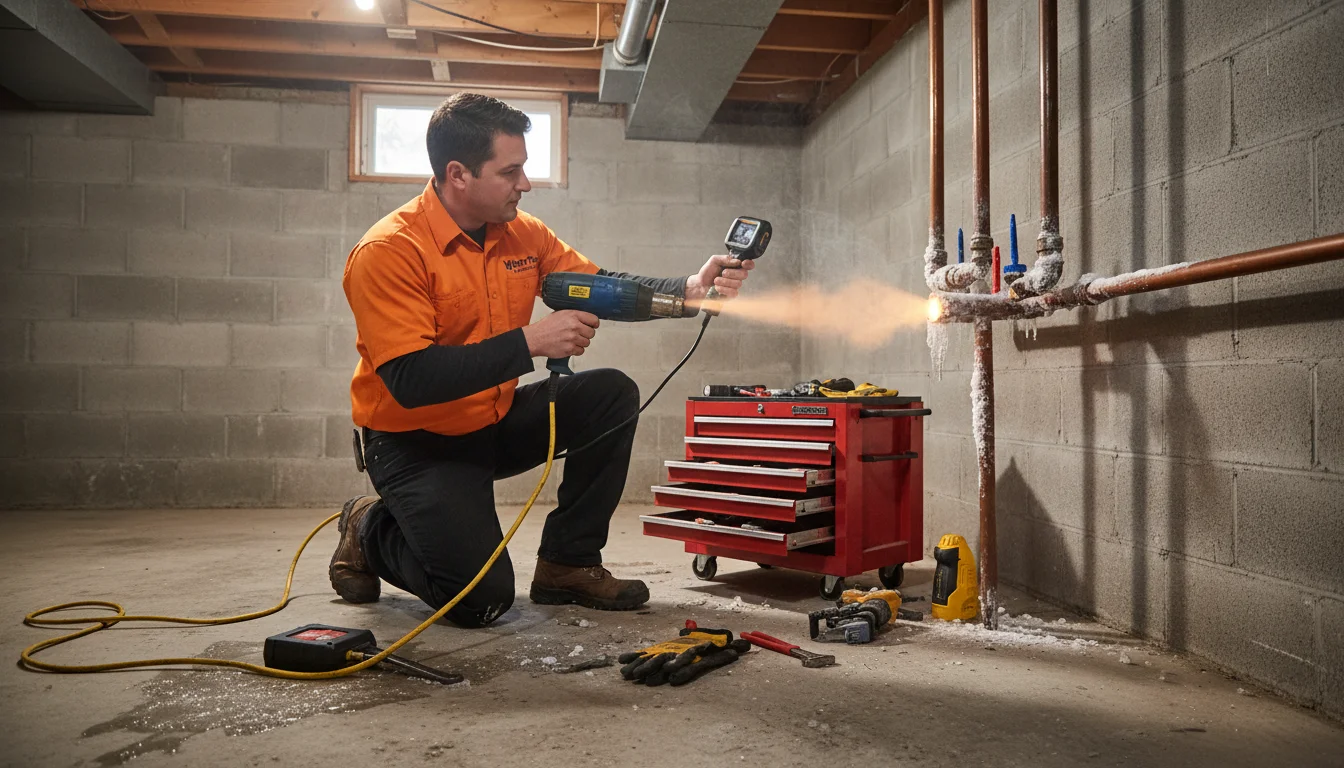
Here's a truth every Toronto homeowner learns the hard way: a frozen discharge line is as bad as having no sump pump at all. Water backs up into the pit, the pump runs continuously trying to discharge, and eventually either the motor burns out or your basement floods.
I get more emergency calls about frozen discharge lines in January and February than any other issue. Let's prevent that.
Below-Grade (Buried) Discharge Lines: The Gold Standard
The most reliable freeze protection is burying your discharge line below the frost line. In Toronto, frost can penetrate up to 4 feet deep during severe winters (January-February).
- Dig to 48 inches (4 feet) depth minimum
- Use Schedule 40 PVC pipe (rated for burial and freezing)
- Maintain 1% minimum slope even when buried
- Install cleanout access points every 20-30 feet
- Terminate at approved discharge point (storm sewer, drainage ditch, or surface with pop-up emitter)
For complex drain work, consider our trenchless excavation services to minimize yard disruption.
Above-Grade Discharge Lines: Freeze Protection Strategies
If burial isn't feasible (rental property, budget constraints, temporary setup), use these freeze-prevention methods:
-
Ice Guard/Freeze Vent Attachment
A slotted fitting installed near the foundation wall that allows water to discharge through side slots if the main line freezes. Water exits onto the ground near the house—not ideal, but prevents basement flooding. Cost: $15-$40.
-
Heat Tape (Heat Cable)
Electrical heating cable wrapped around exposed discharge pipe. Plug into GFCI outlet, activates automatically when temperatures drop. Essential for above-ground runs. Cost: $50-$150 for 50-foot cable.
-
Foam Pipe Insulation
Fiberglass or polyethylene foam sleeves delay freezing but won't prevent it in prolonged cold. Use WITH heat tape, not alone. Cost: $20-$60 for typical run.
-
Discharge Line Heater Extensions
Heated discharge hose attachments that plug in during winter. Replace standard hose sections prone to freezing. Cost: $80-$200.
⚠️ Don't Rely on Discharge Hose Alone in Winter
Those corrugated black discharge hoses freeze solid in Toronto winters. They're fine for summer use, but swap to rigid PVC with heat protection from November through March. I've seen discharge hoses freeze into solid ice tubes in less than 48 hours during cold snaps. Protect your investment—call (647) 554-4356 for winterization service.
Common Discharge Line Problems (and Solutions)
After thousands of service calls, I see the same discharge line issues repeatedly. Here's how to identify and fix them:
Problem 1: Water Pooling Near Foundation
Cause: Discharge point too close to house or improper slope
Solution: Extend discharge line to 10-15 feet minimum, verify 2% slope. Install splash block or pop-up emitter at termination point to disperse water.
Cost to Fix: $150-$400 (DIY) or $300-$700 (professional)
Problem 2: Frozen Discharge Line (Ice Blockage)
Cause: Above-ground discharge without freeze protection
Immediate Fix: Pour hot (not boiling) water over frozen section, clear ice blockage manually
Long-Term Solution: Bury line below frost line OR install heat tape + ice guard
Cost to Fix: $800-$1,500 (buried line), $150-$500 (heat tape + insulation)
Problem 3: Discharge Backs Up Into Sump Pit
Cause: Clog in discharge line, frozen section, or check valve failure
Solution: Inspect check valve (replace if stuck), clear blockage, verify line isn't frozen or crushed
Cost to Fix: $50-$150 (check valve replacement), $200-$600 (line clearing/repair)
Problem 4: Pump Runs But No Water Exits
Cause: Complete blockage or disconnected discharge line
Solution: Inspect all connections, check for disconnected sections, verify termination point
Cost to Fix: $100-$300 (reconnection/repair)
Sump Pump Discharge Line Installation Costs (Toronto 2025)
What does proper discharge line installation actually cost in Toronto? Here's the breakdown based on our 2025 pricing:
| Installation Type | Price Range | Details |
|---|---|---|
| Basic Above-Ground Line | $200 - $400 | PVC pipe, 10-20 feet, surface termination |
| Buried Discharge Line | $800 - $1,500 | Code-compliant, below frost line, 20-40 feet |
| Storm Sewer Connection | $1,500 - $3,000 | Permit, excavation, backflow valve, inspection |
| Freeze Protection Upgrade | $150 - $500 | Heat tape, insulation, ice guard attachment |
| Pop-Up Emitter Installation | $100 - $250 | Automatic discharge point with cover |
| Check Valve Replacement | $50 - $150 | Prevents backflow into sump pit |
| Emergency Thaw/Repair | $200 - $600 | After-hours frozen line clearing |
💡 Pro Tip from Mike
Best value: Install buried discharge line during initial sump pump installation. Retrofitting later costs 30-50% more due to mobilization, re-excavation, and landscape restoration. If you're getting a new sump pump, invest in proper burial upfront—it pays for itself in reliability and prevents $600+ emergency frozen line calls. Get a free estimate: (647) 554-4356.
DIY vs. Professional Installation: What You Need to Know
Can you install a discharge line yourself? Maybe—but here's what you need to consider:
DIY-Friendly Discharge Line Projects
- Replacing existing above-ground discharge hose with rigid PVC
- Adding heat tape and insulation to exposed sections
- Installing ice guard attachment near foundation wall
- Extending existing surface discharge 5-10 feet farther from house
Estimated DIY Cost: $100-$300 in materials
Tools Needed: PVC cutter/saw, measuring tape, level, shovel (for shallow trenching), primer/cement for PVC joints
Call a Professional For:
- Buried discharge lines below frost line (requires excavation, grading, proper pitch)
- Storm sewer connections (permit required, must pass inspection)
- Correcting illegal sanitary sewer connections (compliance critical)
- Solving recurring freeze-up problems (diagnostic skills needed)
- Installing on slopes or complex terrain (grading expertise required)
- Any work requiring permits or inspections
Need professional installation or compliance correction? Call (647) 554-4356 for same-day service across Toronto and the GTA.
Do You Need a Permit for Discharge Line Work?
Toronto permit requirements for sump pump discharge work depend on the scope:
Permit Required For:
- Connecting to municipal storm sewer system (mandatory permit + inspection)
- Major excavation work (trenching deeper than 4 feet or within 5 feet of property line)
- Changing discharge point location significantly (e.g., moving from one side of house to another)
- Installing dry well/infiltration systems (soil testing and engineered design required)
No Permit Typically Needed For:
- Replacing existing discharge line in same location
- Adding freeze protection (heat tape, insulation)
- Extending above-ground discharge within your property
- Installing ice guard or check valve
When in doubt, verify with Toronto Building Department: Call 311 or visit toronto.ca/building-construction. Unpermitted work that requires a permit can result in stop-work orders and fines.
Toronto Neighborhood Considerations
Different Toronto neighborhoods have unique discharge challenges based on terrain, soil type, and infrastructure age:
High Water Table Areas (Toronto Islands, Etobicoke Lakeshore, Scarborough Bluffs)
Challenge: Water table within 6 feet of surface makes surface discharge less effective. Storm sewer connections preferred but require permits.
Solution: Professional storm sewer connection with backflow prevention valve. Expect $2,000-$3,500 installed.
Older Neighborhoods (The Annex, Rosedale, Forest Hill, East York)
Challenge: Many homes built pre-1950 with combined sewers (sanitary + storm). Illegal connections common but being phased out.
Solution: Mandatory disconnection during renovations or property sales. Install proper surface or storm sewer discharge.
Sloped Terrain (North York, Scarborough, Etobicoke Hills)
Challenge: Natural grade can work for you OR against you depending on direction.
Solution: Discharge downhill away from foundation. Use landscape grading to direct flow to drainage swales.
Clay Soil Areas (Scarborough, North York, Parts of Etobicoke)
Challenge: Poor soil drainage causes surface discharge to pool and freeze.
Solution: Buried discharge line to storm sewer or drainage ditch. Surface discharge not recommended.
Serving all GTA neighborhoods. See our coverage: Toronto, Scarborough, North York, Etobicoke, Mississauga, Brampton.
Discharge Line Maintenance: Keep It Flowing Year-Round
Proper maintenance prevents 90% of discharge line failures. Here's your seasonal checklist:
Spring (March-May): Thaw Season Inspection
- Check for ice damage to above-ground sections
- Verify termination point is clear of debris/ice
- Test pump discharge during heavy rain to confirm flow
- Inspect for winter frost heave movement or disconnections
Summer (June-August): Flow Testing
- Pour 5 gallons water into sump pit, verify discharge exits properly
- Check slope—erosion can change grade over time
- Trim vegetation around discharge point (prevents clogs)
- Inspect check valve for debris/sticking
Fall (September-November): Winter Prep
- Clear leaves and debris from discharge termination point
- Install heat tape and insulation on exposed sections
- Test ice guard attachment (if equipped)
- Consider switching to rigid PVC from corrugated hose
Winter (December-February): Freeze Monitoring
- Check discharge point after every pump cycle during cold weather
- Listen for pump running continuously (sign of frozen discharge)
- Keep snow cleared from above-ground discharge sections
- Verify heat tape is working (should feel warm to touch when active)
💡 Pro Tip from Mike
Set a phone reminder for quarterly discharge line checks. It takes 5 minutes and prevents emergency flooding. I recommend the 1st of March, June, September, and December. Add "Check sump pump discharge" to your calendar right now—future you will thank you. Need professional seasonal maintenance? We offer annual service plans: (647) 554-4356.
Frequently Asked Questions
No. Toronto Municipal Code Chapter 681 prohibits connecting sump pumps to sanitary sewers. Violations carry fines up to $5,000. Discharge must go to surface drainage, storm sewer, or proper yard drainage at least 6 feet from your foundation.
Minimum 6 feet from your foundation, sloped away at 2% grade (1/4 inch per foot). Best practice is 10-15 feet to prevent water re-entering the drainage system. Never discharge onto neighboring properties or public sidewalks.
Use buried discharge lines below frost line (4 feet deep in Toronto), install freeze-protected discharge points, use heat tape on exposed sections, ensure proper slope for complete drainage, and consider ice guard attachments for above-ground terminations.
Most residential sump pumps use 1.5-inch discharge pipe. For high-capacity pumps (1/2 HP or larger) or long discharge runs, use 2-inch pipe to reduce backpressure. Never reduce pipe size smaller than the pump discharge port.
Only if it connects to a municipal storm sewer inlet. Never discharge directly onto roads, sidewalks, or neighboring properties. Check with Toronto Water for approved storm sewer connections. Most residential setups discharge to yard drainage or drainage ditches.
Basic above-ground discharge line: $200-$400. Buried discharge line (code-compliant): $800-$1,500. Storm sewer connection permit and installation: $1,500-$3,000. Freeze protection upgrades: $150-$500. Costs vary based on distance and site conditions.
Frozen discharge lines cause water to back up into the sump pit, potentially burning out the pump motor or causing basement flooding. Immediate solutions: thaw the line with warm water, clear ice blockage, install temporary discharge. Long-term: upgrade to freeze-protected system.
Permits required for: connecting to municipal storm sewers, major excavation work, changing discharge points. No permit typically needed for replacing existing discharge lines in the same location. Always verify with Toronto Building Department before major work.
The Bottom Line: Don't Gamble with Discharge Lines
Your sump pump discharge line isn't glamorous, but it's critical infrastructure that protects your home from flooding. Toronto's strict bylaws against sanitary sewer connections aren't bureaucratic red tape—they're necessary to prevent neighborhood-wide sewer backups and protect water treatment capacity.
Here's what I tell every homeowner: Invest in proper discharge line installation once, and it will work reliably for decades. Cut corners with above-ground hose that freezes every winter, and you'll spend more on emergency calls than a buried line would have cost.
The three non-negotiables:
- Never discharge to sanitary sewer—it's illegal and carries $5,000 fines
- Minimum 6 feet from foundation with 2% downward slope
- Freeze protection is mandatory—buried line OR heat tape + ice guard
Everything else—storm sewer connections, pop-up emitters, landscape integration—depends on your specific site conditions and budget.
Need Discharge Line Installation or Repair?
Licensed plumbers available 24/7 across Toronto and the GTA. Code-compliant installations with 90-day guarantee.
📞 Call (647) 554-4356Same-day service • Toronto bylaw compliance • 5,234+ families helped
Related Articles

About Mike Thompson
Master Plumber • License #MP-2847 • 28 Years Experience
Mike has installed over 3,000 sump pump systems across the GTA since 1996. He's a certified expert in basement waterproofing and Toronto building code compliance. Mike has helped hundreds of homeowners navigate discharge line bylaw requirements and winterization challenges.
Member: Canadian Institute of Plumbing & Heating (CIPH) • Ontario Plumbing Inspectors Association (OPIA)