
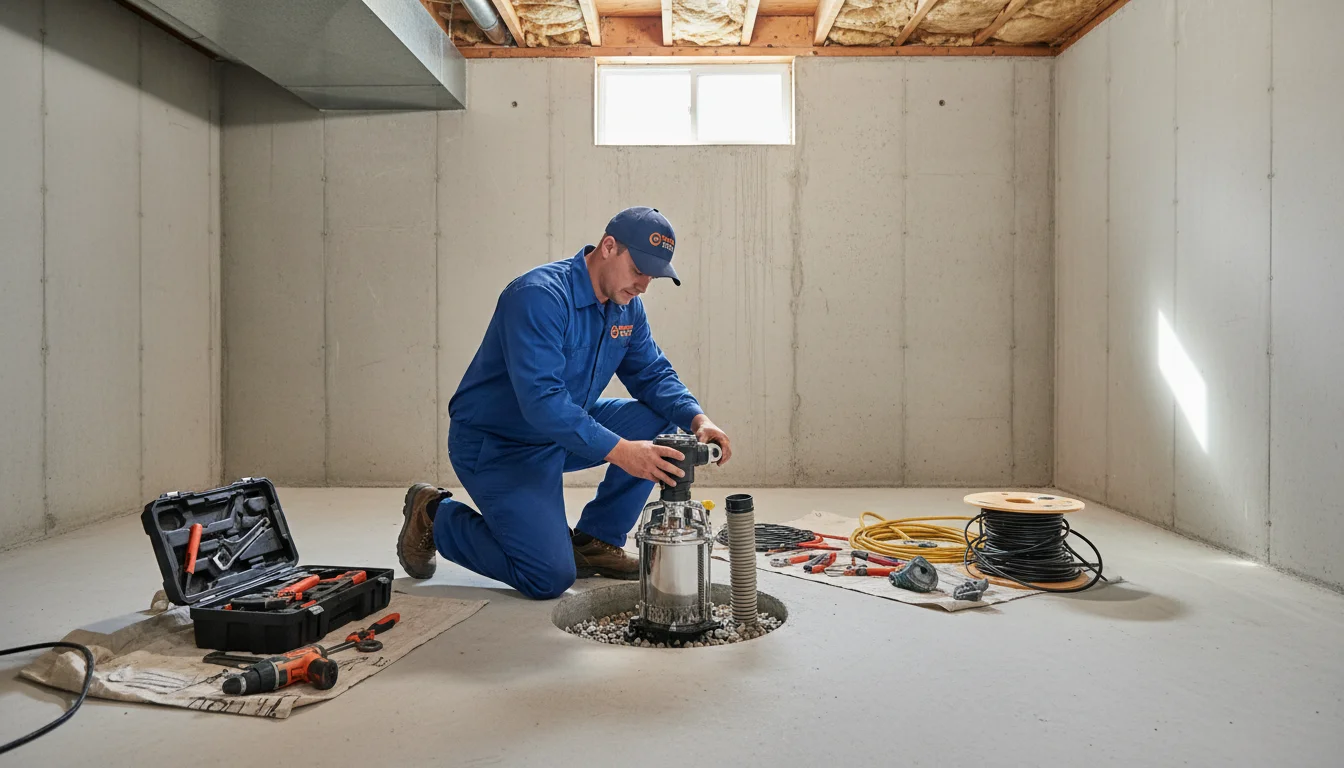
Proper sump pump installation is the difference between a dry basement and thousands of dollars in flood damage. In Toronto, where basement flooding affects more than 26,000 homes annually, understanding the installation process—from pit excavation to discharge routing—helps you make informed decisions about protecting your home.
After installing over 3,800 sump pumps across Toronto neighborhoods from the Beaches to Etobicoke, I've seen every installation scenario imaginable. The quality of installation determines whether your pump works reliably for 15+ years or fails during the next major storm. This comprehensive guide covers everything homeowners need to know about professional sump pump installation.
🔑 Key Takeaways: Sump Pump Installation Essentials
- Proper pit size is 24-36" deep × 18-24" diameter with gravel bed below your weeping tile system
- Discharge lines must extend 6+ feet from foundation with proper slope and check valve installation
- Dedicated 15-amp GFCI circuit required—never share power with other basement appliances
- Toronto Building Code requires permits for new installations ($150-$300, handled by professionals)
- Professional installation takes 4-8 hours and ensures warranty coverage, insurance compliance, code approval
Understanding Sump Pump Installation Types
The type of installation determines cost, timeline, and complexity. Here's what each scenario involves:
New Construction Installation
When: Building new home or finishing basement during construction
Cost Range: $1,200 - $2,000
Installed during foundation work with easy access for pit excavation, weeping tile connection, and discharge routing. This is the ideal scenario—no concrete cutting or working around finished spaces. The pit is integrated with your drainage system from day one.
Timeline: 4-6 hours during construction phase
Retrofit Existing Basement Installation
When: Adding sump pump to existing home without current system
Cost Range: $1,500 - $2,800
Requires cutting concrete floor, excavating pit, connecting to weeping tiles (if present), and routing discharge line through foundation or rim joist. More complex due to working around existing plumbing, finished walls, and limited access. Most common installation type in Toronto.
Timeline: 6-10 hours depending on concrete thickness and discharge routing
Replacement/Upgrade Installation
When: Replacing failed pump or upgrading existing system
Cost Range: $800 - $1,800
Simplest installation—pit already exists, discharge line in place, electrical connection available. May involve pit cleaning, liner replacement, or discharge line upgrades. Upgrading to battery backup adds $500-$800. Perfect opportunity to add high-water alarm or better capacity pump.
Timeline: 2-4 hours for direct replacement, 4-6 hours with upgrades
Sump Pump Pit Requirements: Getting It Right
The pit is the foundation of your entire sump pump system. Toronto's clay soil and high water tables in neighborhoods like the Beaches and Leaside make proper pit construction critical:
Pit Size and Depth Specifications
| Specification | Standard Requirement | High Water Table Areas |
|---|---|---|
| Pit Diameter | 18-24 inches | 24 inches (larger capacity) |
| Pit Depth | 24-30 inches below floor | 30-36 inches below floor |
| Gravel Bed Depth | 6-8 inches below pit bottom | 8-12 inches (better drainage) |
| Liner Type | Perforated plastic liner | Heavy-duty perforated liner |
| Weeping Tile Connection | At least 2 connection points | 4 connection points (full perimeter) |
A pit that's too shallow causes your pump to cycle on/off constantly—running every 2-3 minutes instead of every 15-20 minutes. This dramatically shortens pump life from 15 years to 3-5 years. The extra 6 inches of depth costs $50-$100 more during installation but saves thousands in premature replacement and electricity costs.
Why Pit Location Is Critical
Professional installers choose pit location based on several factors Toronto homeowners should understand:
Lowest Floor Point
Water naturally flows to the lowest point. The pit must be positioned where gravity brings water—typically the corner farthest from your main drain or the actual low spot determined by surveying the floor slope.
Weeping Tile Access
If your home has weeping tiles (most Toronto homes built after 1950), the pit must connect to this drainage system. We locate tiles using a tile probe or camera inspection to ensure proper connection.
Discharge Route Planning
The pit should minimize discharge line length and avoid routing through finished spaces. Shorter runs mean more efficient pumping and easier freeze protection in Toronto winters.
Electrical Access
The pump needs power within 6 feet. We position pits near existing outlets when possible or plan new dedicated circuits. Never use extension cords—they're a code violation and safety hazard.
Discharge Line Routing: The Most Common Installation Mistake
I've seen more sump pump failures caused by improper discharge routing than any other issue. Here's how it should be done according to Toronto Building Code and best practices:
Toronto Building Code Discharge Requirements
- Minimum distance from foundation: 6 feet (2 meters) with positive slope away from house
- Cannot discharge to: Sanitary sewer system (illegal in Toronto), neighboring properties, sidewalks/roadways
- Preferred discharge locations: Storm sewer connection (where available), surface drainage to street, dry well or rain garden
- Freeze protection: Buried lines below frost depth (4 feet in Toronto) or proper surface drainage
- Check valve requirement: Mandatory to prevent backflow into pit
Connecting your sump pump to Toronto's sanitary sewer is illegal and carries fines up to $5,000. More importantly, it contributes to basement flooding across the city during heavy rain when the sewer system is overwhelmed. All sump pump discharge must go to approved surface drainage or storm sewers only. If you suspect your current pump discharges illegally, call (647) 554-4356 for proper re-routing.
Check Valve Installation
The check valve is a one-way valve that prevents pumped water from flowing back into your pit after the pump shuts off. Without it:
- Your pump cycles every 30-60 seconds instead of every 15-20 minutes
- Pump motor burns out in 1-2 years instead of lasting 10-15 years
- Electricity costs triple due to constant cycling
- Water hammering damages discharge pipes and connections
Proper installation: Check valve mounts on the vertical discharge pipe 6-12 inches above the pump. The arrow on the valve must point up (direction of flow). We use spring-loaded check valves that close smoothly to prevent water hammer.
Electrical Requirements and Safety
Electrical work for sump pump installation must meet Ontario Electrical Code standards. This is where DIY installations commonly fail inspection:
Dedicated Circuit
15-amp circuit serving only the sump pump—no other basement appliances or lighting on this circuit. Prevents tripped breakers when the pump runs during high water events.
GFCI Protection
Ground Fault Circuit Interrupter required for all basement outlets. Protects against electrical shock in the wet environment around sump pits. GFCI outlets or breakers both acceptable.
Outlet Height
Mounted minimum 12 inches above floor—higher in flood-prone basements. If the outlet floods, your pump can't run when you need it most. We mount 18-24 inches high.
Plug vs. Hardwired
Most residential pumps plug into outlets for easy replacement. Commercial installations may be hardwired. Never cut off the plug to extend the cord—this voids warranty and violates code.
Improper electrical installation around sump pits has caused fatal electrocutions in Toronto. Working with electricity in wet environments requires licensed electricians who understand proper grounding, GFCI protection, and code requirements. The $200-$400 you save doing DIY electrical work isn't worth the risk to your family's safety. Always hire licensed professionals for electrical connections.
Step-by-Step Professional Installation Process
Here's exactly what happens when Water Pro installs your sump pump system:
Pre-Installation Assessment (30-45 minutes)
We survey your basement to identify the actual low point using laser levels, locate existing weeping tiles with tile probes or camera inspection, check for adequate electrical service, plan discharge route that meets code requirements, and assess soil conditions. This determines pump size, pit depth, and system configuration.
What you'll see: Our technician mapping basement layout, testing floor slopes, probing for weeping tiles, measuring from foundation to determine discharge path.
Concrete Cutting and Removal (45-90 minutes)
We mark the pit location (typically 24" diameter circle), cut concrete with diamond blade saw to minimize cracking, break out concrete sections carefully, and dispose of concrete debris. Dust control measures protect your belongings—we use HEPA-filtered saws and plastic barriers.
What you'll see: Concrete cutting dust (controlled with water spray), loud cutting noise (30-45 minutes), concrete chunks removed and hauled away. We cover nearby items with plastic sheeting.
Pit Excavation and Preparation (60-90 minutes)
We excavate 30-36 inches below floor level through Toronto's clay soil, install 6-8 inches of ¾" clear stone gravel for drainage bed, connect to weeping tile system (4 connection points for full perimeter drainage), install perforated plastic liner, and ensure pit walls are stable and properly supported.
What you'll see: Significant soil removal (12-15 five-gallon buckets), weeping tile exposure and connection, gravel installation, liner placement. Excavated soil is removed from your property.
Discharge Line Installation (60-90 minutes)
We drill through foundation or rim joist (core drill for minimal cracking), install 1½" or 2" PVC discharge line with proper slope (¼" per foot minimum), route exterior discharge minimum 6 feet from foundation, install check valve on vertical pipe above pump, and add freeze-protection measures (heat cable or proper burial depth).
What you'll see: Core drilling noise (15-30 minutes), PVC piping installation, exterior trenching if burying discharge line. We seal all foundation penetrations with hydraulic cement.
Pump Installation and Electrical Connection (30-45 minutes)
We position pump in pit center on support blocks (prevents gravel intake), orient float switch for unobstructed operation, connect discharge piping with proper couplings, verify pump sits level, install dedicated GFCI outlet if needed (by licensed electrician), and connect battery backup system if included in your package.
What you'll see: Pump lowered into pit, plumbing connections made, electrical outlet installation if needed, battery backup unit mounted on wall (if applicable).
Testing and Verification (20-30 minutes)
We fill pit with water to test pump activation, verify float switch triggers at correct water level, check for proper discharge flow and no leaks, test check valve prevents backflow, verify GFCI protection works correctly, test battery backup (if installed), and measure pump performance (gallons per minute at your head height).
What you'll see: Multiple pump cycles with water filling/emptying pit, outdoor discharge verification, alarm testing, documentation of pump performance specifications.
Cleanup and Documentation (30-45 minutes)
We patch concrete around pit with high-strength concrete (smooth finish matching existing floor), vacuum all dust and debris from work area, haul away all concrete and soil, provide operation and maintenance instructions, complete building permit documentation (if required), supply warranty paperwork, and give you our 24/7 emergency contact information.
What you receive: Clean work area, warranty certificates, operating manual, maintenance checklist, building permit receipt (we handle inspection scheduling).
Get Professional Sump Pump Installation
Protect your Toronto basement with code-compliant installation that lasts 15+ years. Free assessment and detailed quote—same-day service available.
📞 Call (647) 554-4356Licensed & insured | Permit handling included | 90-day guarantee | 4.9/5 rating from 5,234+ families
Toronto Building Code and Permit Requirements
Understanding Toronto's permit requirements prevents costly mistakes and ensures your installation is legal and insurance-compliant:
When Permits Are Required
- New sump pump installation: Always requires plumbing permit ($150-$300)
- Connecting to storm sewer: Requires additional drainage permit
- Electrical work: New circuits require electrical permit ($75-$150)
- Major modifications: Changing pit size, relocating pump, rerouting discharge
When Permits Are NOT Required
- Direct pump replacement (same type/size in existing pit with no modifications)
- Adding battery backup to existing system without electrical changes
- Discharge line repairs using existing routing
Some homeowners try to avoid permits to save the $150-$300 fee. This is penny-wise and pound-foolish. When you sell your home, buyers' home inspectors look for unpermitted work. Insurance companies can deny flood damage claims if your sump pump installation isn't permitted. The permit also ensures a city inspector verifies your installation meets code—catching potential failures before they cause $20,000+ in flood damage. Water Pro handles all permit applications as part of our installation service at no additional charge beyond the city's permit fee.
Toronto's Weeping Tile Disconnect Program
Toronto offers incentives for disconnecting weeping tiles from the sanitary sewer (an outdated practice from pre-1980s construction). If your weeping tiles currently connect to the sewer, proper sump pump installation can qualify you for:
- Rebate: Up to $1,750 for disconnecting and installing sump pump
- Reduced basement flooding risk: Prevents sewer backup into your home
- Insurance premium discounts: Some insurers offer 5-10% discounts for compliant drainage
Water Pro is familiar with Toronto's disconnect program requirements and can help you apply for available rebates. Call (647) 554-4356 to discuss your eligibility.
Cost Breakdown: What You're Paying For
Professional sump pump installation costs reflect materials, labor, expertise, and code compliance:
| Component | Cost Range | What It Includes |
|---|---|---|
| Pump (Submersible) | $250 - $600 | 1/3 HP to 3/4 HP pump with float switch, quality brands (Zoeller, Wayne, Liberty) |
| Pit and Liner | $150 - $300 | Excavation, gravel bed, perforated liner, weeping tile connections |
| Discharge Line | $200 - $500 | PVC piping, check valve, foundation core drilling, exterior routing |
| Electrical Work | $150 - $400 | Dedicated circuit, GFCI outlet, proper grounding (by licensed electrician) |
| Labor (4-8 hours) | $400 - $800 | Licensed plumber, concrete cutting, installation, testing, cleanup |
| Permit Fees | $150 - $300 | Toronto building permit, permit application, inspection coordination |
| Battery Backup (Optional) | $500 - $900 | Backup pump, marine battery, charger, automatic switching system |
| TOTAL (Standard Install) | $1,500 - $2,400 | Complete turnkey installation with warranty and permit |
Why Professional Installation Saves Money Long-Term
The upfront cost difference between DIY and professional installation ($800-$1,200) seems significant—until you consider the total cost of ownership:
DIY Installation Risks
- Incorrect pit sizing causes pump cycling (burns out in 2-3 years vs. 15 years)
- Missing check valve triples electricity costs
- Improper discharge causes foundation damage ($8,000-$15,000 repair)
- Code violations void insurance coverage for flood damage
- Unpermitted work creates problems when selling home
- No warranty coverage when pump fails
Professional Installation Benefits
- Pump lasts full 10-15 year lifespan (saves $2,000+ in replacements)
- Proper sizing reduces electricity costs by 60-70%
- Code-compliant installation maintains insurance coverage
- Permit documentation adds value when selling
- 5-10 year warranty on parts and labor
- 24/7 emergency support if system fails
Real cost comparison over 15 years:
- DIY installation: $800 initial + $400 replacement pump (year 3) + $600 replacement pump (year 6) + $1,200 replacement pump (year 9) + $200/year extra electricity = $3,800+ total
- Professional installation: $2,000 initial + $0 replacement (15-year pump life) + normal electricity costs = $2,000 total
Professional installation saves $1,800+ over the pump's lifespan while eliminating flood risk from installation failures.
High Water Table Neighborhoods in Toronto
Certain Toronto areas have naturally high water tables requiring more robust installation approaches:
Homes in these neighborhoods typically need:
- Larger capacity pumps: 1/2 HP minimum, often 3/4 HP for adequate water removal
- Deeper pits: 36 inches vs. standard 30 inches for more water storage capacity
- Battery backup: Essential—these pumps run frequently during wet seasons
- High-water alarm: Early warning system when water level rises abnormally
- Dual pump systems: Primary pump plus backup for redundancy in critical situations
If your home is in a high water table area, expect installation costs $300-$600 higher due to larger pump requirements and deeper excavation. Call (647) 554-4356 for area-specific recommendations.
Maintenance Access: Installing for Future Service
A properly installed sump pump system is designed for easy maintenance and eventual pump replacement:
When we install your system, we're planning for the day 10-15 years from now when you need to replace the pump. We ensure adequate clearance above the pit for pump removal (18-24 inches), use union couplings on discharge pipes for easy disconnection, position check valves for accessible service, and document pump specifications so replacement is simple. Many DIY installations make pump replacement nearly impossible without cutting pipes or breaking concrete—requiring full reinstallation instead of simple pump swap.
What Should Be Accessible
- Pit opening: Uncovered or easy-to-remove cover for inspections
- Electrical outlet: Accessible without moving stored items
- Check valve: Reachable for cleaning or replacement
- Discharge line cleanout: Access point for clearing clogs
- Battery (if backup system): Space to check water level and replace battery
Schedule Your Free Installation Assessment
Our experts evaluate your basement, recommend the right system configuration, and provide transparent pricing—no obligation.
📞 Call (647) 554-4356Same-day assessments available | Permits handled for you | 24/7 emergency service
Frequently Asked Questions About Sump Pump Installation
Protect Your Toronto Basement with Professional Installation
Get code-compliant sump pump installation that lasts 15+ years. Licensed plumbers, proper permits, guaranteed results.
📞 Call (647) 554-4356⭐ 4.9/5 Rating from 5,234+ Families | 90-Day Guarantee | 24/7 Emergency Service