Quick Answer: Repair or Replace Your Sewer Line?
Repair when: damage is localized (under 15 feet), pipe is less than 40 years old, and costs under $4,000. Replace when: pipe is 50+ years old, damage exceeds 40% of length, you've had 3+ repairs in 2 years, or repair costs exceed 50% of replacement cost. In Toronto, repair ranges $1,200-$4,000 while replacement costs $5,000-$15,000.
Key Takeaways
- Repair makes sense for isolated damage in pipes under 40 years old
- Replace when damage exceeds 40% of pipe length or pipe is 50+ years old
- Break-even point: if repair costs exceed 50% of replacement, replace instead
- Trenchless repair ($1,200-$4,000) lasts 50+ years with proper installation
- Full replacement ($5,000-$15,000) adds $3,000-$8,000 to Toronto home values
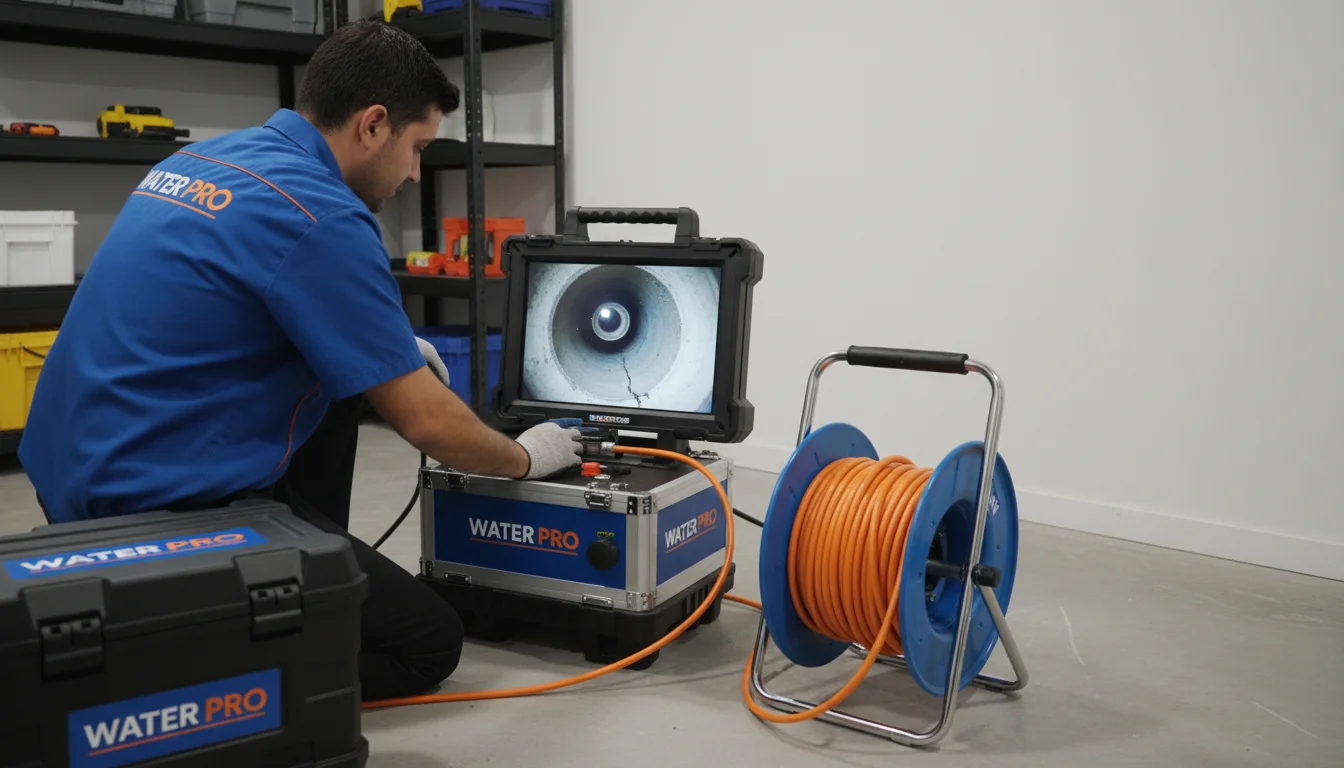
- Camera inspection ($150-$350) is critical before making any decision
You've just gotten a quote—maybe even two or three—and now you're stuck. One plumber says repair your sewer line for $2,500. Another recommends full replacement at $8,000. A third suggests "trenchless pipe lining" for $3,200. Which one is actually giving you the right advice?
After 28 years of diagnosing Toronto sewer lines, I've seen homeowners throw good money after bad with repeated repairs—and I've seen others talked into unnecessary $12,000 replacements when a $1,800 fix would have lasted 20 years. This guide cuts through the sales pitches and gives you the decision framework you need. Need expert assessment? Call (647) 554-4356 for honest advice—no upselling, just facts.
Cost Comparison: Repair vs Replacement in Toronto
Let's start with the numbers. Here's what Toronto homeowners actually pay in 2025 for different sewer line solutions:
| Service Type | Cost Range | Lifespan | Best For |
|---|---|---|---|
| Spot Repair (Traditional) | $800 - $2,500 | 5-10 years | Single pipe section damage, emergency fixes |
| Trenchless Pipe Lining | $1,200 - $4,000 | 50+ years | Isolated damage in otherwise healthy pipes |
| Pipe Bursting (Partial) | $2,500 - $6,000 | 50-75 years | Moderate damage, 20-40 feet of pipe |
| Full Sewer Replacement | $5,000 - $15,000 | 50-100 years | Pipe 50+ years old, extensive damage |
| Trenchless Full Replacement | $8,000 - $18,000 | 75-100 years | Full replacement without landscape destruction |
💡 Pro Tip: The 50% Rule
If the repair quote exceeds 50% of the replacement cost, replacement is usually the smarter long-term investment. For example: if full replacement costs $8,000, don't spend $4,500 on repairs. That extra $3,500 buys you 50+ years of peace vs. a 5-10 year patch. Get both quotes from Water Pro—call (647) 554-4356.
The Decision Framework: 5 Critical Factors
The repair vs. replacement decision comes down to five key factors. Here's how to evaluate each:
1. Age of Your Sewer Line
✅ REPAIR Makes Sense
- • 0-20 years old: Modern materials (PVC, ABS)
- • 20-40 years old: Durable pipe in good condition
- • Cast iron 30-50 years: If localized damage only
🔴 REPLACE Recommended
- • 50+ years old: Any pipe material
- • Cast iron 60+: Likely near end-of-life
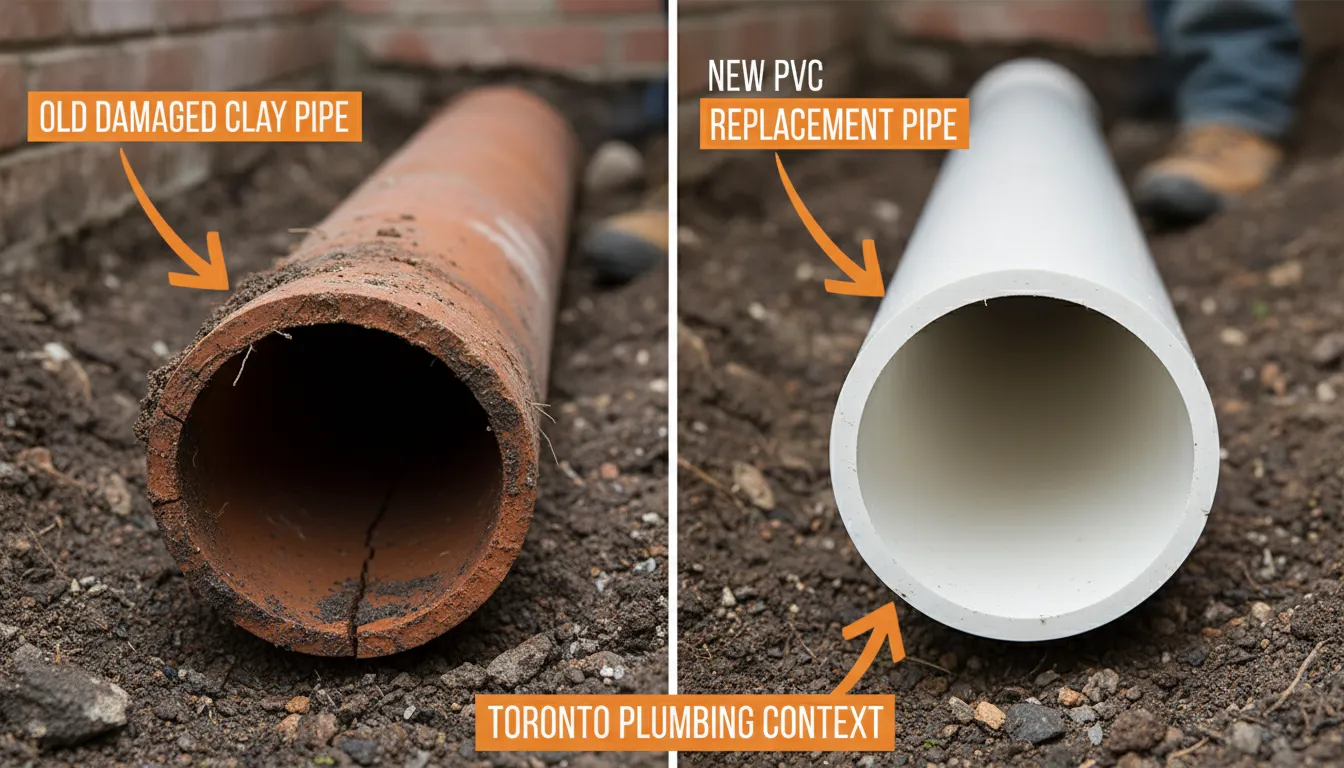
- • Clay pipe 40+: High risk of collapse in Toronto freeze-thaw
Toronto homes built before 1970 often have cast iron or clay pipes. These materials corrode, crack, and attract tree roots. If your home was built in the 1950s-60s (common in East York, North Toronto, Scarborough, Etobicoke), your sewer line is likely 60-70 years old—prime time for replacement, not repair.
2. Extent of Damage
This is where a camera inspection ($150-$350) becomes critical. The footage reveals:
- Localized damage: Cracks, root intrusion, or collapse in a single 10-15 foot section
- Widespread issues: Multiple problem areas, general deterioration, scale buildup throughout
- Percentage damaged: If 40%+ of the pipe shows issues, replacement is usually smarter
3. Pipe Material
Material determines repair viability and long-term outlook:
| Material | Typical Age | Repair Viability | Recommendation |
|---|---|---|---|
| PVC | 1980s-present | Excellent | Repair unless widespread damage |
| ABS | 1970s-present | Very Good | Repair for isolated issues |
| Cast Iron | 1920s-1980s | Moderate | Replace if 50+ years or extensive rust |
| Clay/Terracotta | 1900s-1970s | Poor | Replace—brittle, prone to tree root damage |
| Orangeburg (fiber) | 1945-1970 | Very Poor | Replace immediately—prone to collapse |
⚠️ Toronto-Specific Material Concerns
Our freeze-thaw cycles accelerate deterioration. Clay and cast iron pipes are particularly vulnerable to cracking during winter. If you have clay or Orangeburg pipe (common in 1940s-60s Toronto homes), budget for replacement soon—these materials don't age well in our climate. Trenchless options minimize disruption.
4. Frequency of Past Repairs
Have you been calling plumbers repeatedly for the same sewer line? Here's the rule:
✅ The 3-in-2 Rule
If you've had 3 or more repairs in the past 2 years, it's time to replace. Repeated repairs signal systemic pipe failure, not isolated incidents. Adding up those $800-$2,500 repair bills? You've likely already spent 40-60% of replacement cost—stop throwing money at a failing system.
5. Your Budget and Long-Term Plans
Consider these financial factors:
- Planning to sell within 5 years? Replacement adds $3,000-$8,000 to home value and prevents inspection failures
- Staying 10+ years? Replacement pays for itself in avoided emergency repairs and peace of mind
- Budget-constrained? Trenchless lining ($1,200-$4,000) offers 50-year lifespan at lower cost than full replacement
- Major renovation planned? Combine sewer work with landscaping/construction for cost savings
Interactive Decision Matrix
Score your situation using this matrix. Add up points for each category to see your recommended path:
Repair vs. Replacement Scoring Matrix
Age of Pipe
- • 0-20 years: +3 points (REPAIR)
- • 20-40 years: +1 point (REPAIR)
- • 40-60 years: -1 point (REPLACE)
- • 60+ years: -3 points (REPLACE)
Extent of Damage
- • Under 10 feet damaged: +3 points (REPAIR)
- • 10-20 feet damaged: +1 point (REPAIR)
- • 20-30 feet damaged: -1 point (REPLACE)
- • 30+ feet or 40%+ of pipe: -3 points (REPLACE)
Pipe Material
- • PVC or ABS: +2 points (REPAIR)
- • Cast iron (under 50 years): +1 point (REPAIR)
- • Cast iron (50+ years): -2 points (REPLACE)
- • Clay, Orangeburg, or failing material: -3 points (REPLACE)
Repair History (Past 2 Years)
- • 0-1 repairs: +2 points (REPAIR)
- • 2 repairs: -1 point (REPLACE)
- • 3+ repairs: -3 points (REPLACE)
Budget vs. Quote
- • Repair quote under $2,000: +2 points (REPAIR)
- • Repair quote $2,000-$3,500: +1 point (REPAIR)
- • Repair quote $3,500-$5,000: -1 point (REPLACE)
- • Repair quote over 50% of replacement: -3 points (REPLACE)
Long-Term Plans
- • Selling within 2 years: -2 points (REPLACE)
- • Staying 10+ years: -2 points (REPLACE)
- • Unsure/no immediate plans: 0 points (NEUTRAL)
Your Score Interpretation:
- +8 to +15 points: REPAIR is the clear choice. Isolated damage in good pipe.
- +3 to +7 points: REPAIR likely best, but get both quotes for comparison.
- -2 to +2 points: BORDERLINE—cost/benefit analysis needed. Camera inspection critical.
- -3 to -7 points: REPLACE likely smarter long-term investment.
- -8 to -15 points: REPLACE strongly recommended. Repairs will be temporary.
ROI Analysis: What Makes Financial Sense?
Let's look at real Toronto scenarios to understand the break-even math:
Scenario 1: The Repeated Repairer (East York, 1955 Home)
📊 Case Study: Throwing Money at a Dying Pipe
Home: 1955 bungalow, East York • Pipe: 68-year-old cast iron • Original issue: Recurring backups every 8-12 months
5-Year Repair History:
- • Year 1: Root removal + snaking ($950)
- • Year 2: Emergency backup + hydro jetting ($1,400)
- • Year 3: Spot repair section collapsed ($2,100)
- • Year 4: Root intrusion again ($850)
- • Year 5: Another backup + cleanup ($1,200)
- • Total spent on repairs: $6,500
Water Pro Recommendation: Full trenchless replacement quoted at $8,200
Result: Homeowner chose replacement after Year 5. Had they replaced after Year 2 ($2,350 spent), they'd have saved $4,150 in repeated failures. Lesson: Don't chase repairs on aging infrastructure.
Scenario 2: The Smart Liner (Scarborough, 1985 Home)
✅ Case Study: Right Repair, Right Time
Home: 1985 split-level, Scarborough • Pipe: 38-year-old cast iron, generally good condition • Issue: 12-foot section cracked by tree root
Camera Inspection Findings: Single crack in 12-foot section under driveway. Rest of 55-foot sewer line in excellent condition (no scale, no corrosion).
Quote Comparison:
- • Trenchless pipe lining (12 feet): $1,850
- • Traditional excavation repair: $2,400
- • Full sewer replacement: $9,500
Decision: Trenchless lining. Result: No issues 4 years later. Saved $7,650 vs. unnecessary full replacement. Lining warranty: 50 years. Lesson: Localized damage in healthy pipe = perfect repair candidate.
Break-Even Calculation Formula
Use this calculation to decide if repair makes sense:
💡 Break-Even Formula
If (Repair Cost) ÷ (Replacement Cost) > 0.50, choose replacement.
Example:
- • Repair quote: $3,800
- • Replacement quote: $7,500
- • Ratio: $3,800 ÷ $7,500 = 0.507 (50.7%)
- • Decision: REPLACE (you're spending half the cost for 1/10th the lifespan)
Additional factor: Multiply repair lifespan estimate by 0.7 for Toronto's harsh climate. A "10-year repair" realistically lasts 7 years here.
What to Expect: Repair vs. Replacement Process
Understanding the process helps you plan for disruption, time, and hidden costs:
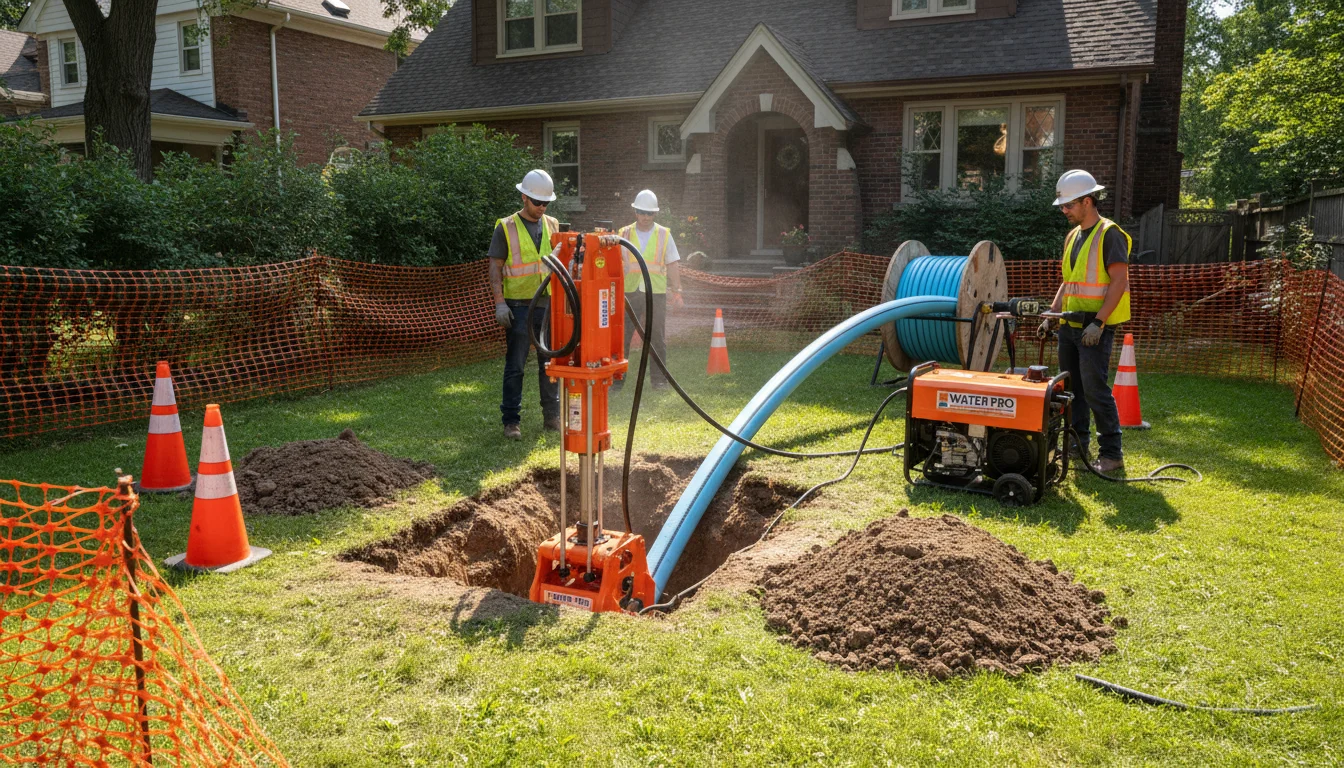
Trenchless Repair Process (1-2 Days)
- Camera Inspection: Confirm damage location and extent ($150-$350, often waived if you proceed)
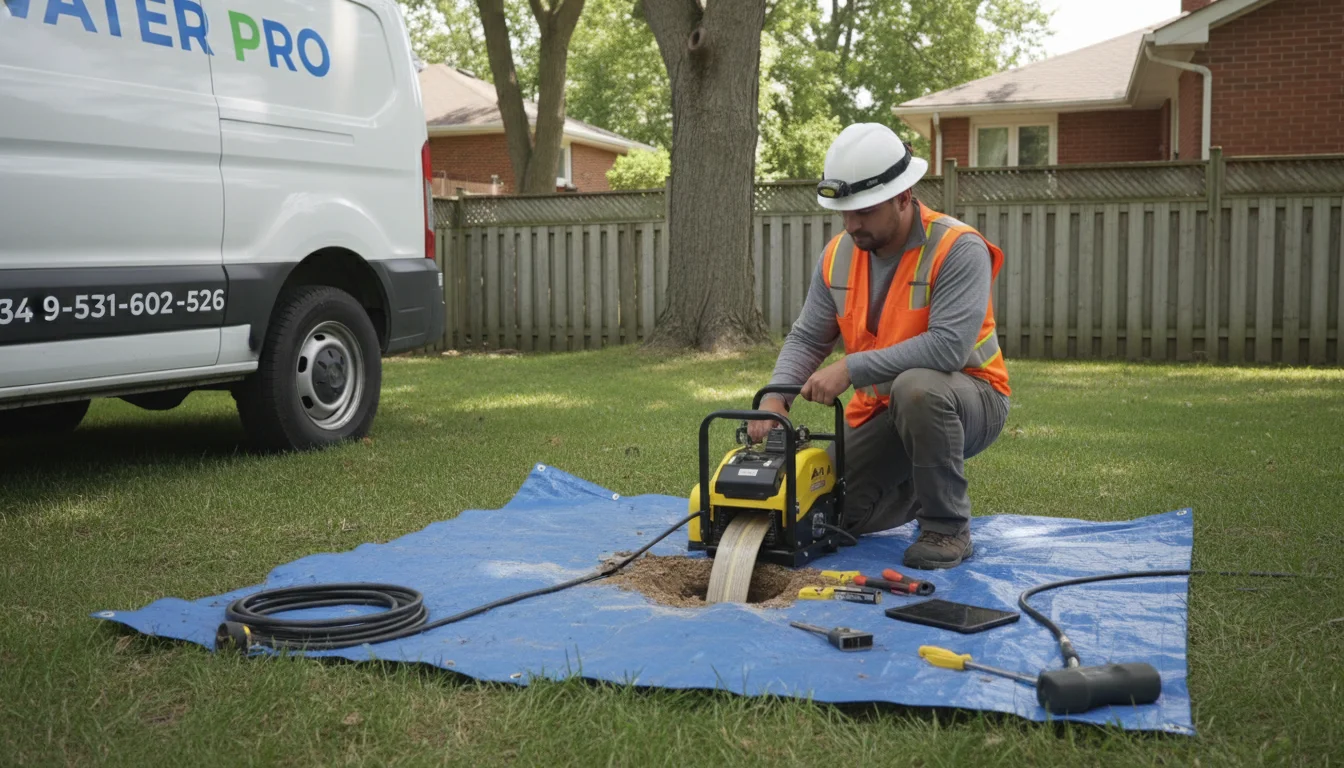
- Access Points: Two small access holes (2x2 feet) at entry/exit points
- Cleaning: Hydro jet to clean pipe interior thoroughly
- Lining Installation: Resin-saturated liner inserted and inflated to cure against pipe walls
- Curing Time: 4-8 hours (you can stay in home)
- Final Inspection: Camera confirms seal and quality
- Restoration: Patch two small access holes, minimal landscaping
Typical timeline: 1-2 days from start to finish. Minimal disruption. No excavation.
Full Sewer Replacement Process (3-7 Days)
- Permits: City of Toronto permit application (2-4 weeks processing time, $200-$500)
- Utility Locate: Mark underground utilities (gas, water, electrical)
- Excavation: Trench from house to property line or city connection (3-5 feet deep)
- Old Pipe Removal: Remove and dispose of failed sewer line
- New Pipe Installation: Install modern PVC/ABS with proper slope (1/4 inch per foot)
- Connection: Connect to city main (may require city inspector approval)
- Backfill & Compaction: Refill trench, compact soil in layers
- Landscaping Restoration: Sod, interlocking, driveway repair (often separate quote)
Typical timeline: 3-7 days depending on length, obstacles, and weather. Plan for yard disruption.
⚠️ Toronto Winter Considerations
Traditional excavation is difficult November-March due to frozen ground. Trenchless methods work year-round—another reason they're popular in Toronto. If you need emergency replacement in winter, expect 20-30% premium for excavation or choose trenchless. Call (647) 554-4356 for winter-ready options.
Toronto-Specific Factors to Consider
1. City of Toronto Permits and Regulations
If your sewer replacement requires digging in the road allowance (city property between your property line and street), you need:
- Road Opening Permit: $500-$1,200 depending on street type
- Traffic Control Plan: Required for busy streets (add $300-$800)
- Inspection Fees: City inspector must approve connection to main ($150-$300)
- Restoration Bond: Some streets require deposit for road repair ($1,000-$3,000, refundable)
Good news: Trenchless replacement often avoids road allowance work entirely, eliminating these costs. Check Toronto's permit requirements before getting quotes.
2. Neighborhood-Specific Challenges
Certain Toronto neighborhoods have unique sewer considerations:
🌳 Tree-Heavy Areas
Affected: High Park, Leaside, Rosedale, Forest Hill, Beaches
Challenge: Mature tree roots seek moisture in sewer lines. Cast iron and clay pipes are especially vulnerable. Consider root-resistant PVC with reinforced joints for replacements.
🏚️ Heritage Districts
Affected: Cabbagetown, Distillery, Old Toronto
Challenge: Excavation restrictions may apply. Trenchless methods strongly preferred to preserve heritage landscaping and avoid permit delays.
🏙️ High-Density Areas
Affected: Downtown condos, Liberty Village, CityPlace
Challenge: Shared sewer connections, limited access, condo board approvals. Repairs often easier than full replacement in multi-unit buildings.
❄️ Freeze-Prone Areas
Affected: Scarborough Bluffs, waterfront properties
Challenge: Pipes must be buried deeper (5+ feet) to avoid frost. Increases excavation cost 15-25%. Trenchless often more economical.
3. Basement Flooding Prevention Subsidy
The City of Toronto offers the Basement Flooding Protection Subsidy Program—up to $3,400 for installing:
- Backwater valve ($1,250 subsidy)
- Sump pump ($875 subsidy)
- Severance of foundation drain ($1,250 subsidy)
If you're replacing your sewer line, combine this work with subsidy-eligible upgrades to maximize value. Learn more about our backwater valve installation services and City of Toronto subsidy details.
Warning Signs You Need Sewer Line Work
Don't wait for a catastrophic backup. These signs indicate it's time for camera inspection and assessment:
🚨 Critical Signs (Immediate Action)
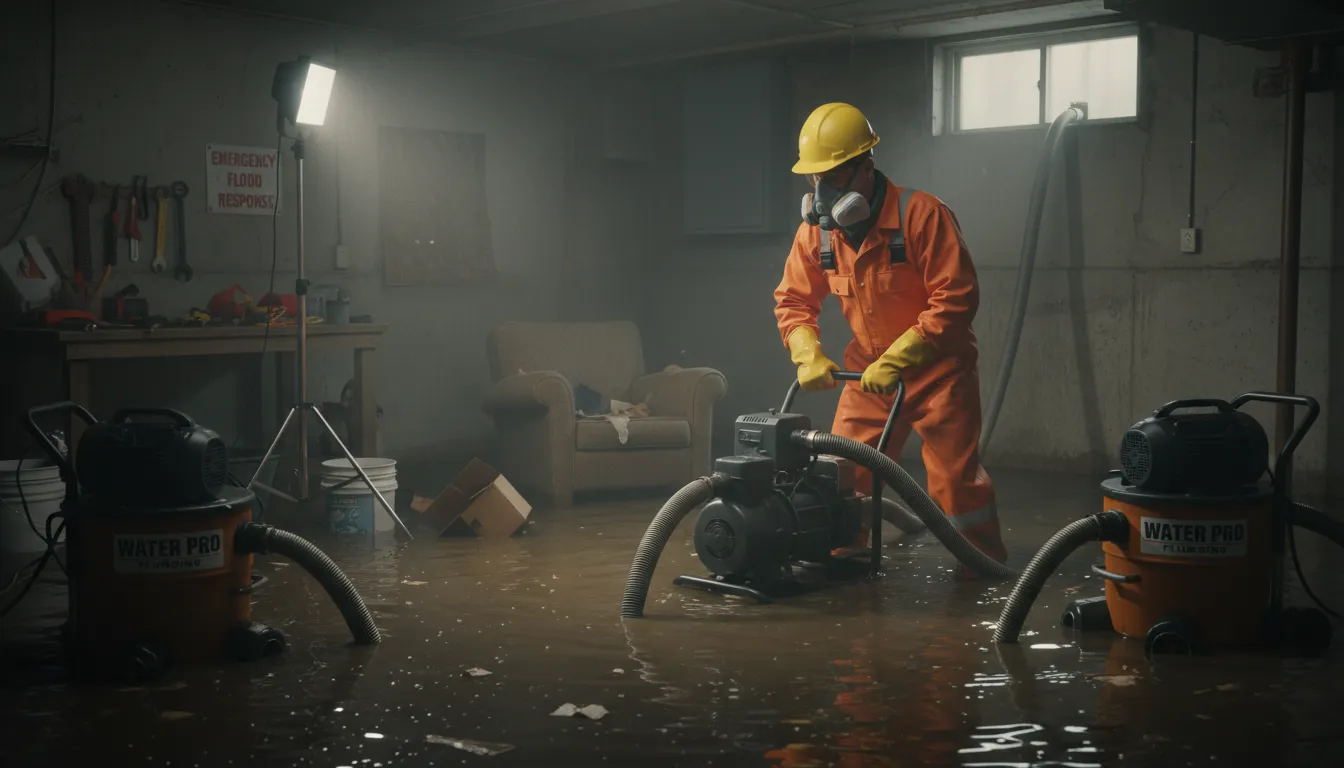
- • Sewage backup in basement: Call emergency plumber now— (647) 554-4356
- • Multiple drains backing up simultaneously: Main sewer line issue
- • Sewage odor near foundation: Possible pipe break or leak
- • Soggy patches in yard with sewage smell: Underground leak
- • Foundation cracks with moisture: Soil shifting from sewer leak
⚠️ Warning Signs (Schedule Inspection Soon)
- • Slow drains in multiple fixtures: Partial main line blockage
- • Gurgling sounds when flushing toilet: Ventilation or blockage issue
- • Fruit flies or drain flies: Organic buildup in pipes
- • Recurring clogs every few months: Underlying pipe deterioration
- • Water bill increase without usage change: Possible underground leak
Frequently Asked Questions
Repair makes sense when damage is localized (under 15 feet), the pipe is less than 40 years old, material is durable (PVC, ABS), and costs under $4,000. Trenchless repairs like pipe lining ($1,200-$4,000) are ideal for isolated damage in otherwise healthy pipes.
Full replacement is recommended when: pipe is 50+ years old, damage exceeds 40% of total length, material is failing (cast iron, clay), you have 3+ repairs in 2 years, or you're planning major renovations. Total replacement costs $5,000-$15,000 in Toronto.
Traditional spot repairs last 5-10 years. Trenchless pipe lining lasts 50+ years with proper installation. Full sewer replacement with modern materials (PVC, ABS) lasts 50-100 years. Toronto's freeze-thaw cycles may reduce lifespan by 10-15% without proper installation depth.
If repair costs exceed 50% of replacement cost, replacement is usually better long-term. For Toronto: if repair quotes exceed $3,500-$4,000 for a typical residential sewer (replacement $7,000-$8,000), replacement often makes more financial sense.
Yes. A new sewer line adds $3,000-$8,000 to home value in Toronto and prevents deal-breaking inspection failures. Pre-listing replacement eliminates buyer concerns, strengthens negotiating position, and can recover 60-85% of replacement cost at sale.
Standard home insurance rarely covers sewer line repairs (considered maintenance). However, optional sewer backup coverage ($50-$200/year in Toronto) covers resulting damage, not the repair itself. City of Toronto offers a Basement Flooding Protection Subsidy (up to $3,400) for backwater valve installation.
Traditional excavation replacement: 3-7 days including permits, excavation, installation, and landscaping restoration. Trenchless replacement (pipe bursting): 1-2 days with minimal disruption. Toronto permit processing adds 2-4 weeks before work begins.
Critical signs: recurring backups, multiple slow drains, sewage odors, foundation cracks, wet spots in yard, gurgling toilets, fruit flies or drain flies, and increased water bills. Any sewage backup warrants immediate camera inspection—call Water Pro 24/7 at (647) 554-4356.
The Bottom Line: Make the Smart Choice
The repair vs. replacement decision isn't about choosing the cheapest option—it's about choosing the smartest long-term investment. Here's the simple logic:
- Young, healthy pipe with isolated damage? Repair with confidence.
- Old, failing pipe with multiple issues? Replace and move on.
- Borderline case? Let the 50% Rule guide you—if repair costs exceed half of replacement, replace.
Don't let a sales pitch drive your decision. Get a camera inspection first ($150-$350). See the actual condition. Get quotes for both repair and replacement. Then use the decision matrix above to choose based on facts, not fear.
Need Expert Assessment?
Camera inspection + honest repair vs. replacement advice. No upselling, just facts.
📞 Call (647) 554-4356Same-day inspection • 90-day guarantee • 5,234+ families helped
Related Articles

About Mike Thompson
Master Plumber • License #MP-2847 • 28 Years Experience
Mike has diagnosed and repaired over 3,400 sewer lines across Toronto since 1996. He specializes in helping homeowners make data-driven decisions between repair and replacement, with particular expertise in trenchless technology and ROI analysis. Member of the Canadian Institute of Plumbing & Heating (CIPH) and Ontario Plumbing Inspectors Association (OPIA).
🏆 2023 Best Plumber Award - Toronto Home Services • Featured in Toronto Star, BlogTO